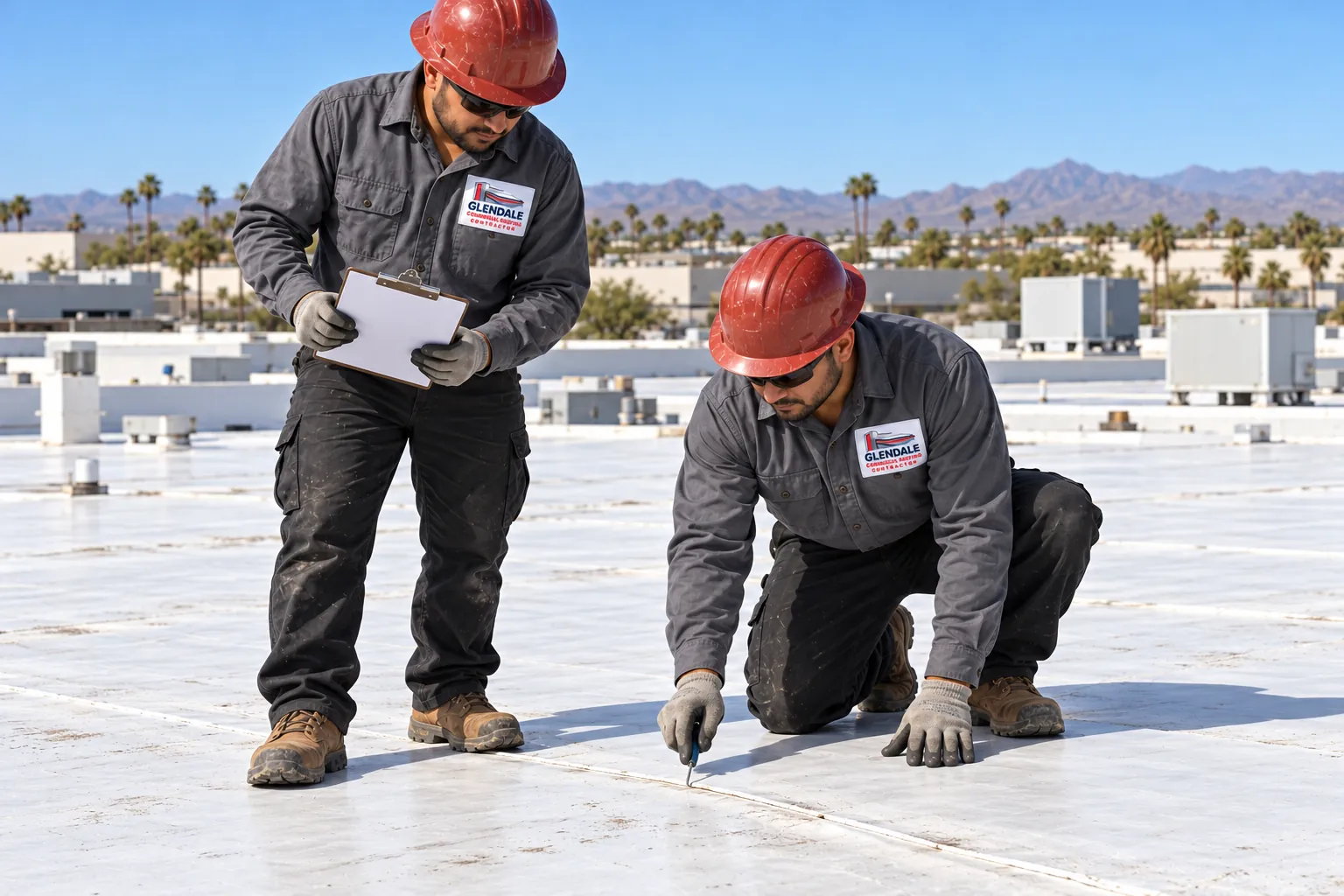
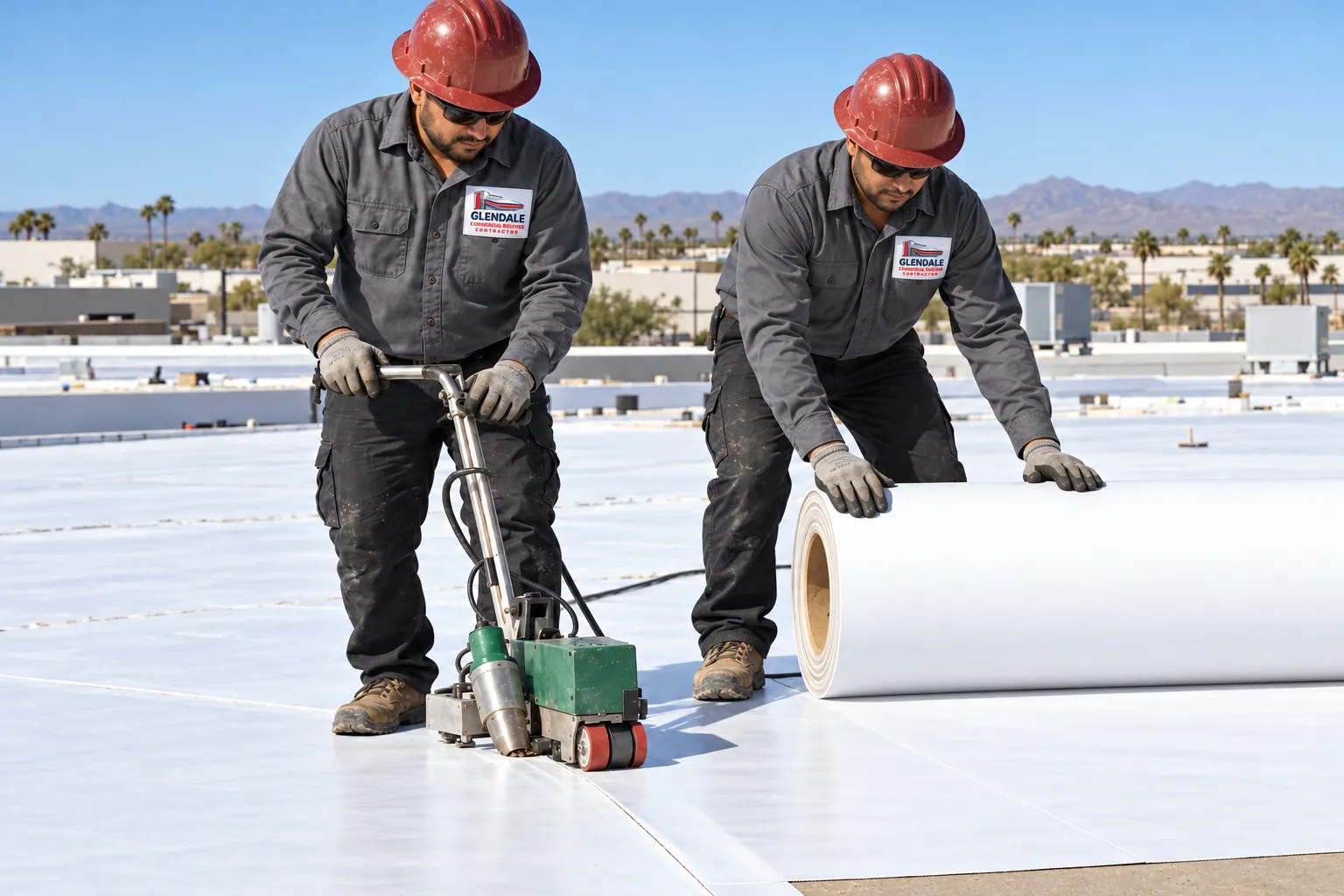
Two roofers heat-welding and unrolling white TPO membrane on a Glendale warehouse roof

Glendale, AZ · Commercial Roofing

Glendale Commercial Roofing Contractor

Leaking curbs, ponding, and storm-lifted edges on Glendale warehouses, shops, offices, and retail buildings, fixed by a commercial roofing contractor that installs TPO, EPDM, industrial, and metal roofs.

SystemsTPO · EPDM · Industrial · Metal
CoverageGlendale + 6 West Valley towns
  • Roof walked before any price
  • Core cuts show what is underneath
  • Work phased around your hours
  • Open sections sealed every evening

What Heat And Monsoon Storms Do Up There

Glendale roofs take months of triple-digit heat, then short storms that test every weak spot at once. These six problems show up most on the roofs we walk.

  • Cracked Sealant At Pipes And Curbs

    Mastic around pipe boots, pitch pans, and HVAC curbs dries out under daily heat. Hairline cracks open at the base of each penetration, and that is where most first leaks start on a low-slope roof.

  • Membrane Pulling At The Edges

    Shrinking membranes tug at perimeter edges and inside corners, lifting the sheet off the parapet or bridging it across the corner. That tension splits flashing and lets wind get under the edge metal.

  • Seam Stress On Dark Roofs

    Black EPDM and older dark roofs run hotter than white ones, so laps expand and contract harder every day. Seam tape and adhesive lose their grip first, usually at end laps and around drains.

  • Screws Backing Out Of Metal Panels

    Every hot afternoon and cool night moves metal panels a little. Exposed screws back out, rubber washers dry and crack, and water follows the threads into the building at the panel laps.

  • Half-Blocked Roof Drains

    Dust storms wash grit, palm fronds, and debris into roof drains and overflow scuppers. A drain that is half blocked sends rain sideways toward the lowest seam on the roof.

  • Edge Metal Peeled Back By Wind

    Straight-line winds from monsoon cells peel up loose edge metal and the membrane behind it. A lifted corner after one storm can turn into a torn section by the next, so it gets fastened early.

Matching The Roof To How The Building Is Used

Slope, rooftop traffic, what vents onto the roof, and how long you plan to own the building all point toward a system. Here is how they usually line up in Glendale.

Matching The Roof To How The Building Is Used
Building TypeCommon FitWhy It WorksWhere You See It In Glendale
Distribution warehouseTPOLarge flat area, reflective surface, welded seamsWarehouses along the Loop 101 corridor
Strip retail or restaurant padTPO or EPDMHandles HVAC curbs; EPDM tolerates grease vents with proper detailingRetail and hospitality around Westgate and the stadium
Office or medical buildingEPDM or TPOFlexible over older decks, quiet installsOlder downtown buildings and office parks
Manufacturing or process plantIndustrial membrane systemChosen for chemicals, heat, and heavy rooftop trafficLight industrial off Northern Avenue
Pre-engineered steel shopMetalLong service life, sheds water fastSteel shops across the city
Hangar or storage buildingMetalWide clear spans, low maintenanceBuildings near Glendale Municipal Airport

The inspection settles the system for your roof itself. The building type is where that conversation starts.

Four Systems, Four Different Build-Ups

Each system is a different build-up from the deck to the surface. The layers show what goes on your roof, and the lists show where each one earns its place.

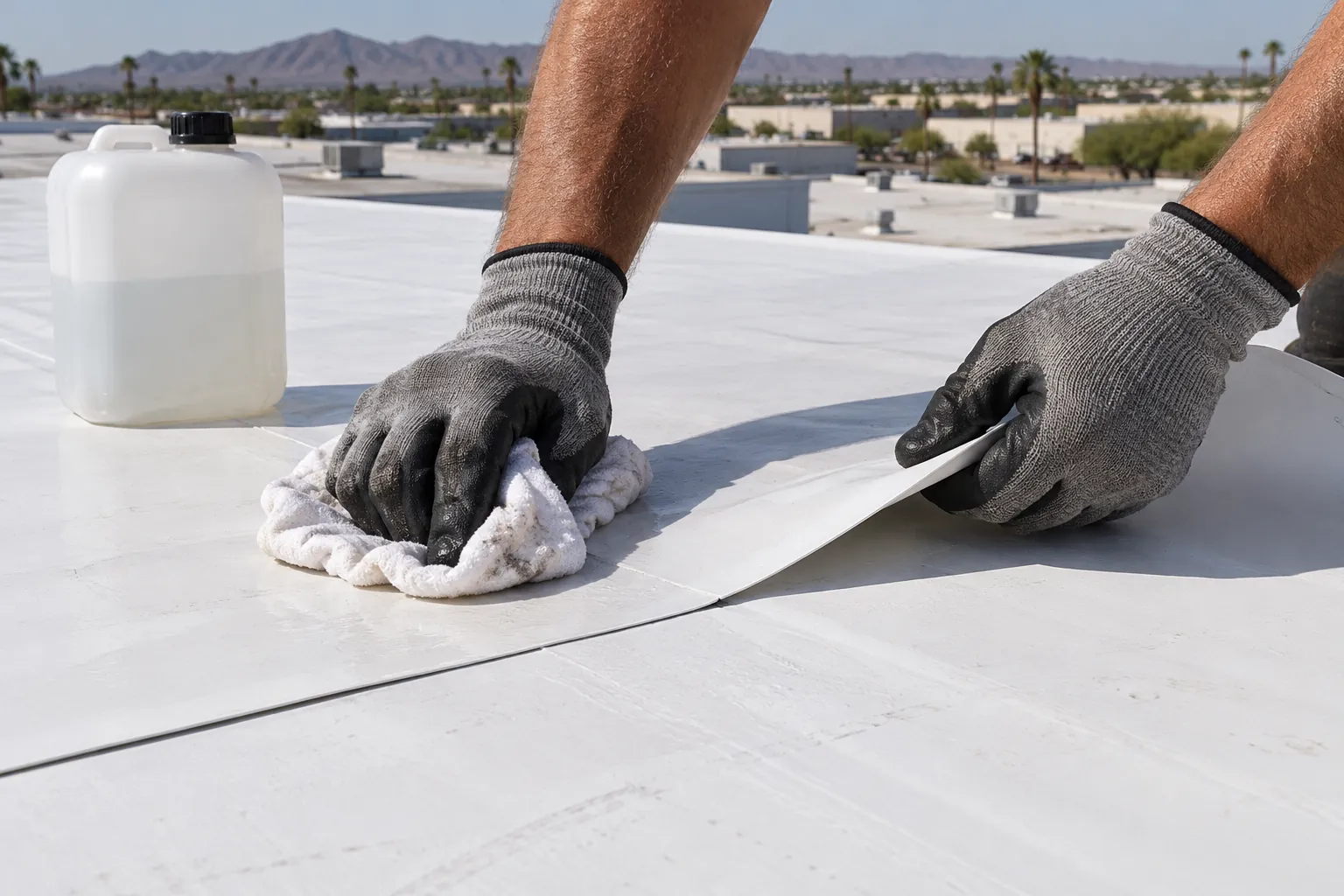
Gloved hands cleaning a white TPO lap before the seam is welded

TPO Roofing

Typical layers, top to bottom
  1. White TPO membrane, heat-welded seams
  2. Cover board
  3. Polyiso insulation
  4. Steel or concrete deck

Wide white sheets welded with hot air leave fewer seams on big warehouse and retail roofs, and the reflective surface keeps more summer heat out of the deck.

Best For
  • Distribution and big-box roofs
  • Roofs with long open runs
Check First
  • Foot traffic paths to HVAC units
  • Wet insulation under the old roof
TPO roofing in Glendale
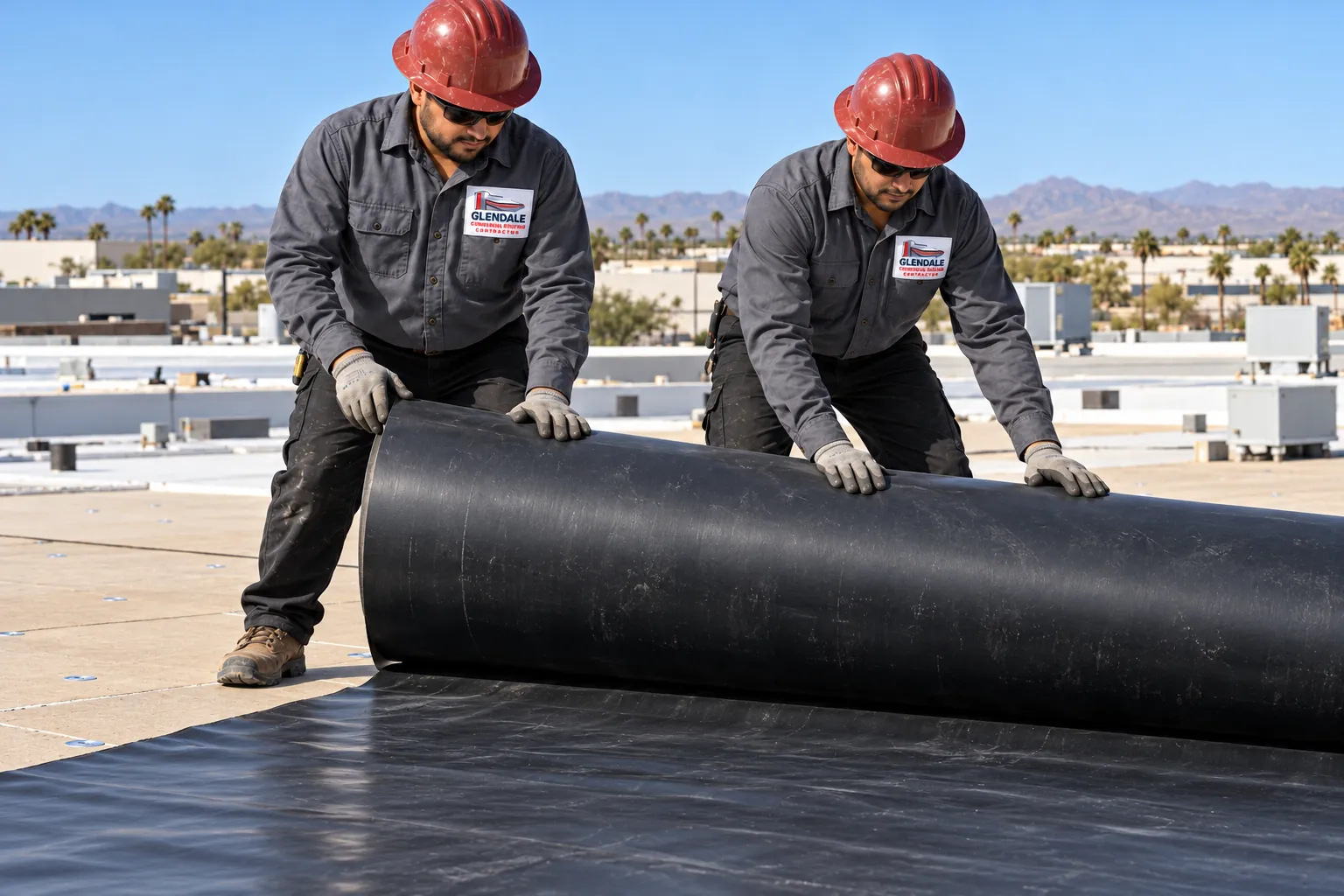
Two roofers unrolling a black EPDM sheet over cover board on a flat commercial roof

EPDM Roofing

Typical layers, top to bottom
  1. Black or white-topped EPDM, taped seams
  2. Cover board
  3. Insulation
  4. Deck

This rubber sheet stays pliable through big temperature swings, so it fits roofs that move, irregular older decks, and roofs crowded with pipes and curbs.

Best For
  • Office and medical buildings
  • Existing EPDM roofs needing new sections
Check First
  • Heat load on a black sheet
  • Seam tape age on older laps
EPDM roof installation and repair
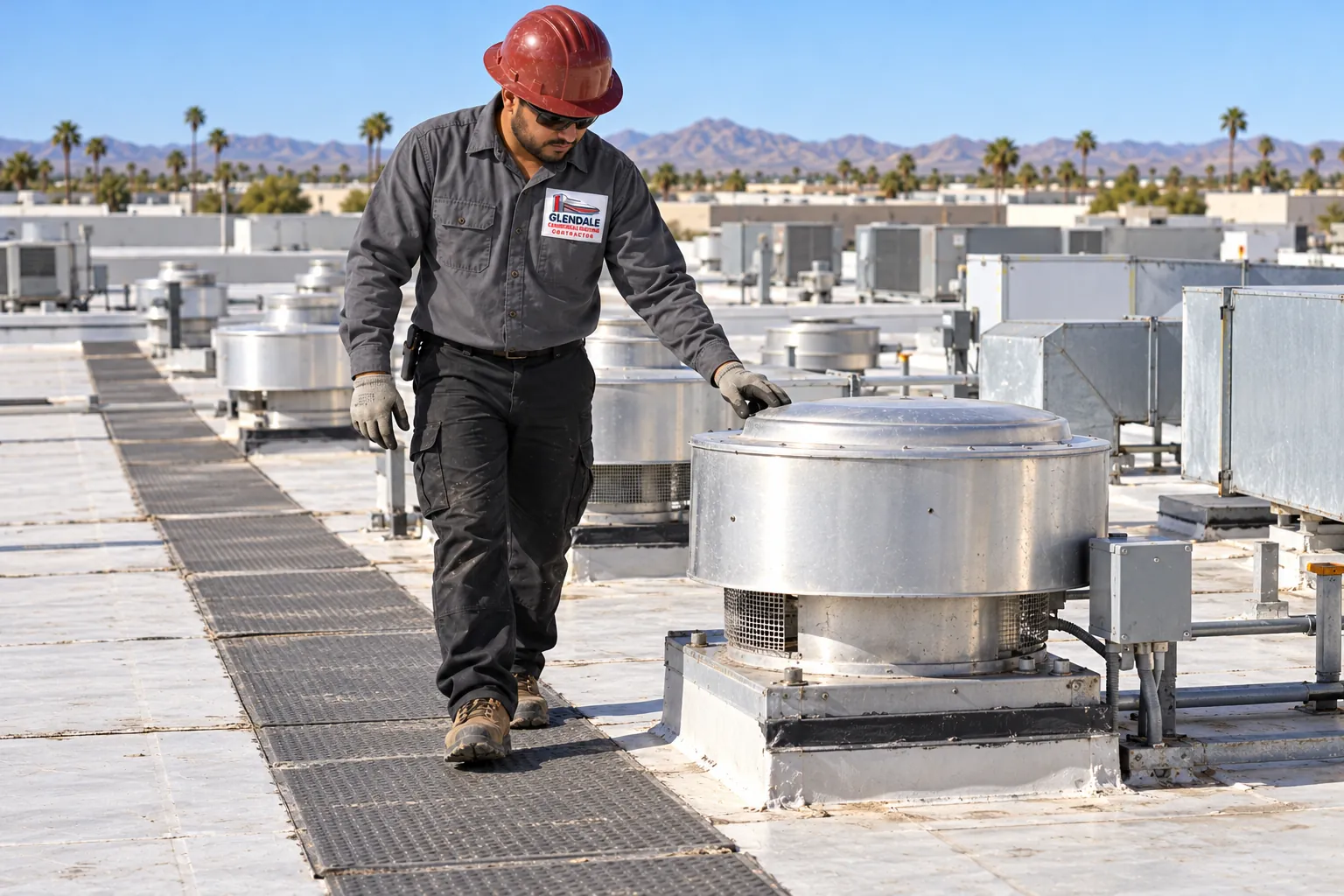
Roofer walking a walk-pad path past exhaust fans and ductwork on an industrial roof

Industrial Roofing

Typical layers, top to bottom
  1. Walk pads on equipment paths
  2. Membrane matched to the exhaust
  3. Cover board
  4. Tapered insulation to drains
  5. Deck

Plants, distribution centers, and cold storage carry heavy rooftop units, process exhaust, and wide spans where a small slope error holds water across a large area.

Best For
  • Plants with process vents
  • Roofs carrying heavy equipment
Check First
  • Oils or chemicals landing on the membrane
  • Production shutdown windows
industrial roofing for plants and warehouses
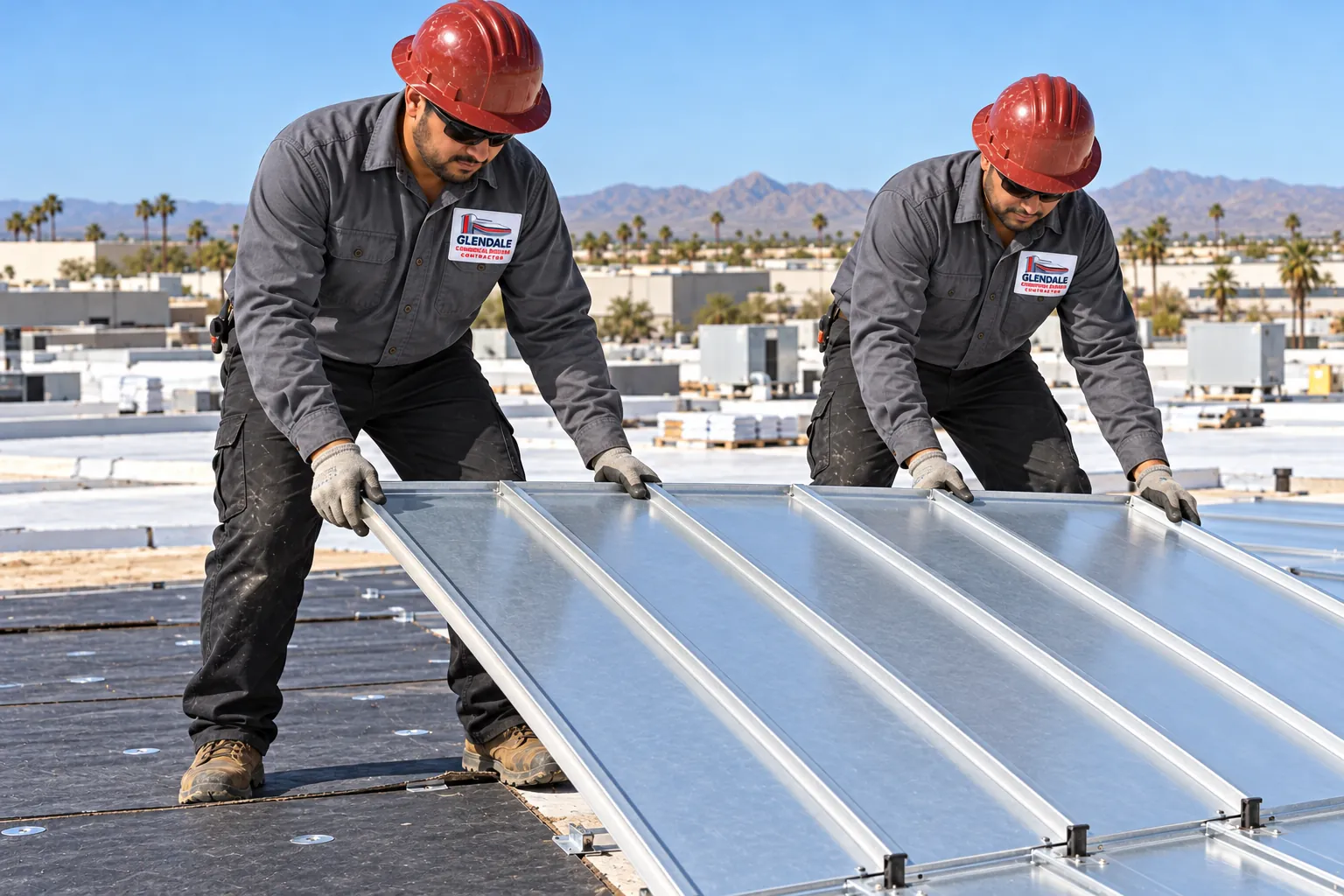
Two roofers setting a standing-seam metal panel on a low-slope commercial roof

Commercial Metal Roofing

Typical layers, top to bottom
  1. Standing-seam or ribbed panels
  2. Clips or exposed fasteners
  3. Insulation and underlayment
  4. Purlins

Pre-engineered steel buildings, hangar-style structures, and sloped retail sections shed monsoon rain fast, and a reflective finish keeps panels cooler in full sun.

Best For
  • Steel shops and hangars
  • Sloped roof sections
Check First
  • Backed-out screws at panel laps
  • Rust at trim and transitions
commercial metal roofing in Glendale

Drip Showing Up Over The Shop Floor?

Call and tell us where the ceiling stain is and what sits on the roof above it. We walk that section first.

From Roof Walk To Handover

Five steps, from the first walk to the last cleanup. Some happen on the roof and some around your building, so both lanes matter.

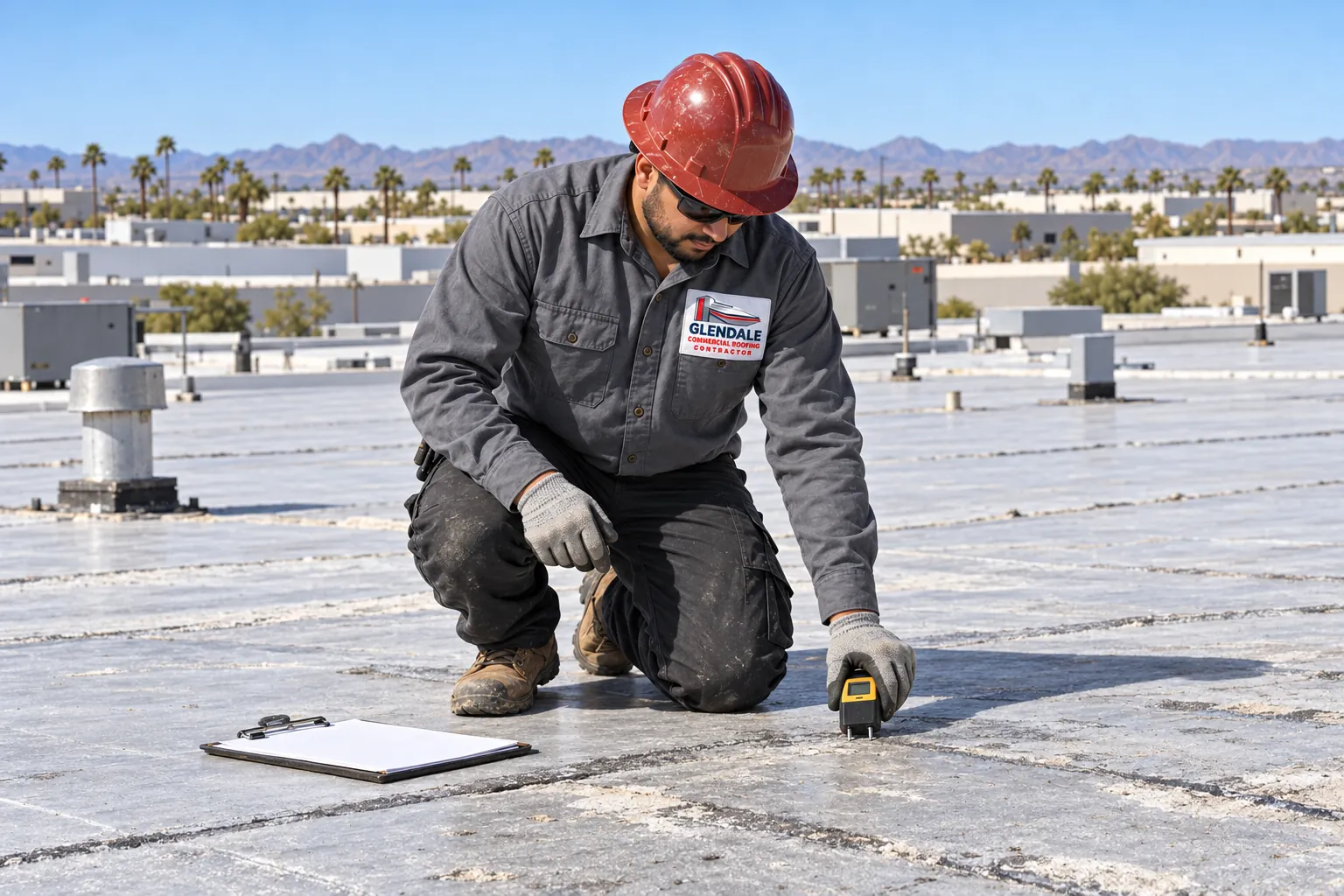
Roofer pressing a moisture meter against a worn low-slope membrane during a roof inspection
Two roofers walking a light-colored membrane roof, one kneeling to check a seam
On The RoofAround The Building
  1. On The Roof

    Step 1: Inspect Your Roof

    We walk the whole roof, take moisture readings, and cut cores where readings run high. You get photos of seams, flashings, drains, and any wet insulation we find.

  2. Around The Building

    Step 2: Decide What The Roof Needs

    Repair, recover, or tear-off is decided from what the cores show. Pricing is broken out by roof section, so you can see what each part of the roof costs.

  3. Around The Building

    Step 3: Plan Around Your Operation

    Staging, crane spots, and work hours are set to keep loading docks and parking open. On event days near the stadium and Westgate, deliveries are moved to quieter days.

  4. On The Roof

    Step 4: Build It One Section At A Time

    Old roofing comes off one section at a time, then insulation, cover board, and the new membrane or panels follow. Each open section is sealed before the crew leaves.

  5. On The Roof

    Step 5: Seam Check And Handover

    Welded seams are probed, flashings and drains are checked, and debris comes off the roof. You walk the completed sections with us and get photos for your records.

Where You Will See The Difference

Each benefit shows up on a specific part of the roof, so you can check it on your own building.

  • A Cooler Deck

    White TPO or white-topped EPDM reflects more sun than a dark roof, which keeps the deck and the top of the insulation cooler through Glendale summers.

    Deck
  • Fewer Seams To Fail

    Wide TPO sheets and long metal panels cut the number of laps on a big roof. Fewer laps leaves fewer places for monsoon rain to find a way in.

    Seams
  • Protected Paths To Equipment

    Walk pads and heavier membrane along technician routes keep boots and dropped tools from wearing through the roof around rooftop units.

    Curbs
  • Rain Headed For The Outlets

    Tapered insulation and cleared drains move water toward the outlets, so ponding rings stop forming where seams and the deck take the strain.

    Drains
  • Edges That Stay Down

    New edge metal fastened at the spacing the system calls for holds the perimeter when straight-line winds hit the building.

    Edges
  • Known Insulation Condition

    Core cuts and moisture readings show which areas hold wet insulation and which are dry, so the next repair or reroof is budgeted instead of rushed.

    Insulation

Glendale Commercial Roofing Contractor Coverage Up Grand Avenue

Six towns sit along or near Grand Avenue (US 60) northwest of Glendale. Each has its own permit office or county rules, and its own mix of buildings.

Drive-line ladder along Grand Avenue (US 60) from Glendale northwest to Sun City West, not to scaleGRAND AVENUE (US 60)LOOP 303GLENDALEPeoria both sidesYoungtownSun CityEl MirageSurprise both sidesSun City WestNORTHWESTNot to scaleSOUTHWEST SIDENORTHEAST SIDE
  1. Peoria

    Restaurant pads and open-air centers along Loop 101 and around P83, where grease exhaust and dinner service shape the roof plan.

  2. Youngtown

    Health-care and senior-living buildings along Grand and Olive Avenues, where adhesive odor and rooftop air intakes need careful timing.

  3. Sun City

    Commercial buildings from the community's first decades, often with layered older roofs. Permits come from Maricopa County.

  4. El Mirage

    Fabrication, precast, and aggregate operations off Loop 303, where abrasive dust wears membranes and packs drains.

  5. Surprise

    Newer centers and industrial buildings, many still under a membrane maker's warranty that sets the repair rules.

  6. Sun City West

    Recreation centers and shared buildings run by a governing board that wants photos and core results before it approves work.

Answers About Glendale Roofs

Heat, roof systems, and work days, in a few sentences each.

How hard is Glendale's heat on a commercial roof?

Heat does more long-term damage here than anything else. Summer highs regularly top 100°F, and the roof surface runs far hotter than the air, which ages membranes, sealants, and flashings faster. Reflective membranes, solid insulation, and a sealant check every spring slow that wear.

What should I check after a monsoon storm?

Start at the drains and scuppers, since dust and debris wash into them first. Then walk the edges for lifted metal and the field for punctures or new ponding. Ceiling stains that show up a day later usually trace back to one of those three spots.

Get A Straight Answer On Your Roof

Send the address and the spot where water shows up. We walk the roof and explain what it needs, section by section.

Call (623) 310-0165