EPDM Roofing
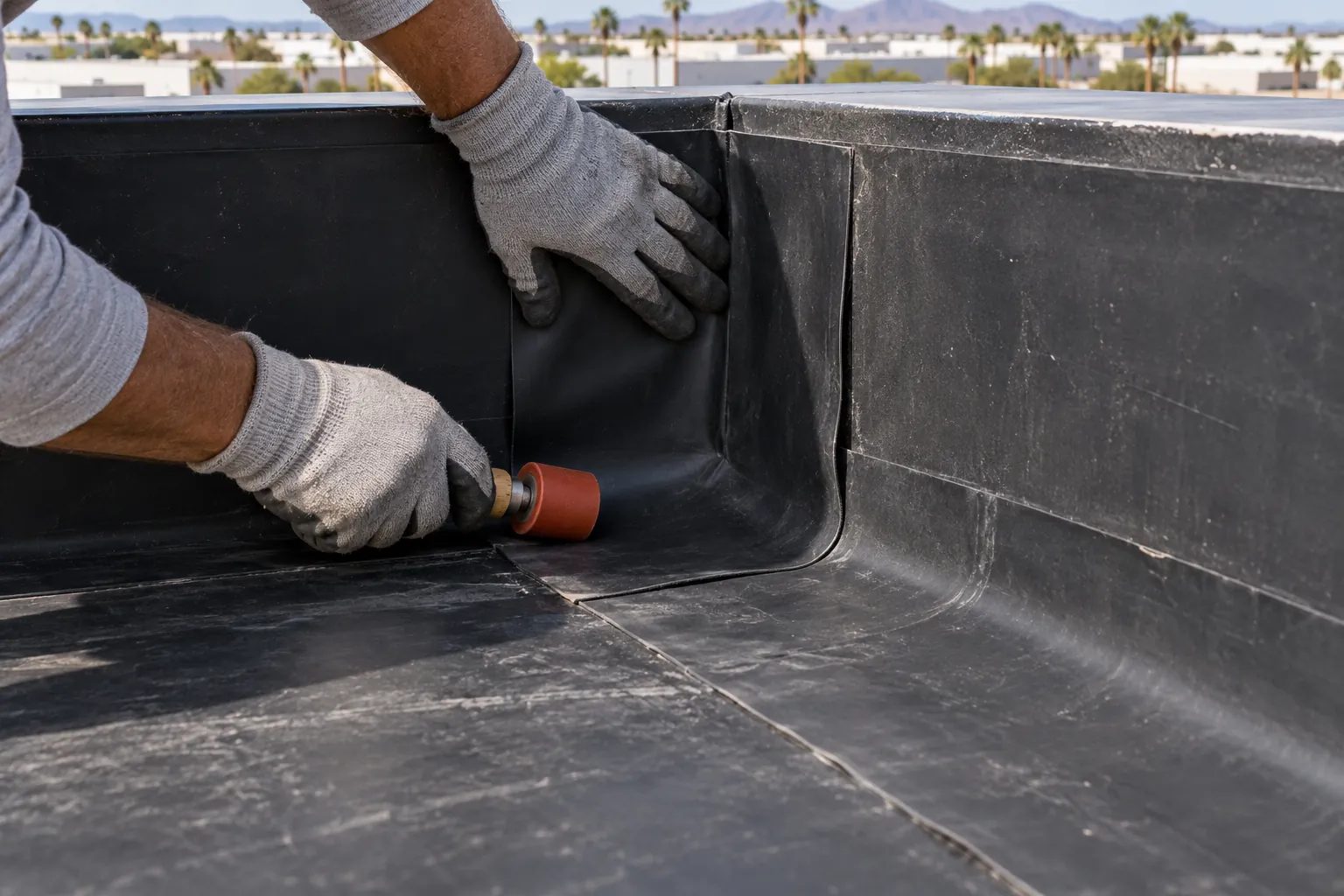
EPDM handles grease vents better than many sheets when it is detailed correctly, and it wraps the crowded curbs on kitchen roofs where hoods, makeup air, and HVAC share a small deck.
EPDM roofing details
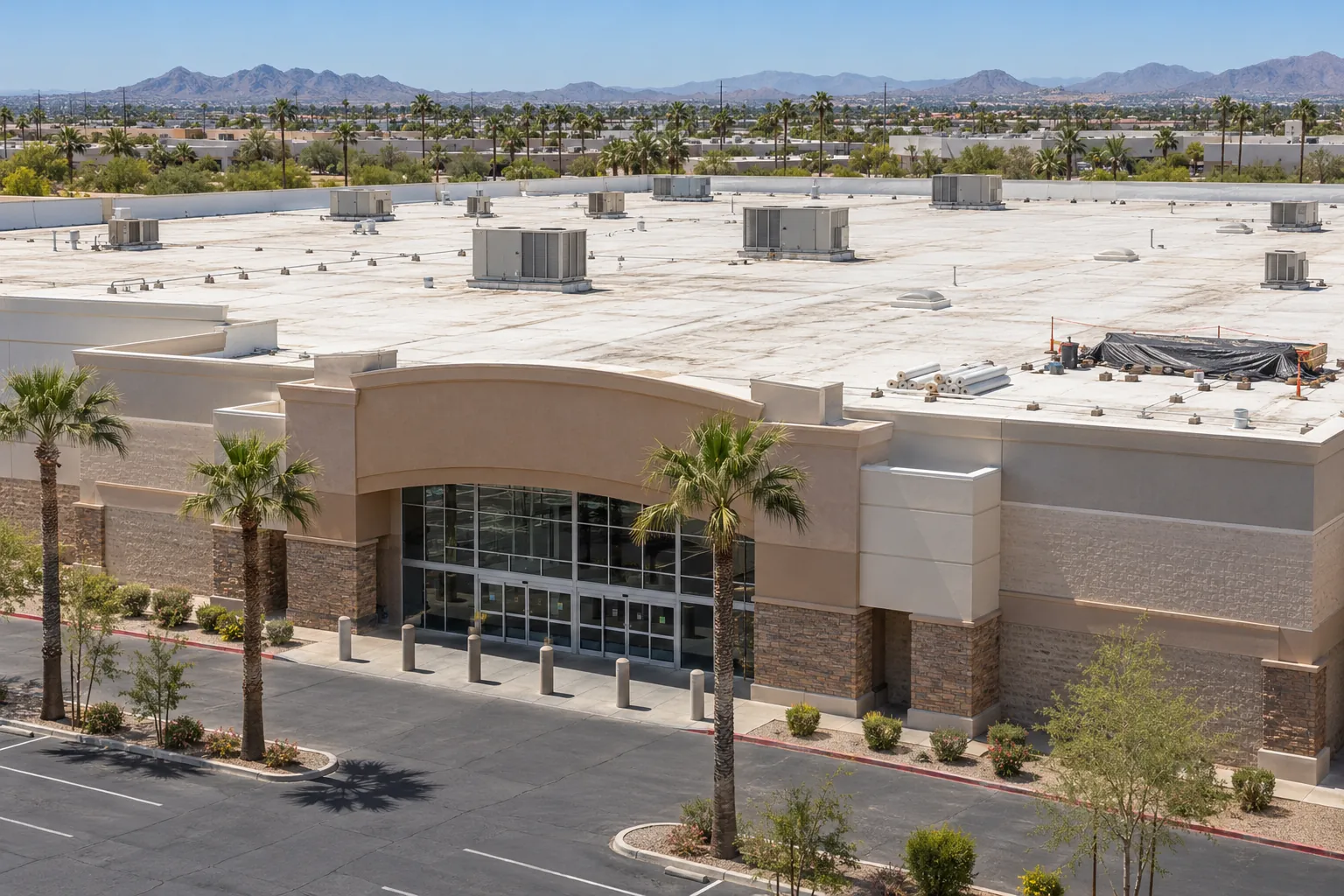
Restaurant pads, open-air centers, and retail roofs in Peoria, handled by a commercial roofing contractor that starts at the grease-fan curbs and kitchen exhaust.
Kitchen exhaust changes how a roof ages, so restaurant pads get their own plan.
Peoria's Park West center at Loop 101 and Northern Avenue and the P83 district by the Peoria Sports Complex both hold restaurant pads and retail. Grease from kitchen exhaust fans settles on the roof around each fan, and some membranes soften when it sits there.
We start at the fans: the containment at each curb, the membrane within a few feet of it, and the drains downhill that collect the runoff.
Six things we look for first on a pad building.
Residue spreads in a ring around each exhaust fan. On the wrong membrane it softens the sheet, and walking on it tears the surface. Containment trays and a cleaning routine stop the ring from growing between visits.
Grease and dust run downhill into drains and harden there. Slow drains leave water standing near the busiest part of the roof. Screens on those drains, cleaned with the hood service, keep the outlets open through monsoon season.
Kitchen hoods, makeup air units, and HVAC get serviced often. Technician paths wear the membrane thin between the hatch and each unit. Walk pads along those routes take the wear and protect the sheet around each curb.
Storefront parapets carry signs and lighting brackets through the flashing. Every bracket hole is a place water can get behind the wall. New counterflashing and sealed bracket bases close those openings without moving the signs.
Pad buildings change tenants, and each one leaves its own repairs. Layered patches around old curb openings hide wet insulation. Cores at old patch areas show whether the insulation under them is wet or dry.
Old exhaust openings capped with plywood or loose sheet metal leak as they weather. They get cut out, decked, and flashed properly. A proper curb or a decked-over opening ends the slow leak for good.
Four results Peoria restaurant and retail owners can check on their own roof.
Containment at each fan keeps residue in a tray you can clean, so it stops spreading across the membrane. The tray empties on the same visit as the hood cleaning.
EPDM detailing or TPO with containment near the kitchen keeps the membrane from softening where grease lands. The right membrane near the fans lasts as long as the rest of the roof.
Morning work windows wrap up before lunch prep, so kitchens keep running while the roof gets fixed. Noisy steps finish before the first customers arrive.
Cleared and screened drains below the kitchen stop grease and dust from backing water up on the roof. Screens and a cleaning schedule keep the roof drains open between storms.
Two systems cover most pad and retail roofs in Peoria.
EPDM handles grease vents better than many sheets when it is detailed correctly, and it wraps the crowded curbs on kitchen roofs where hoods, makeup air, and HVAC share a small deck.
EPDM roofing details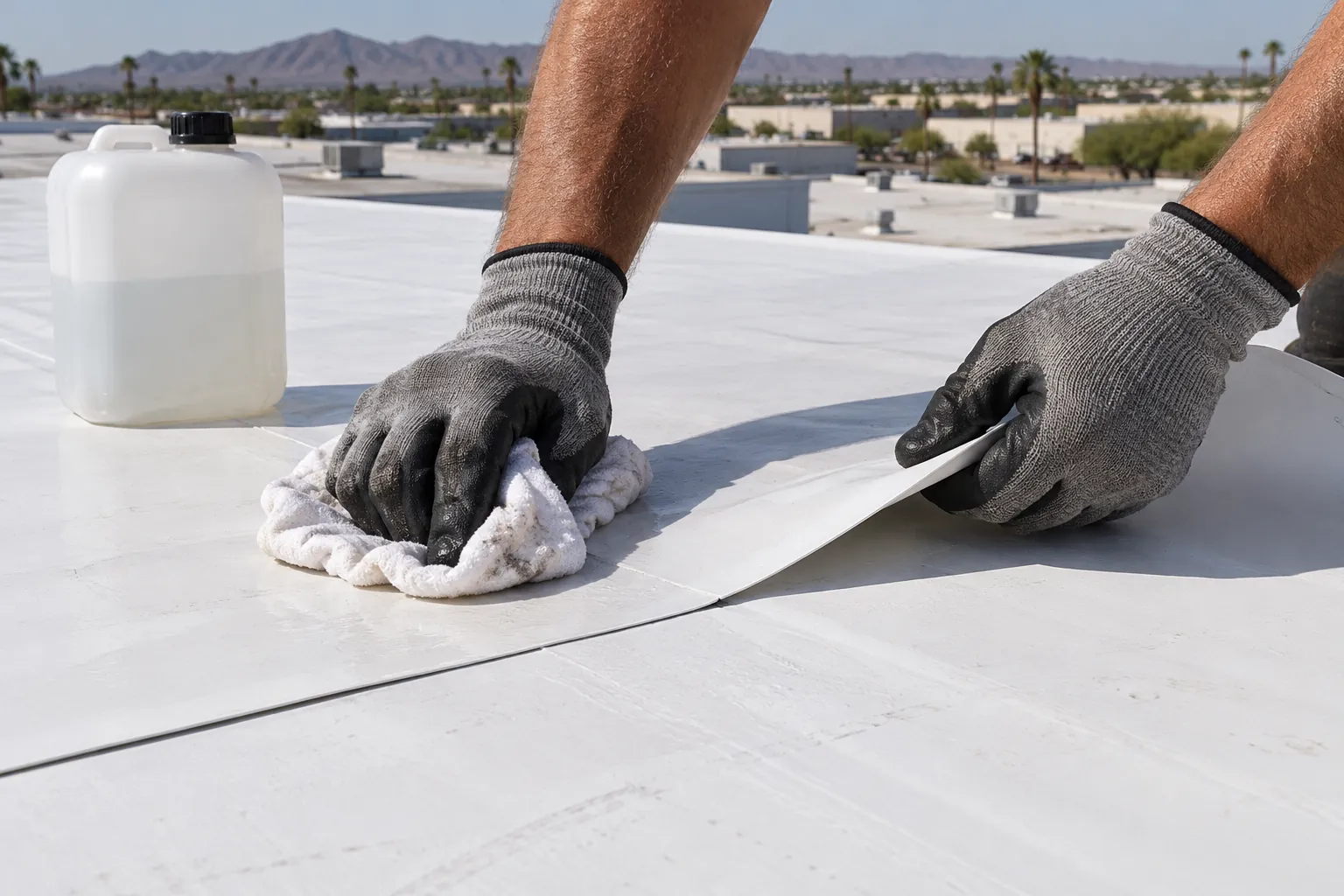
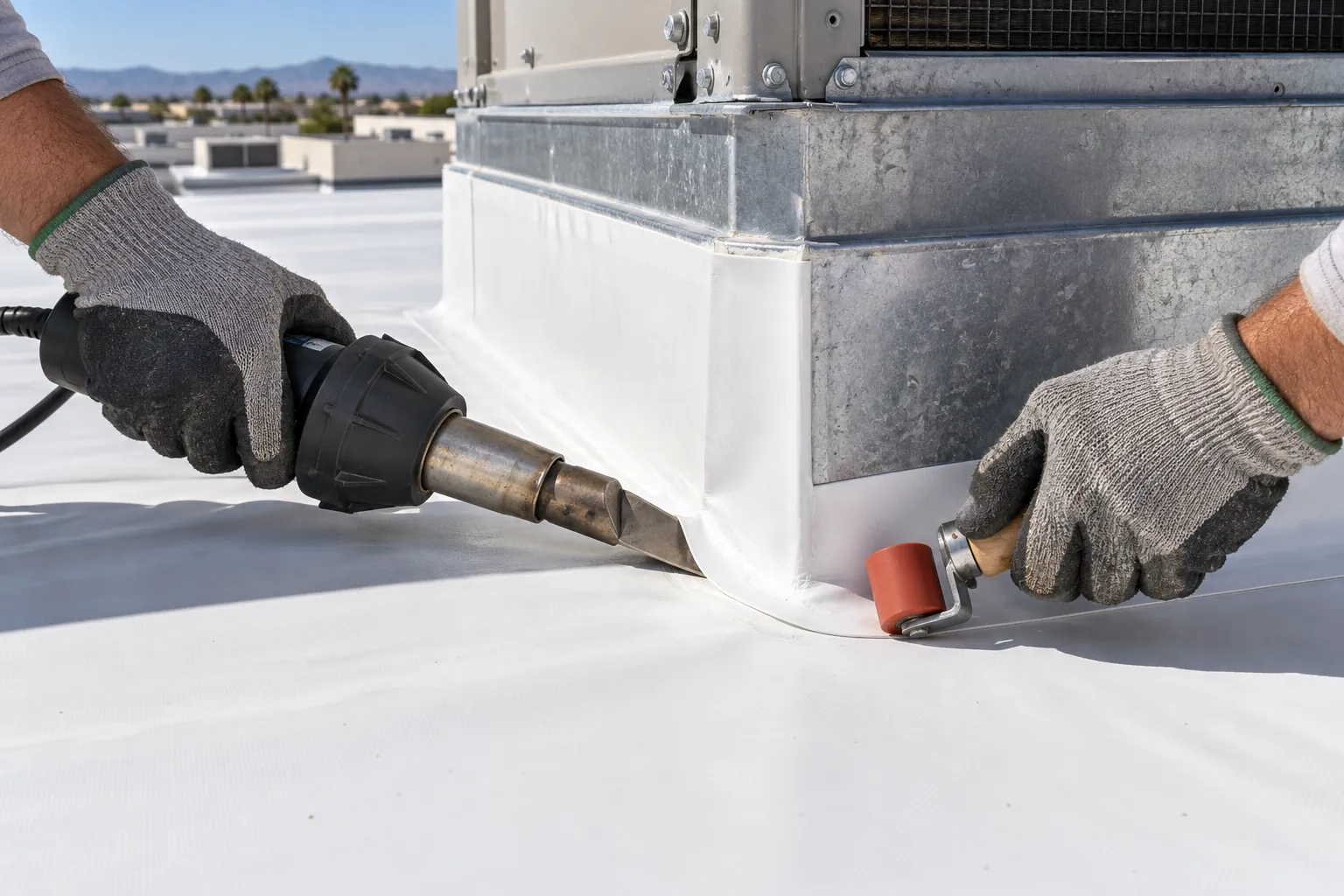
A white TPO sheet with containment at each fan works on larger retail roofs with long open runs, and its welded seams hold up to the rooftop traffic of a busy center.
TPO roofing detailsCall with the restaurant's location and how many exhaust fans it runs. We check the containment at each fan and the membrane around it.
The kitchen sets the schedule. Two of the five steps are about working around it.
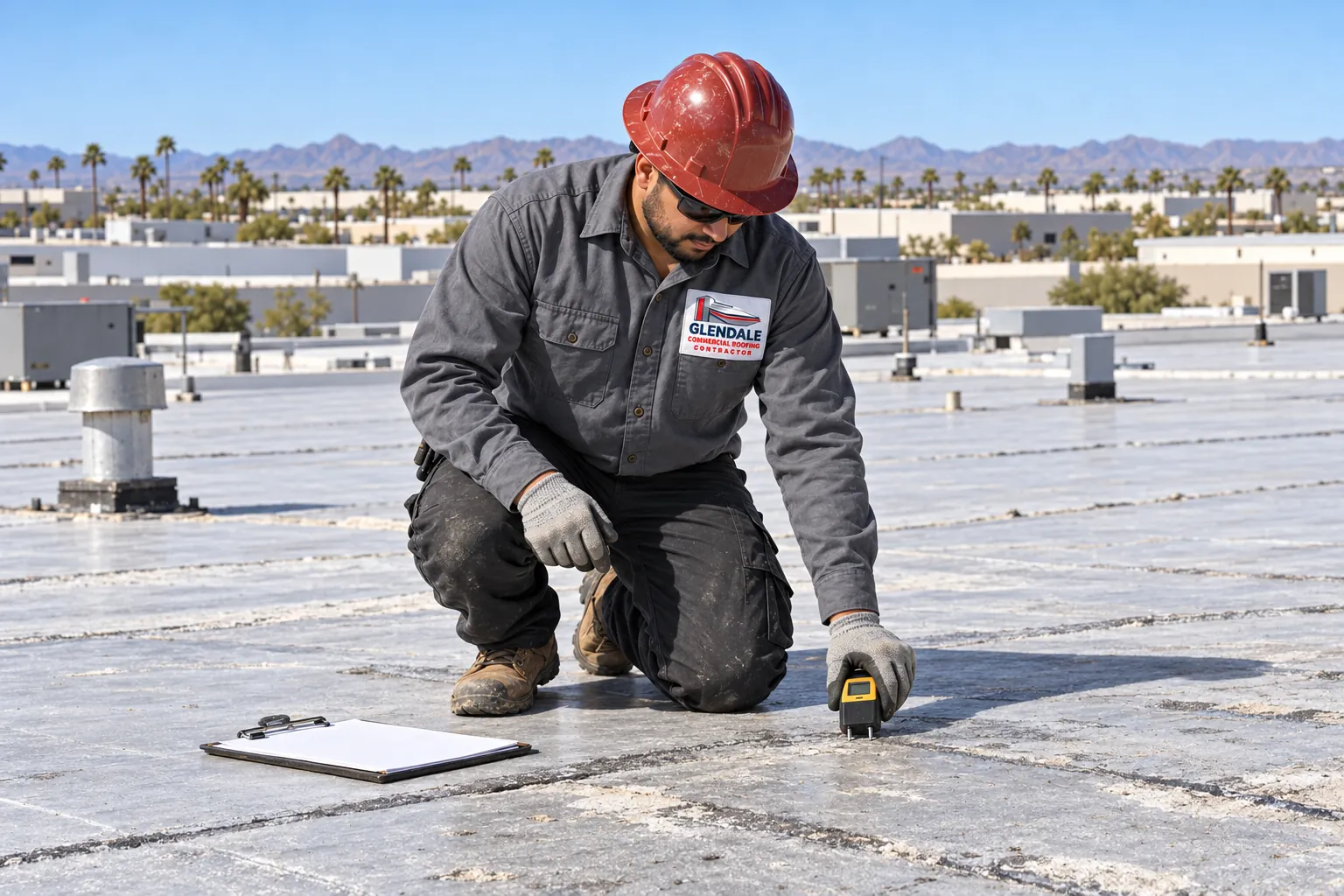
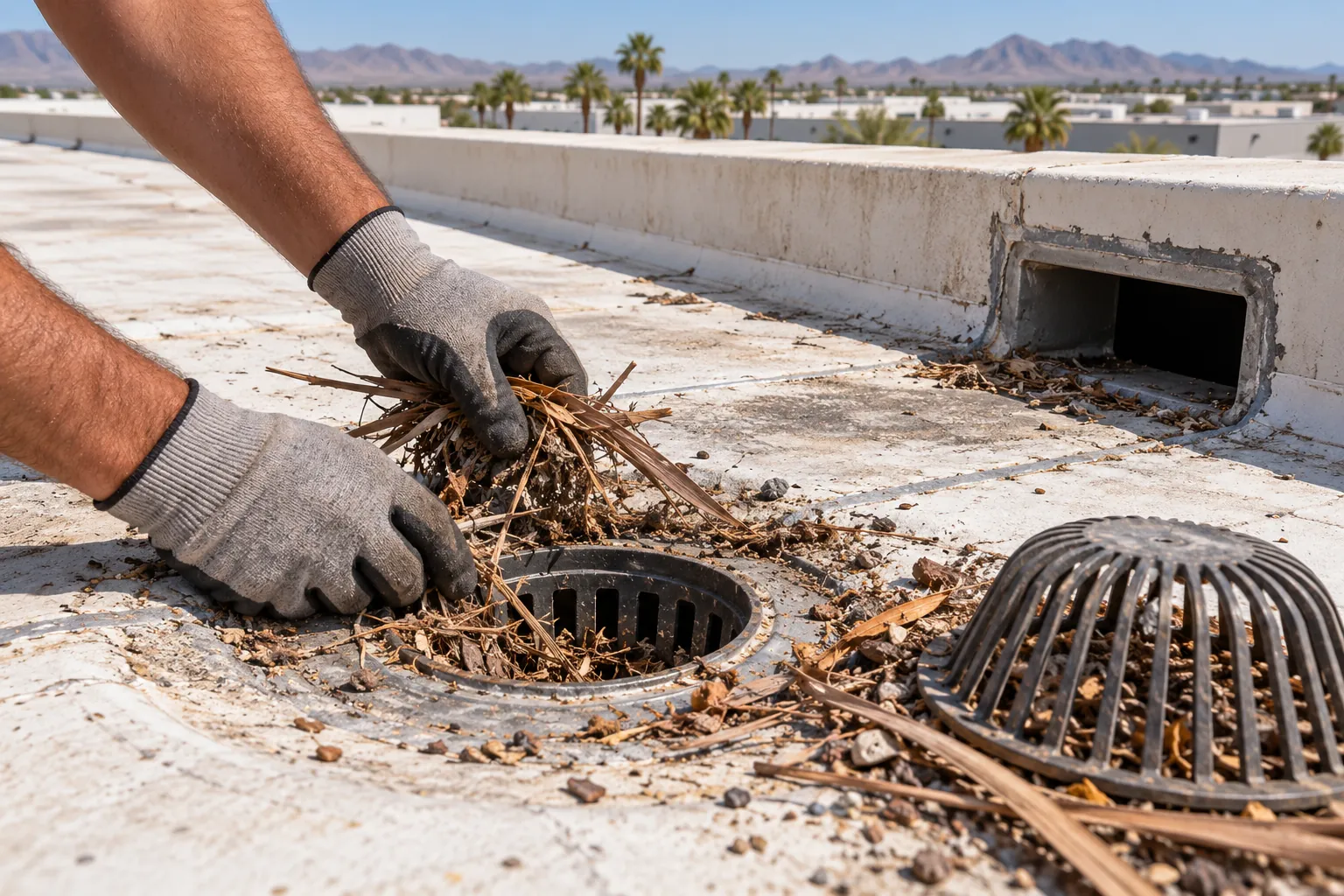
We check every exhaust fan curb and its containment, probe the membrane around it, and look for soft or swollen sheet. Drains below the kitchen get opened and checked. Old capped openings get noted too.
Service hours, delivery times, and the hood cleaners' visits are set with the tenant, so roof work stays clear of the kitchen's busiest hours. Patio and drive-through lanes stay open.
Fans and makeup air units are shut down only while their curbs are flashed, with the kitchen's own contractor on the same schedule. The curb gets new flashing before restart.
Grease-damaged sheet is cut out, new membrane suited to the exposure goes in, and containment trays are set at each fan curb. Drains below get new screens.
Drains are cleared of grease and dust, debris comes off the roof, and you get photos of each fan, curb, and patch. The tray cleaning routine is written down for staff.
Peoria borders Glendale; these towns sit farther up Grand Avenue.
Restaurant roofs, open-for-business work, and Peoria permits.
Grease from exhaust fans settles around each fan and runs toward the drains. Some membranes soften or swell under it, and the residue makes the surface slick and hard to repair until it is cleaned off.
Both can work. EPDM handles grease better than many sheets when it is detailed correctly, and TPO works with containment at each fan. The number of fans and the roof size usually decide it.
Empty and clean it whenever the hood cleaners service the exhaust, and check it at every roof inspection. A full tray spills onto the membrane during the next heavy rain.
In most cases, yes. Work runs in sections with daily dry-in, summer work starts early, and staging keeps the parking lot and entrances clear. Odor and noise days are planned around service, and rooftop equipment gets only brief shutdowns.
Patios near the work area are kept clear of debris paths, and material is lifted from the side of the building away from diners whenever the lot allows.
Yes. A center with several pads or suites can be done in phases, tenant by tenant, with notice to each one before their section opens.
The City of Peoria handles building permits through its development services portal. Whether a reroof needs one depends on the scope, so we check with the city for each project.
Yes. Peoria's commercial buildings run from Old Town on Grand Avenue up to the Loop 101 and P83 areas, and our coverage includes all of them.
Send the address and how many exhaust fans are on the roof. We walk it and price the work around your service hours.
Leave a name and number and we will call you back about the roof.
Or call now: (623) 310-0165