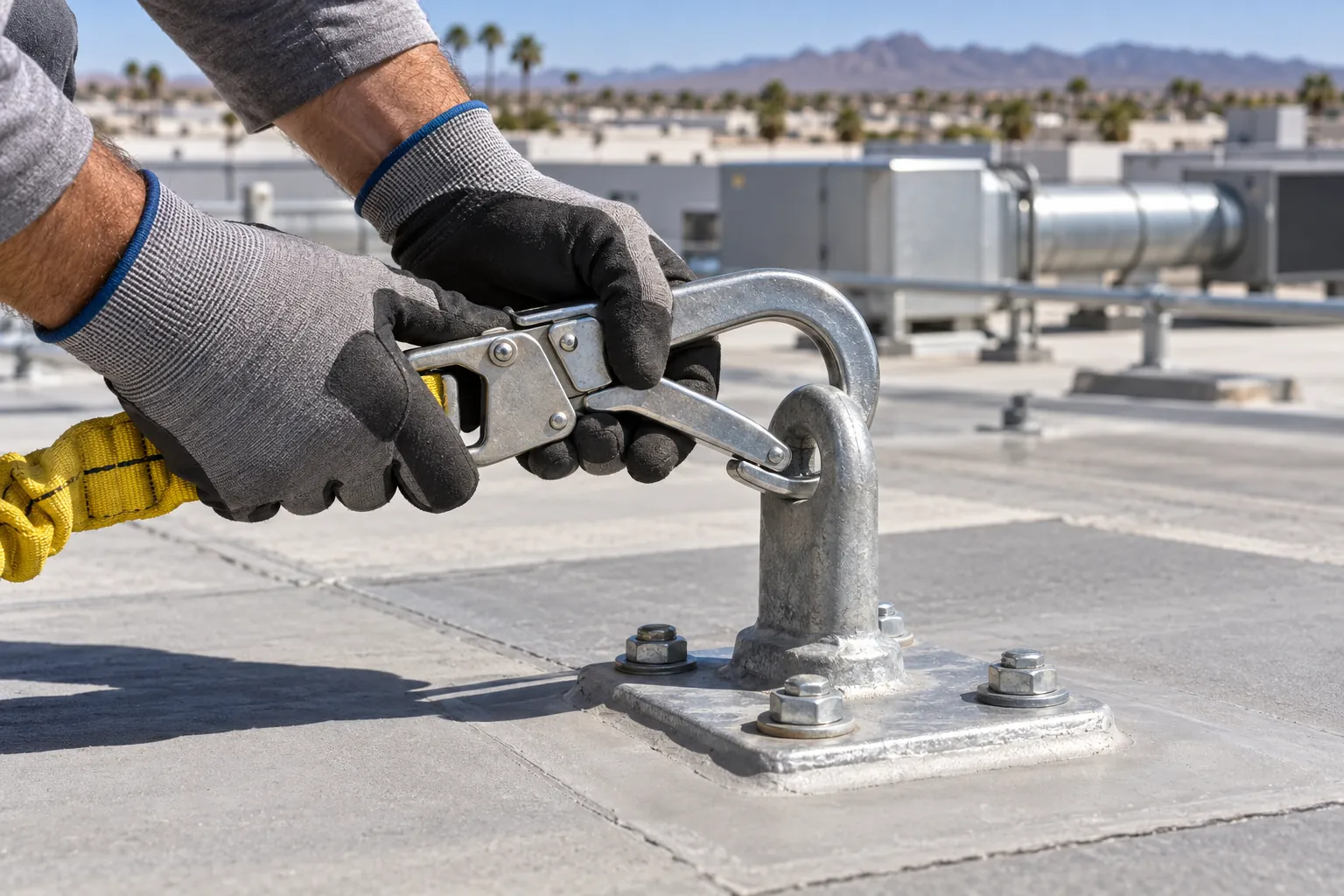
Industrial Roofing
Process vents, heavy traffic, and wide spans on park buildings call for an industrial membrane system with walk pads and containment at the vents.
Industrial roofing details
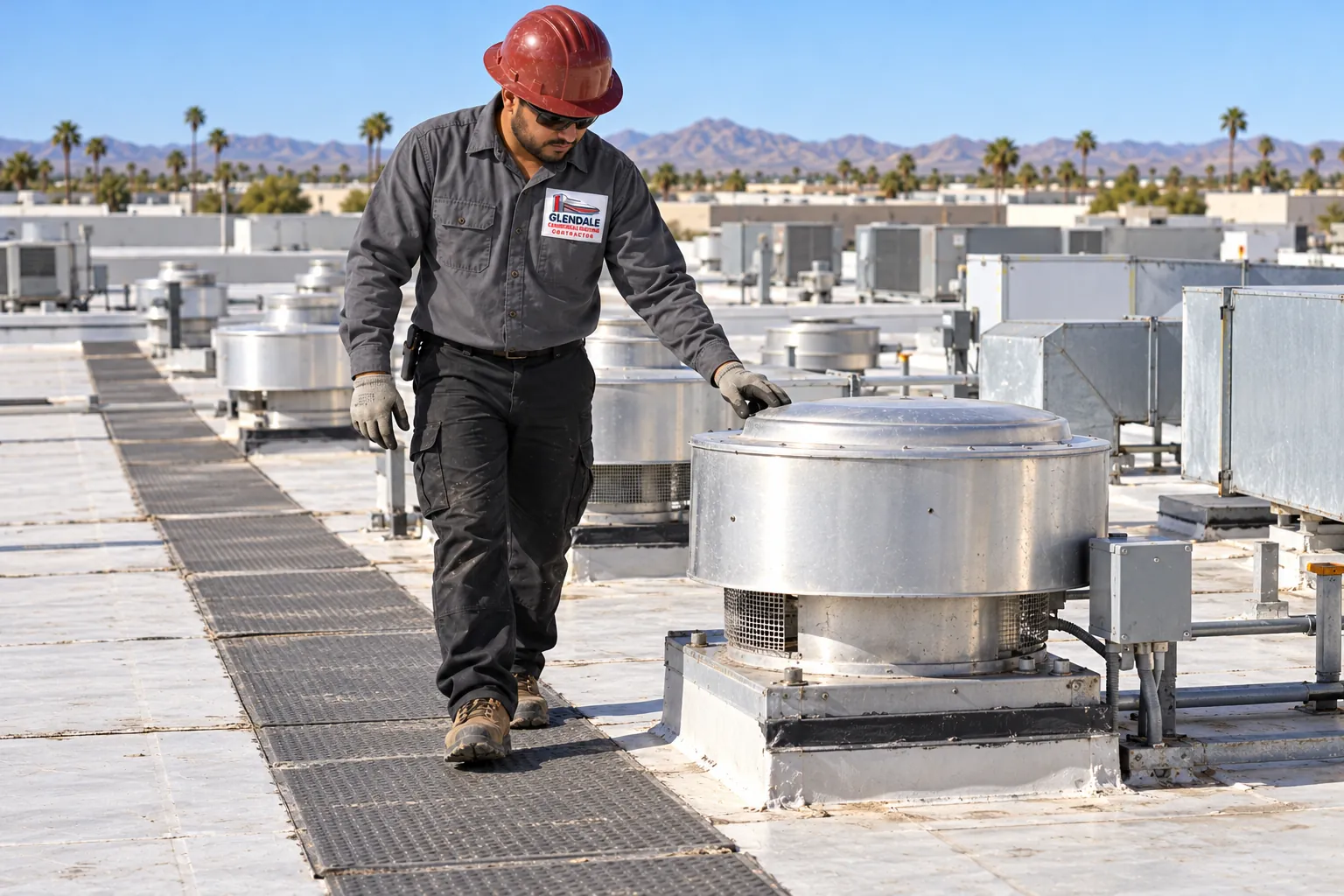
Fabrication shops, precast plants, and yard buildings off Loop 303, roofed and repaired by an El Mirage commercial roofing contractor that plans for dust and grit.
Heavy industry puts abrasive dust on every roof nearby, and that changes the maintenance plan.
El Mirage's commerce and industry park, reached from Loop 303, holds a 1,600-acre Foreign Trade Zone and employers in fabrication, precast concrete, and aggregate work. Those operations put fine abrasive dust in the air, and much of it lands on roofs.
That grit scours membrane under foot traffic and packs into drains and scuppers. Monsoon dust storms add more on top of it.
Dust and heavy use show up at these six spots.
Grit carried up on boots grinds into the sheet along service paths. The top layer wears away until the scrim or reinforcement shows. Walk pads laid along those routes take the grinding instead of the membrane.
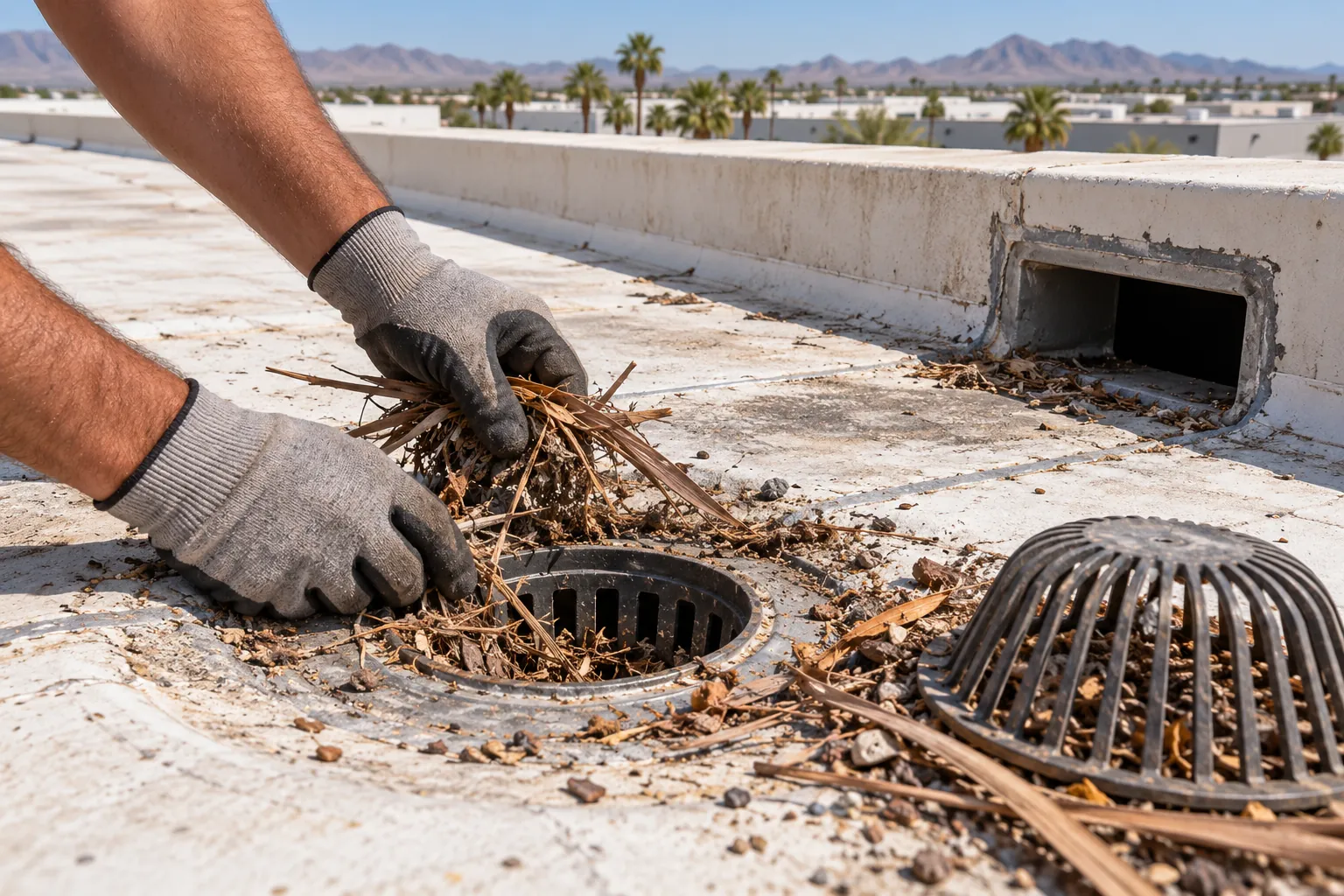
Fine dust settles into drains and hardens after rain, choking the outlet. Water then backs up across the roof. A drain screen and a cleaning schedule matched to the dusty months keep them flowing.
Metal shop buildings with gutters fill them with dust and debris, which overflows behind the fascia during a storm. Clearing and refastening gutters keeps storm water in front of the wall where it belongs.
Exposed screws on metal shop roofs lose their washers to heat and grit, and leaks start at the panel laps. New fasteners with fresh washers close those laps again.
Dust piles up against equipment curbs and holds moisture there, rusting the curb base and aging the flashing faster. Clearing the dust and reflashing the curb stops the rust before it eats through.
Vents from fabrication and finishing leave residue that holds dust and stains the membrane around them. Cleaning around them during each inspection keeps the residue from building up.
What changes on a dusty industrial roof once it is repaired and set up for the conditions.
Walk pads on service routes take the scouring, so the membrane under them stays intact. Pads cost far less than a new membrane on a worn route.
Cleared drains with screens and a cleaning schedule keep fines from closing them between storms. Water leaves the roof before it can soak a seam.
New fasteners and washers at the panel laps stop the slow leaks that start on dusty metal roofs. The shop floor below stays dry through the summer storms.
Curbs cleared and reflashed shed water instead of holding wet dust against the steel. The steel at the base of each unit lasts longer.
Two systems cover most buildings in the El Mirage industrial park.
Process vents, heavy traffic, and wide spans on park buildings call for an industrial membrane system with walk pads and containment at the vents.
Industrial roofing details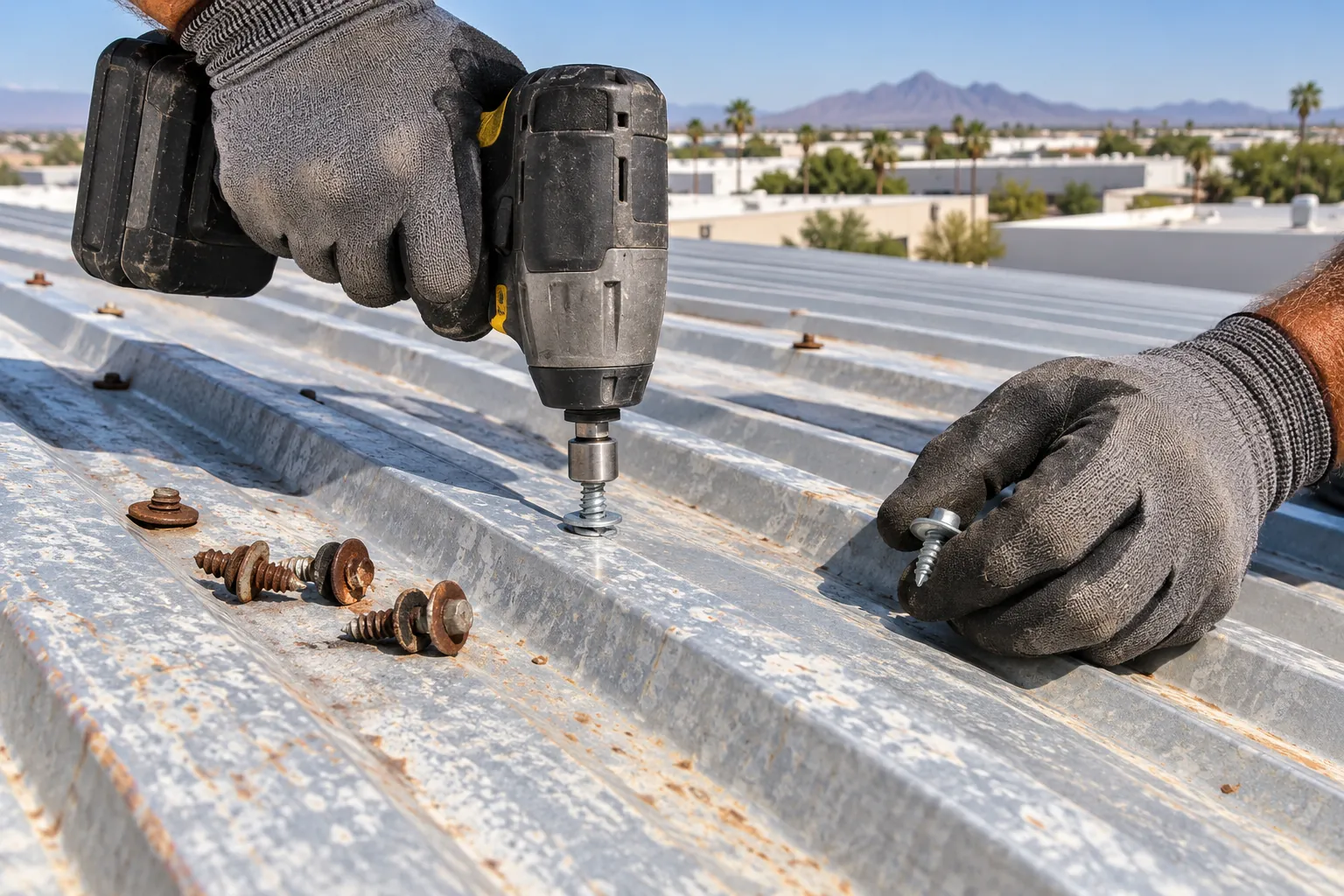
Fabrication shops with metal roofs get fastener replacement, lap sealing, or a retrofit when panels are worn out, plus gutter work where dust collects.
Metal roofing detailsCall and tell us which side of the roof holds water. We clear the drains, check the membrane, and find where the water got in.
Shifts and yard traffic decide the timing. The roof work ends with a cleaning plan for the dusty months.
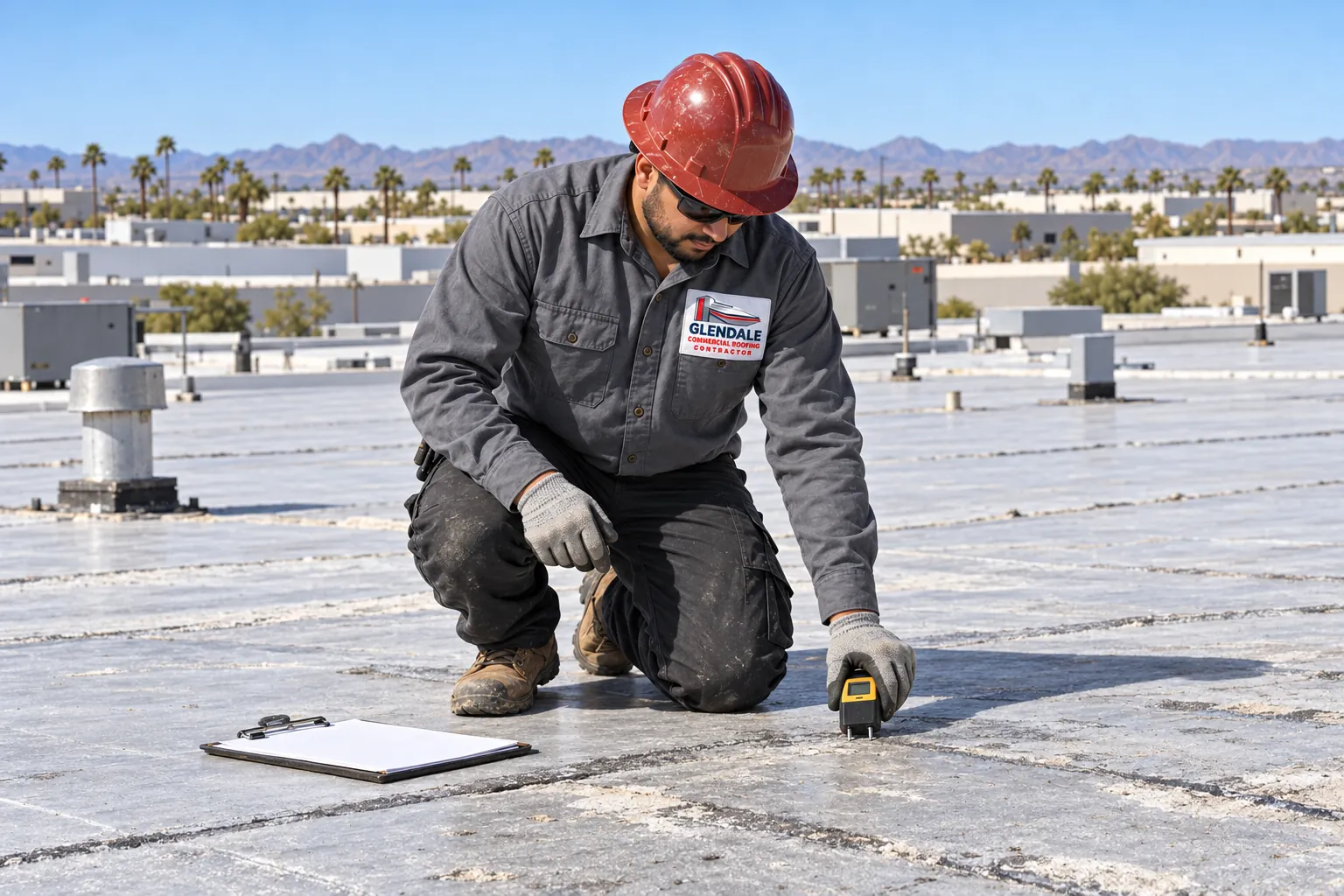
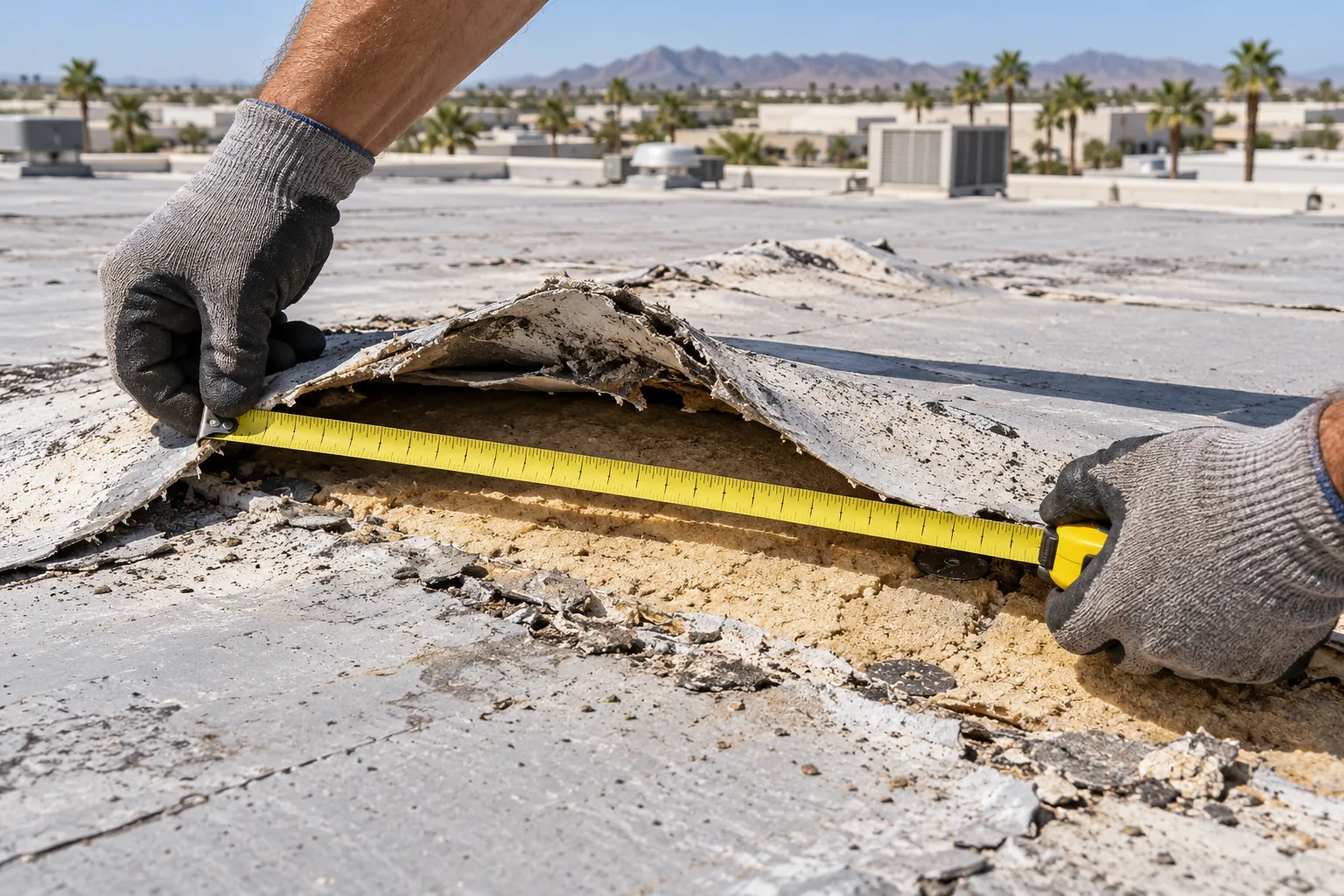
We check walk routes for scouring, open every drain and gutter, and look at curb bases and vents for buildup. Moisture readings follow any spot where water sat. Thin or scoured membrane gets measured and marked.
Shop schedules decide when roof work happens above active bays. Noisy steps like tear-off move to slower shifts or weekends when needed. Dust-producing work in the yard is noted so the roof is not opened downwind of it.
Lifts and roof material drops go where trucks and forklifts stay clear, agreed with your yard lead before the first delivery. Drop zones stay clear of loaded trucks and stacked product.
Damaged membrane or panels are replaced, walk pads go down on every service route, and drains get screens sized for heavy dust. Gutters get refastened and their joints resealed.
A drain and gutter cleaning schedule for the dusty months stays with you, along with photos of each roof outlet as it was left. The schedule lists each drain and gutter by location.
El Mirage sits between Sun City and Surprise on the Grand Avenue corridor.
Newer centers and Loop 303 industrial roofs, many still under a membrane warranty.
Health-care, senior-living, and retail roofs along Grand and Olive Avenues.
Recreation centers and shared buildings with board-approved roof plans.
Dust, storms, industrial buildings, and El Mirage permits.
They test every weak spot at once. The National Weather Service defines Arizona's monsoon season as June 15 through September 30, bringing strong winds, blowing dust, sudden heavy rain, and sometimes hail. Here that means packed drains, ponding, lifted edges, and punctures, so a check before and after the season pays off.
More often than on a quiet street. Near fabrication and aggregate yards, a check every few months and after each dust storm keeps fines from hardening in the outlet.
Yes, where people walk. Grit under boots grinds the surface away along service paths. Walk pads on those routes take the wear instead of the membrane.
Yes, in sections with set work windows. Noisy steps are scheduled with your shop lead, and each section is sealed before the crew leaves it.
That turns on the building. Steel shops often have metal roofs that need fastener and lap work, while larger plants with process vents usually need an industrial membrane system.
Gutters and downspouts get cleared, resealed at joints, and refastened, since overflow there runs behind the wall and looks like a roof leak inside.
The City of El Mirage. Contact its permit center directly about what a reroof needs, and we will confirm the requirements for your scope before pricing.
Yes. Buildings in El Mirage's commerce and industry park, including the Foreign Trade Zone area reached from Loop 303, are part of our coverage.
Send the building address and what runs inside. We inspect the roof, clear the drains, and price the work.
Leave a name and number and we will call you back about the roof.
Or call now: (623) 310-0165