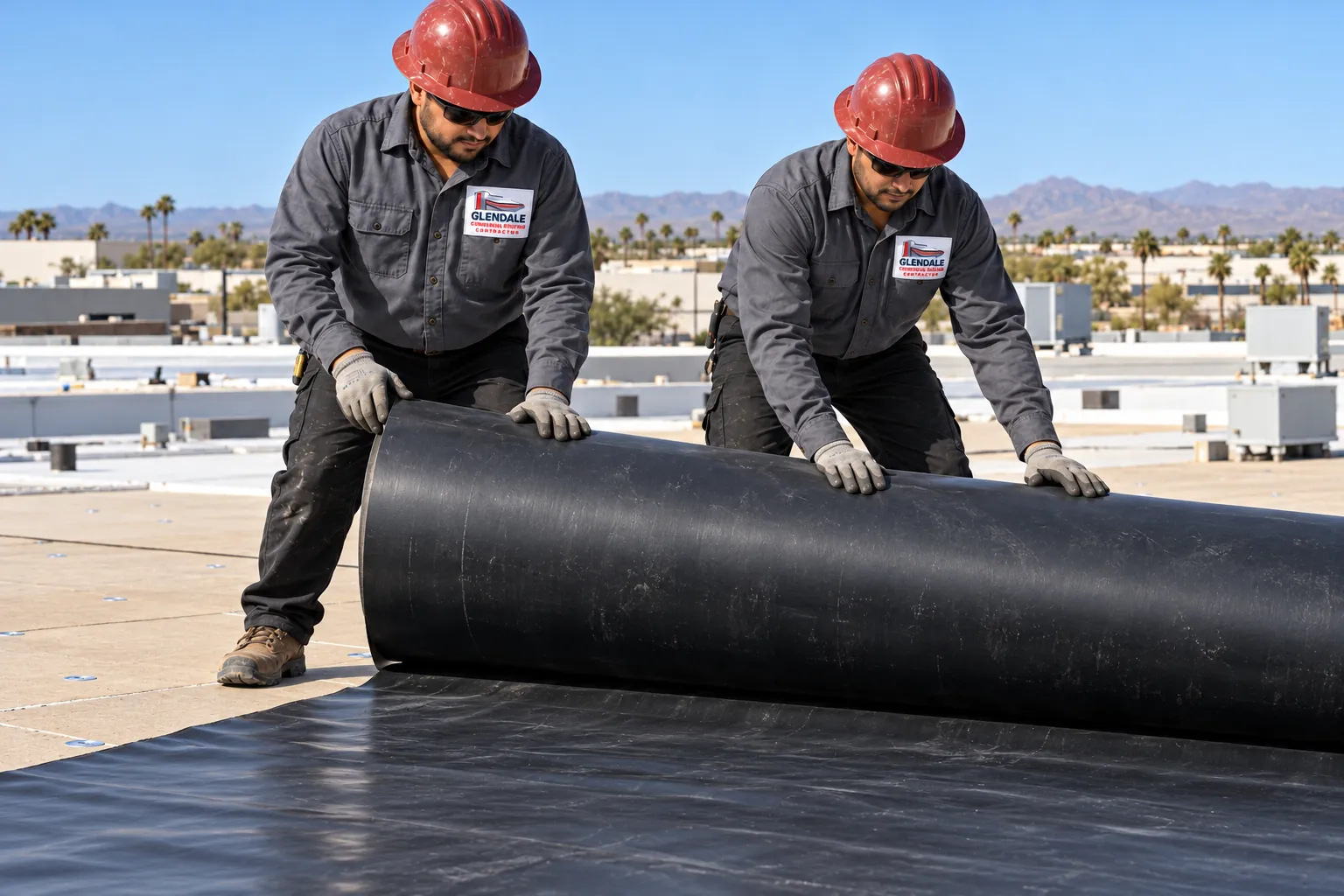
EPDM Roofing
If kitchen grease or a crowded deck rules out TPO, an EPDM roof flexes around curbs and handles grease with careful detailing.
EPDM roofing in Glendale
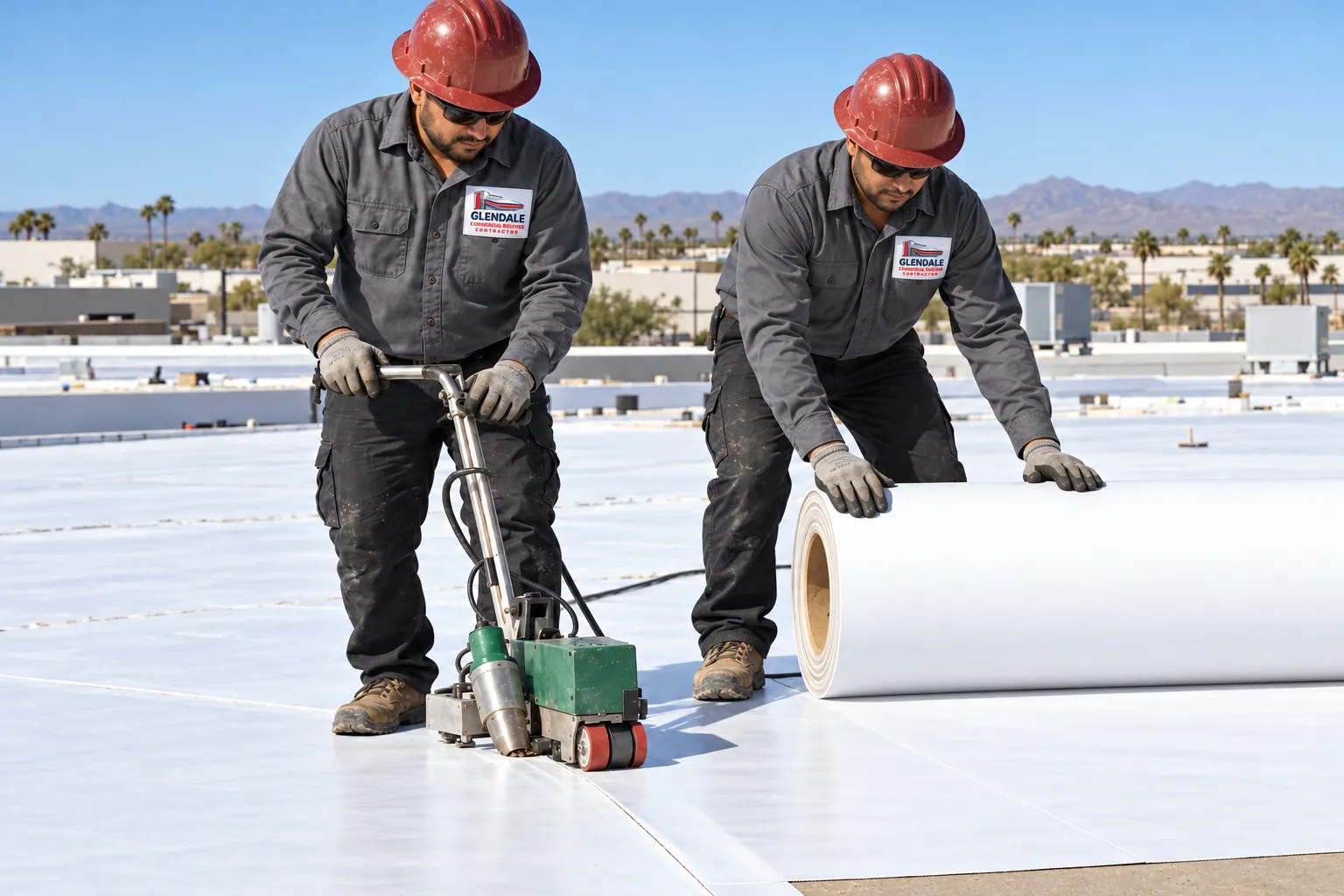
White TPO roofs for Glendale warehouses and retail buildings, from a TPO roofing contractor that probes every weld and recovers over dry insulation when the cores allow it.
TPO works best on low-slope roofs with a solid deck and room for wide sheets. Here is what points toward it, and what needs fixing first.
Aging TPO, and the roofs it replaces, show these six conditions most often.
A weld made too cool or too fast looks fine but peels back under a probe. Monsoon rain finds those gaps first, usually at end laps and T-joints.
Technicians walking to rooftop units scuff thin membrane down to the scrim. Bare scrim beside a curb turns into a leak in the next storm.
Older TPO pulls in at the edges as it ages, stressing the flashing at parapets and corners until the membrane bridges or splits.
Water that stands more than a day after rain strains welded seams and soaks into the deck. It points to a sagging deck or a slow drain.
Fine desert dust settles on a white roof and cuts its reflectivity. Washing it during maintenance brings back much of the white surface.
Hail and wind-blown debris punch through a sheet with no cover board behind it. Small holes leak slowly and show up as ceiling stains weeks later.
Most TPO jobs fall into one of these four types. The core cuts decide which one your roof needs.
| Job | When It Fits | What Happens On The Roof |
|---|---|---|
| New TPO install | New buildings or a full tear-off | Insulation and cover board fastened, sheets laid and heat-welded, every seam probed |
| TPO recover | Dry insulation and one existing roof layer | Cover board over the old roof, new sheet welded on top, edges and curbs reflashed |
| Tear-off and replace | Wet insulation or two existing layers | Old roof removed to the deck section by section, deck repaired, new system installed |
| TPO repair | Isolated failed welds, punctures, or flashing | Area cleaned, patches heat-welded, surrounding seams probed, cause recorded |
Four places on the roof where a TPO system makes a difference you can see.
The white sheet bounces back much of the sun a dark roof soaks up, so the deck and insulation run cooler through Glendale summers and the membrane itself ages more slowly in the heat.
Hot-air welds fuse the laps into one continuous sheet, which stands up to wind-driven monsoon rain better than tape or adhesive. Each weld gets probed, so a weak lap is found on the day it is made.
Thicker membrane and walk pads on service paths keep technician traffic from wearing holes around rooftop units, which is where most TPO punctures start on busy retail roofs.
Over dry insulation, TPO goes on top of the existing roof with cover board, which cuts tear-off debris, dumpster trips, and the number of days the roof is open.
Lifted laps let water in during the first heavy storm. Call and we will probe the seams and weld new patches where they fail.
Two lanes, five steps. The roof work is welding and flashing; the building work is lifts, timing, and heat.
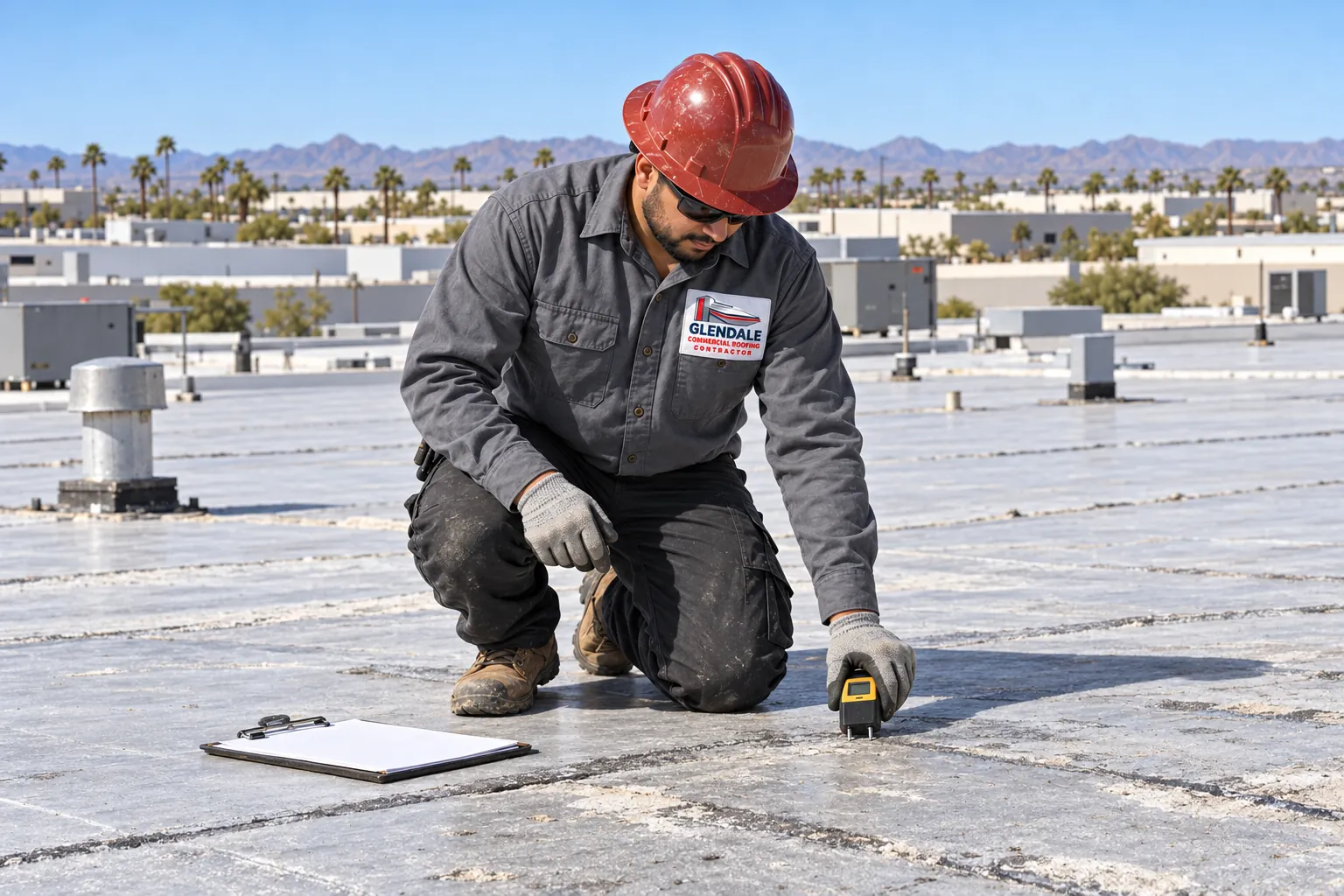
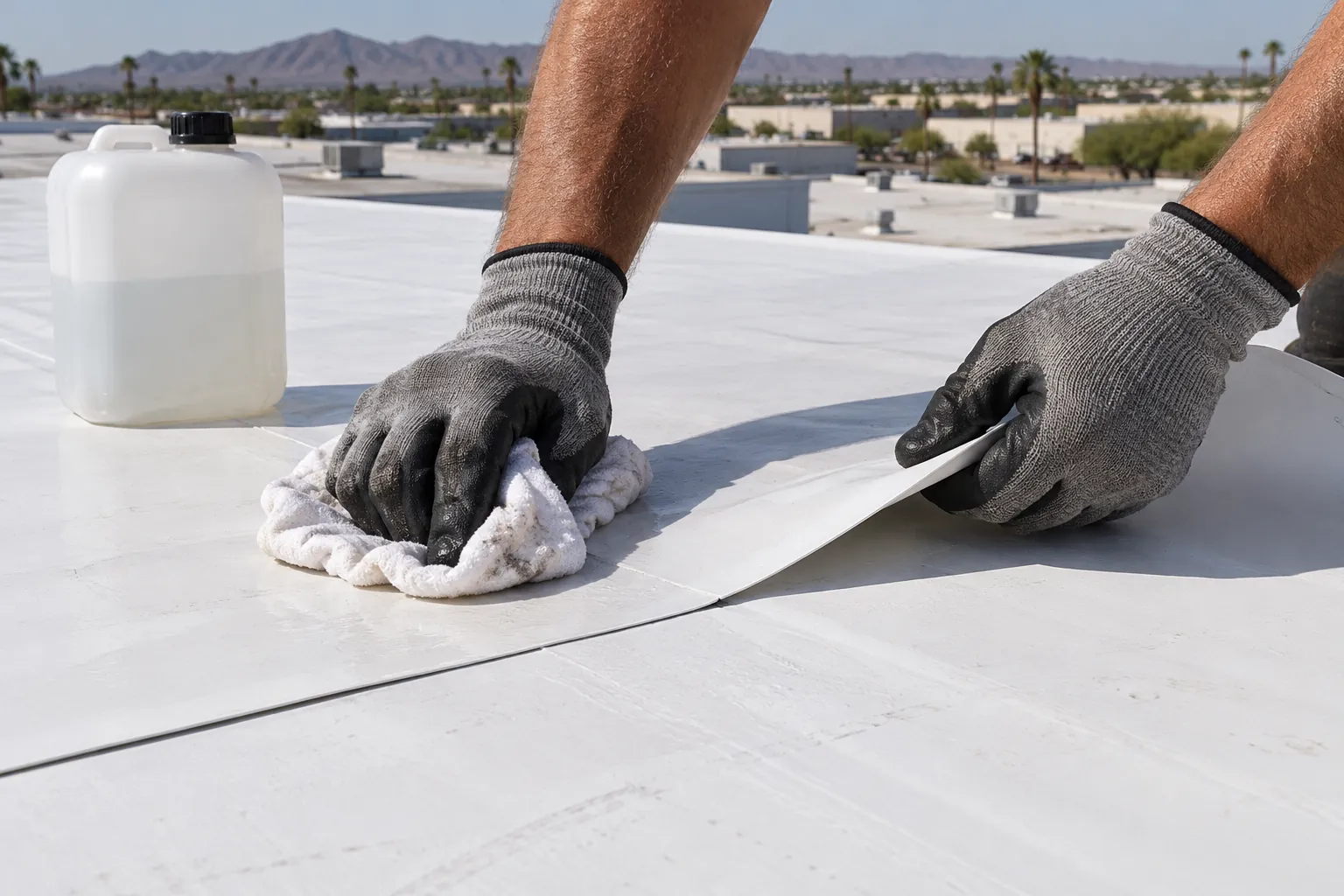
We probe existing welds, check sheet thickness near units, and take moisture readings across the field. Cores at wet readings show whether the insulation can stay. Chalky or brittle sheet gets noted too.
Sheet thickness, cover board, and whether the system is fastened or adhered are chosen for your roof's foot traffic, wind exposure, and deck type. Wind exposure at corners sets the edge fastening.
Membrane rolls and insulation go up by crane or lift on a day you approve. Summer welding starts at first light so the sheet stays workable. Deliveries avoid your busiest dock hours.
Insulation and cover board are fastened, then wide TPO sheets are rolled out and joined with an automatic hot-air welder along every lap. Curbs and drains get flashed as each section closes.
Each weld is probed by hand, curbs and edges are flashed, and drains are cleared. You get photos of the seams and flashings at handover. Leftover scraps and fasteners leave the roof.
Two other systems that come up when TPO is on the table.
If kitchen grease or a crowded deck rules out TPO, an EPDM roof flexes around curbs and handles grease with careful detailing.
EPDM roofing in Glendale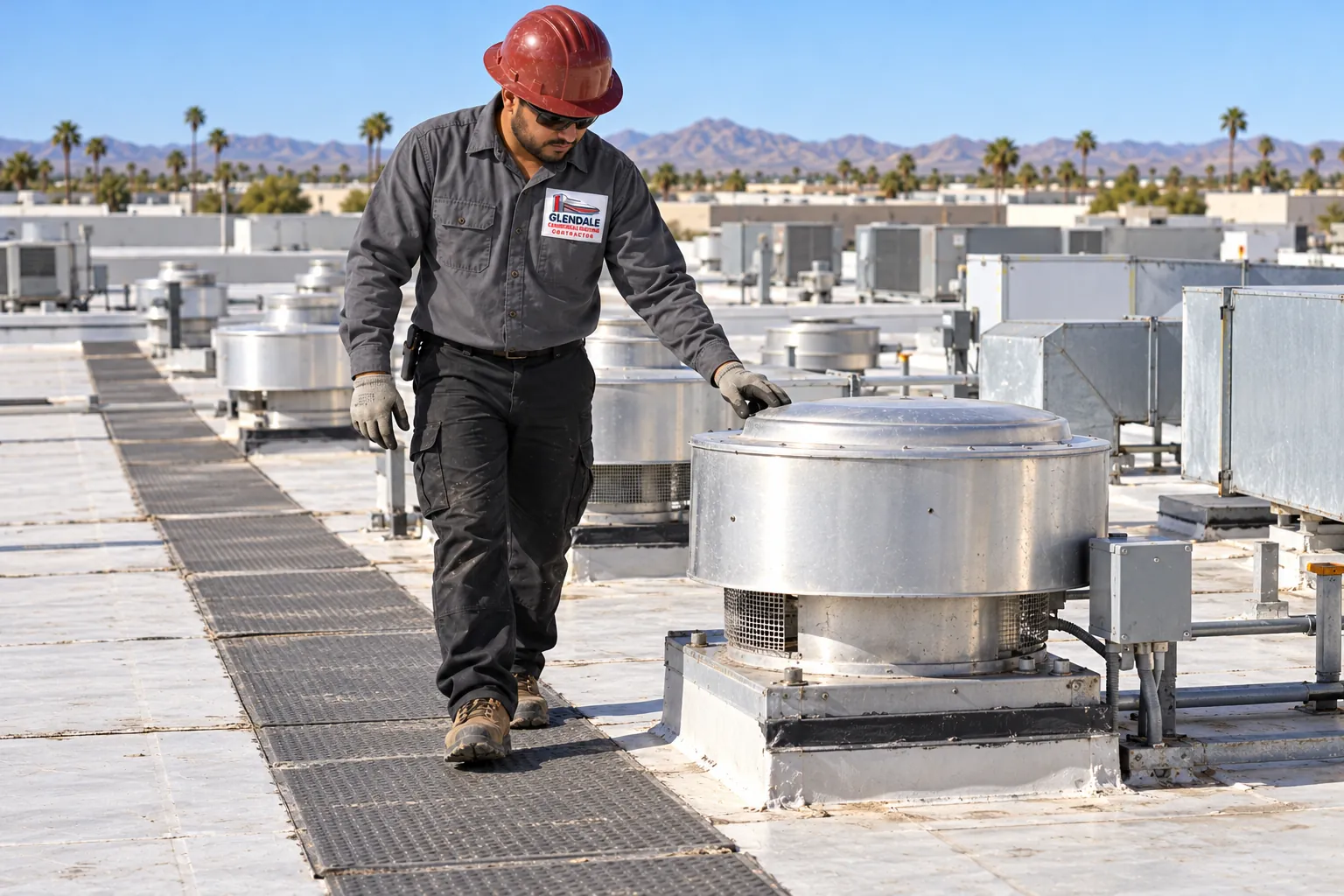
Process exhaust and heavy rooftop units call for an industrial membrane system with reinforced walkways at every unit.
industrial roofing in GlendaleWhat owners ask before choosing TPO for a Glendale building.
Yes, TPO is one of the systems we install most on low-slope roofs here, especially large warehouse and retail buildings. We watch sheet thickness near HVAC traffic, the insulation and cover board under the sheet, and weld quality, which gets checked with a probe.
Thicker is better wherever people walk. Some owners choose a heavier sheet across the whole roof, while others put it on service paths with walk pads. We recommend a thickness after seeing how often technicians are up there.
It does, with more flashing work. Each curb, pipe, and drain gets a welded flashing, so a roof crowded with penetrations costs more per square foot and takes longer to detail.
When the insulation is dry and there is only one roof layer, a recover with cover board is common, and cores tell us both. Wet areas get cut out and replaced before the new sheet goes down.
Both work. Mechanically fastened systems install faster and put little odor into the building, while fully adhered sheets resist wind flutter and suit some decks better. The deck type and wind exposure decide it.
Wash it during routine maintenance. Desert dust dulls the surface over time, and a gentle cleaning brings back reflectivity. Keep pressure washers away from the seams, since a hard spray can lift a lap edge.
Patching clean TPO is quick: the area is cleaned, a new piece is heat-welded over the damage, and the seams around it are probed. Old, chalky TPO is harder to weld, which is often when replacement starts making sense.
Walk pads weld right onto an existing TPO sheet along technician routes. Adding them early protects the membrane around rooftop units before foot traffic wears it down to the scrim.
Send the building address and roof size if you have it. We walk the roof and price TPO by section.
Leave a name and number and we will call you back about the roof.
Or call now: (623) 310-0165