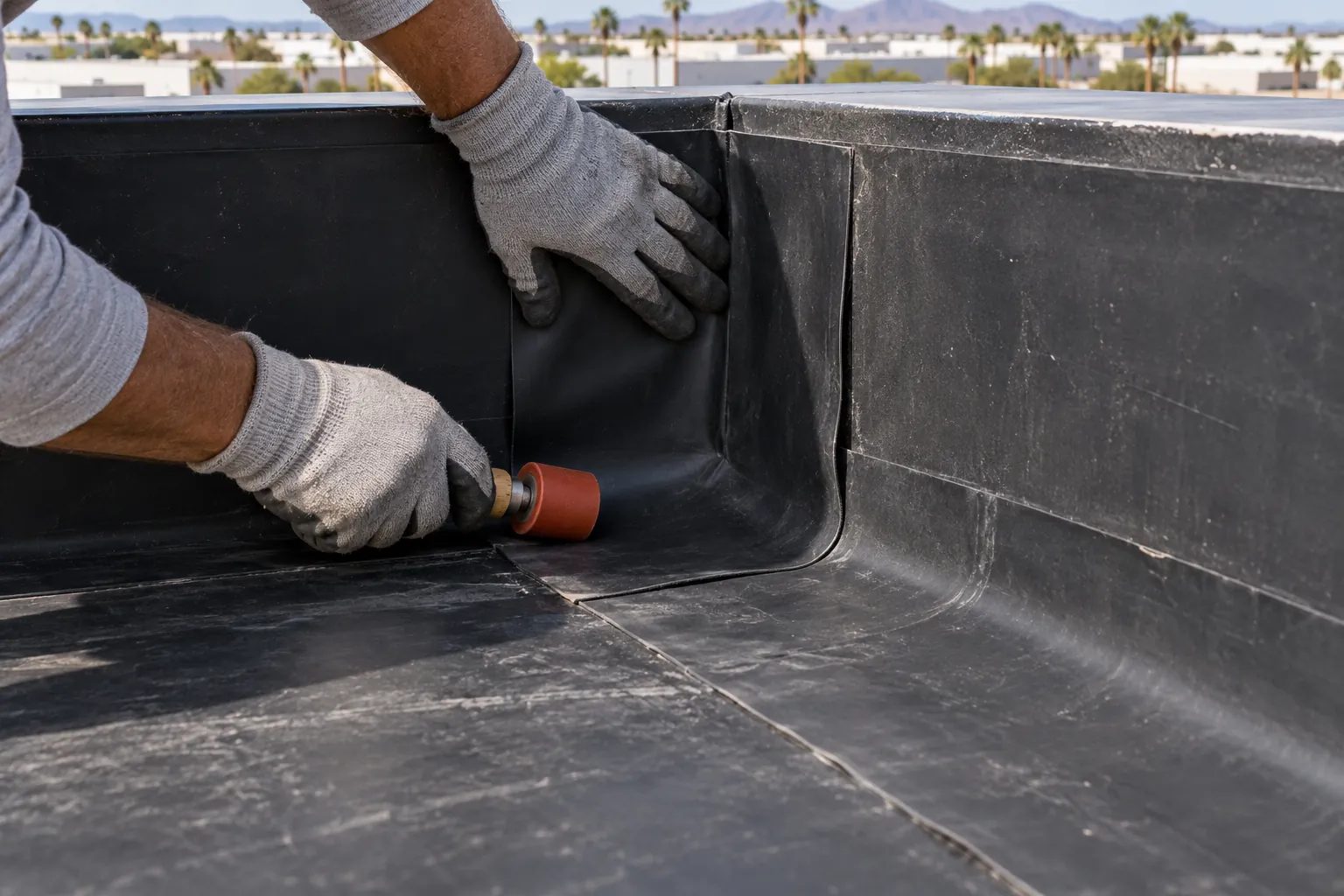
EPDM Roofing
Smaller medical and office roofs with many pipes suit EPDM, with adhesive days planned around intakes and residents' daily routines.
EPDM roofing details
Health-care, senior-living, and retail roofs in Youngtown, replaced by a commercial roofing contractor that keeps adhesive odor and noise away from the people inside.
Health-care and senior-living buildings breathe through their rooftop units, so what happens on the roof reaches the people inside.
Youngtown, founded in 1954 as the nation's first retirement community, now counts health-related businesses, including compound pharmacies and senior living, as its leading industry. Retail and service businesses cluster along Grand Avenue, Olive Avenue, and the town center.
On these roofs the attachment method matters as much as the membrane. We favor low-odor systems and keep primers and adhesives away from air intakes. Each work day starts with a check-in with staff about which rooms below the roof are occupied.
These buildings run equipment around the clock, and the roof shows it.
Rooftop units pull outside air beside their own curbs. A wet curb or soaked insulation near an intake can bring damp, musty air inside. Drying the curb and replacing wet insulation around it clears the problem at the source.
Older roofs often have exhaust vents and air intakes close together. Roof work around them needs extra planning to keep fumes out. Mapping both before work starts shows where adhesive can and cannot be used.
Smaller medical and retail roofs often have older EPDM or built-up roofing with laps opening at the edges. Re-taping the laps or replacing the sheet stops the slow leaks at the edges.
Retail buildings along Grand Avenue carry parapets and sign brackets that let water behind the wall when flashing fails. New counterflashing and sealed bracket bases keep water out of the wall.
Scuppers and downspouts that dump roof water near doors make wet, slick walkways for residents and patients. Moving the outlet or adding a downspout sends the water away from the doors.
Skylights over lobbies and common rooms leak at the curb seal, right above where people gather. Resealing the curb, or replacing an aging unit, stops the drips over the room.
What careful roof work leaves behind on an occupied health-care building.
Low-odor attachment near units and sealed curbs keep fumes and damp air out of the building's supply. Residents and staff breathe the same air they did before the work began.
Noisy steps like deck fastening are grouped into planned windows that staff can work around. Staff know when the loud work happens and can plan around it.
Redirected scuppers and new downspouts carry roof water away from doors and walkways. Walkways stay dry for residents, patients, and visitors.
Resealed or replaced skylight curbs stop drips over lobbies and common rooms. Lobbies and common rooms stay dry during storms.
Two systems that keep odor low on occupied buildings.
Smaller medical and office roofs with many pipes suit EPDM, with adhesive days planned around intakes and residents' daily routines.
EPDM roofing details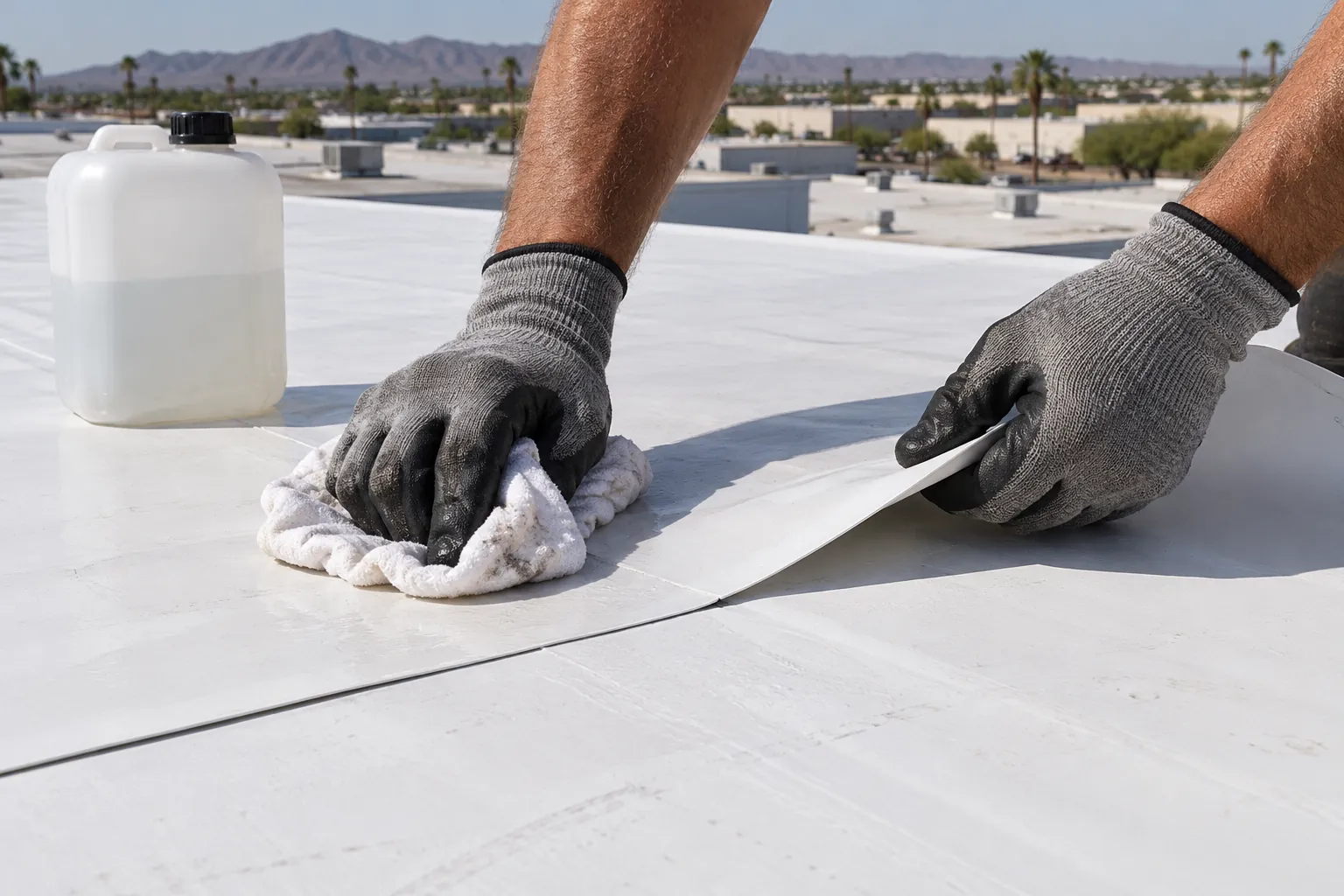
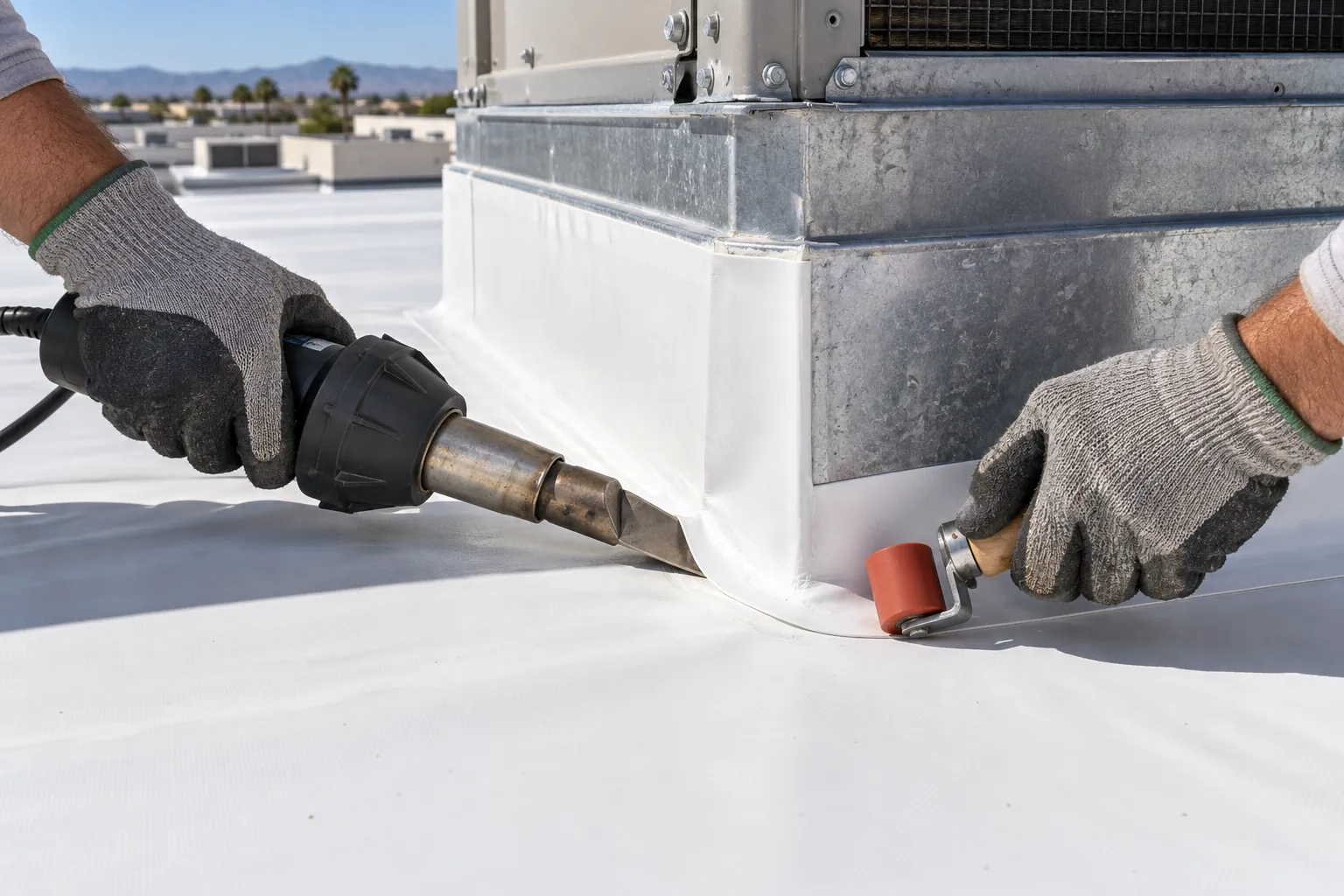
Heat-welded TPO seams put very little odor in the air, which helps on occupied health-care buildings where people stay inside all day.
TPO roofing detailsCall and walk us through the building's air intakes and occupied rooms. We plan the roof work around both before anything is scheduled.
Staff and residents are part of the plan, so two of the five steps happen with the facility before the roof work starts.
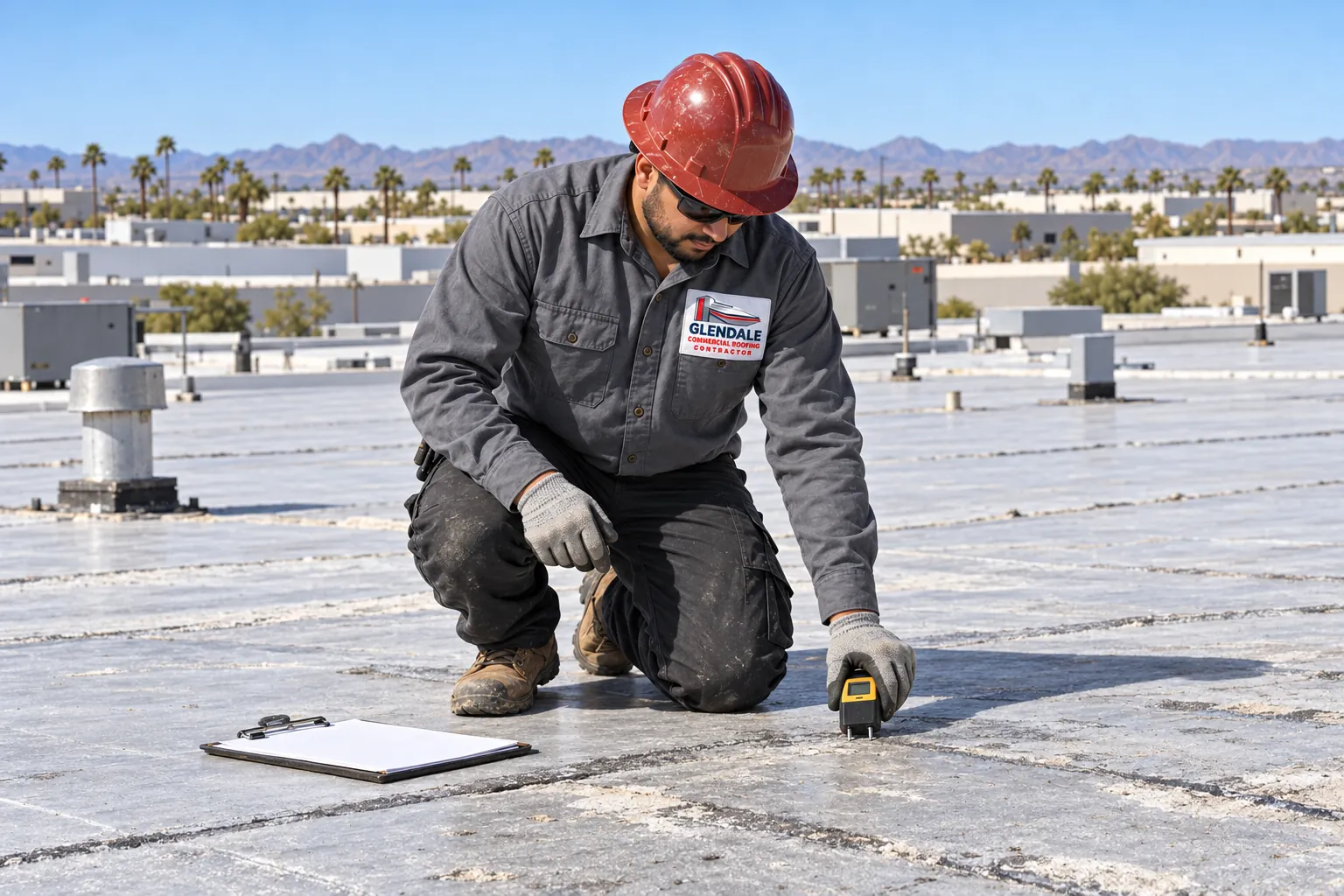
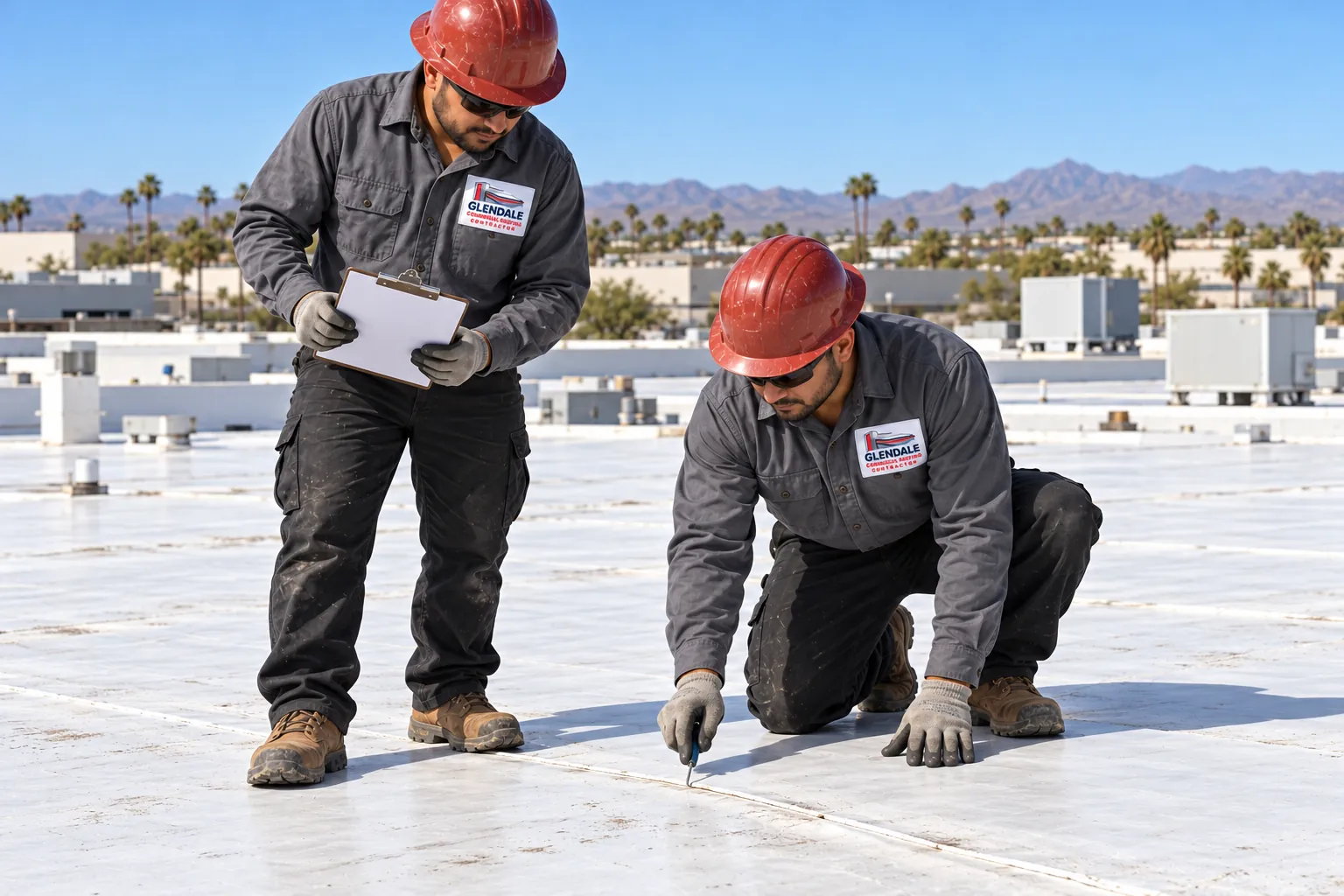
We map every air intake and exhaust, check curbs and laps, and take moisture readings near the units where damp insulation can affect indoor air. Rooms below each roof area get noted for the schedule.
Staff choose the hours for noisy roof steps and any adhesive work, and residents or patients get notice before those days. Quiet hours and medication rounds are part of that plan.
Intakes near the work are shielded, or the unit is set to recirculate during adhesive work, and entrances stay clear of material paths. Air handling changes are set with the building's HVAC contractor.
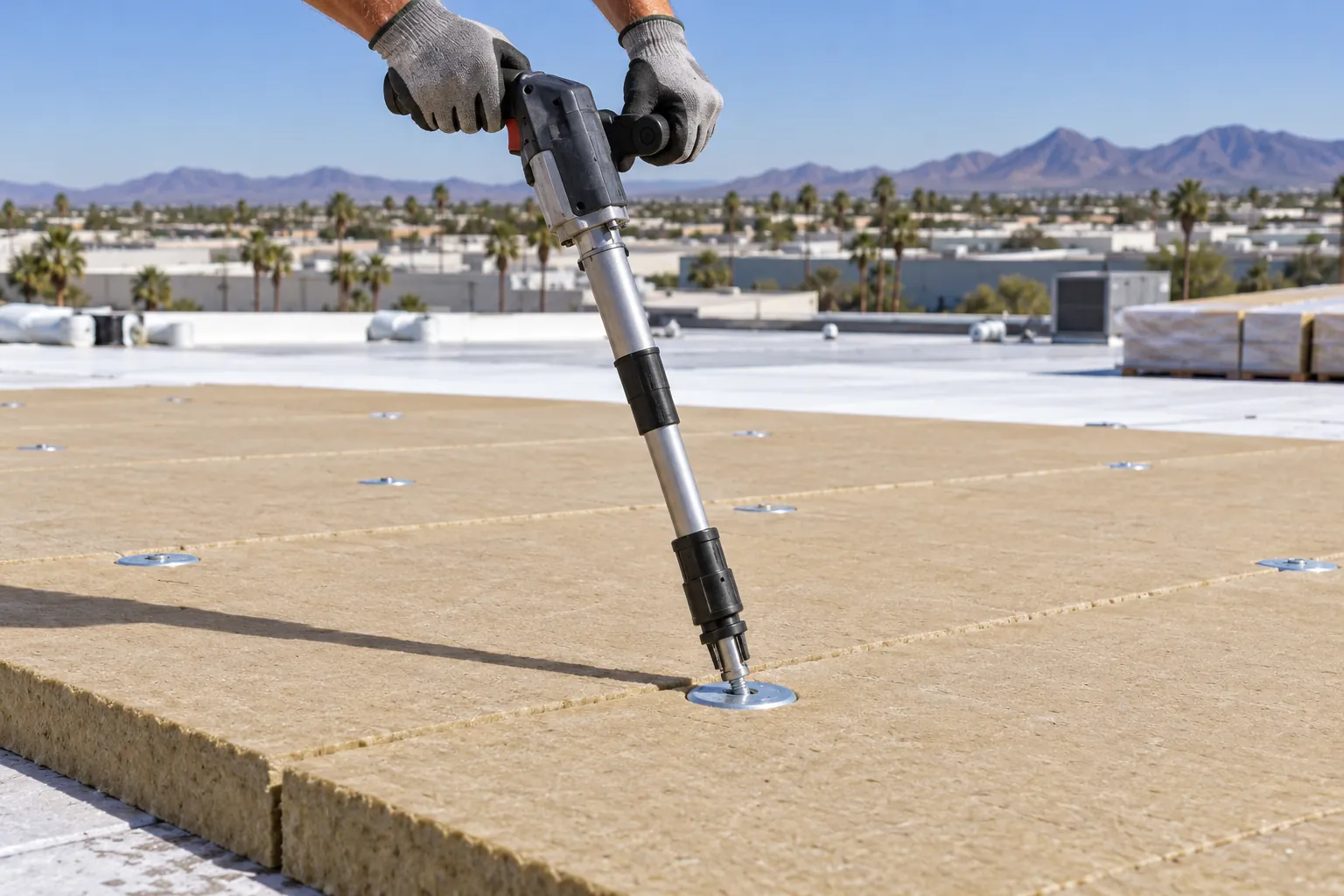
Heat-welded or mechanically fastened membrane goes near the units, with adhesives kept to areas well away from intakes. Primers stay capped and stored away from the units.
Curbs and intakes are checked again, debris comes off the roof, and staff get a short note on what was done each day. Intakes get a last check before units return to normal.
Youngtown sits on Grand Avenue between Peoria and El Mirage, beside Sun City.
Odor and noise, utilities, and Youngtown permits.
It can if adhesives are used near intakes. Welded or fastened systems keep odor low, and when adhesive is needed, intakes are protected and the work is timed with staff.
Tear-off and fastening are the loudest steps. They are grouped into set windows, and quieter work like welding and flashing fills the rest of the day.
In most cases, yes. Work runs in sections, entrances stay clear, and staff get a daily plan so residents and visitors are kept away from any roof material lift or staging area.
Check your electric bill, which shows whether APS or SRP serves the building. Business programs and eligibility change, so confirm what is current before the roof is ordered, since roof incentives often require a product rated by the Cool Roof Rating Council.
A reflective roof keeps the deck cooler, which tends to help buildings that run cooling all day, like care facilities. Savings come down to insulation, equipment, and use, so we avoid promising a number.
Rooms under a dark roof run warmer in the afternoon. A reflective membrane over dry insulation keeps top-floor rooms closer to the thermostat setting, which residents notice most in summer.
The Town of Youngtown, through its Community Development permits and plan review. What a reroof needs depends on the scope, so we confirm with the town first.
Yes. Retail and service buildings along Grand Avenue, Olive Avenue, and the town center are part of our Youngtown coverage.
Share the building address, where its air intakes sit, and when it is busiest. We inspect and plan the work around all three.
Leave a name and number and we will call you back about the roof.
Or call now: (623) 310-0165