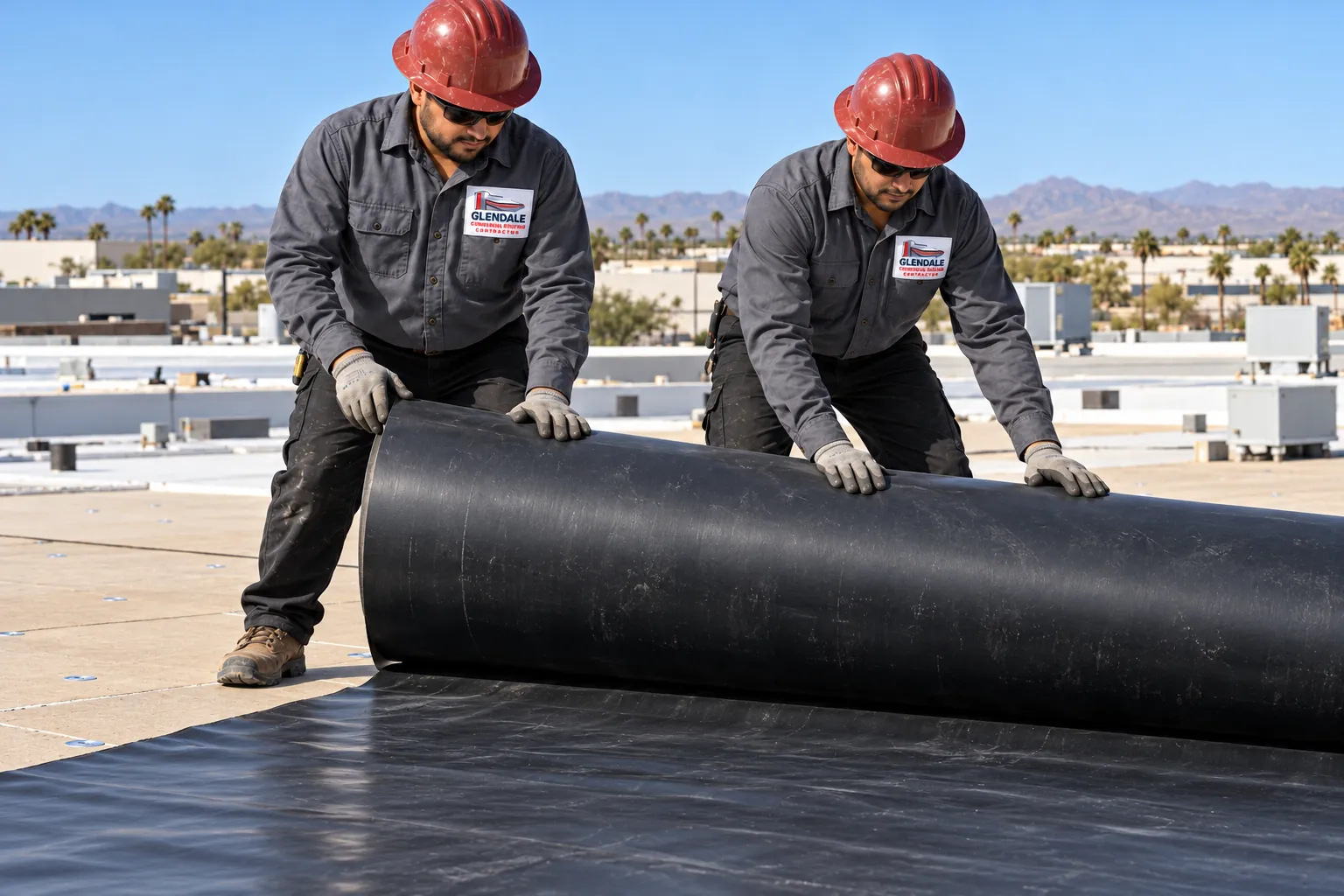
EPDM Roofing
EPDM suits smaller office and medical buildings with simple layouts and many pipes, and it flexes over the older decks common on buildings from the community's early decades.
EPDM roofing details
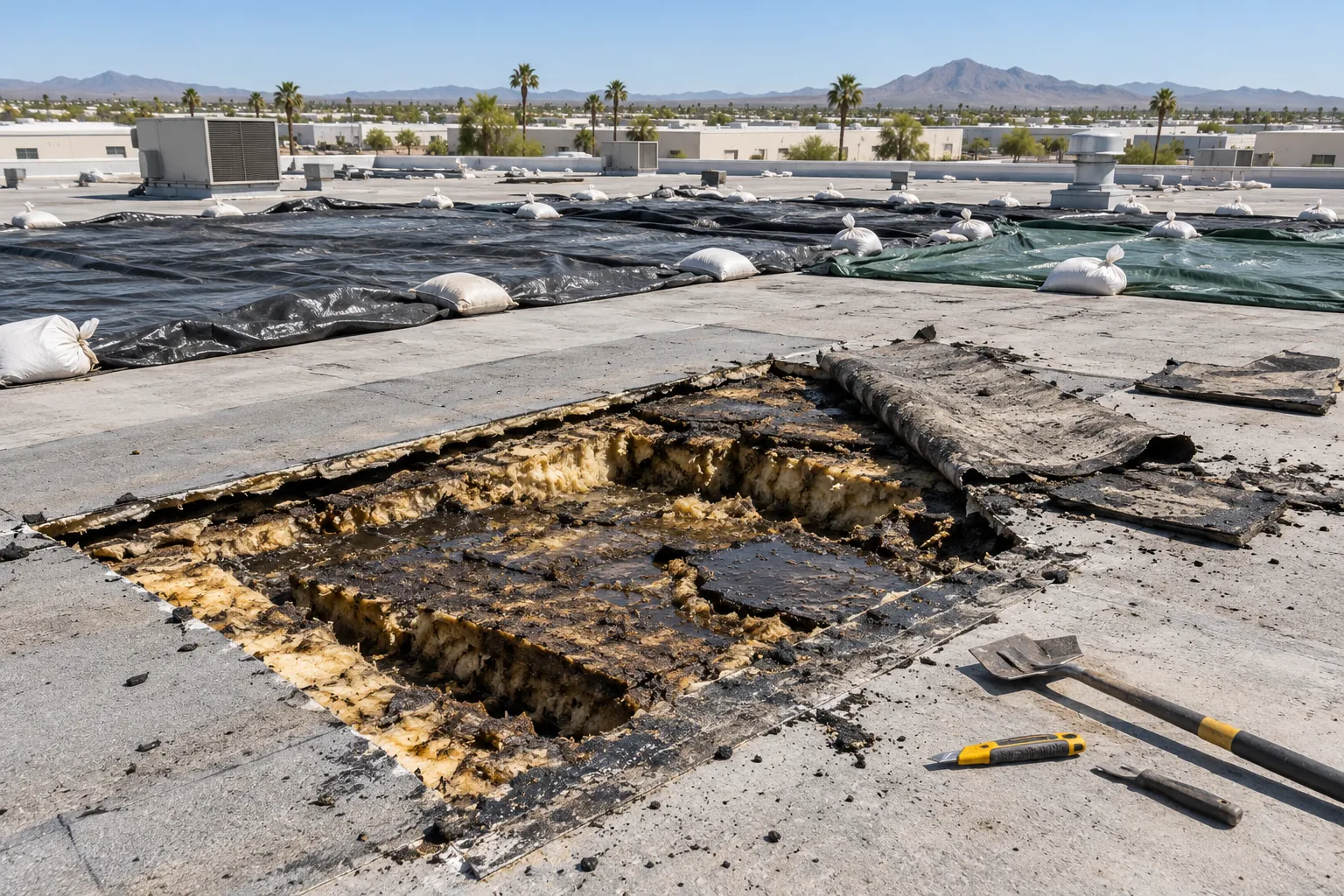
Older shopping centers, offices, and service buildings in Sun City, inspected layer by layer by a commercial roofing contractor before any new roof goes on.
Sun City opened in 1960, and some of its commercial buildings have carried several roofs since.
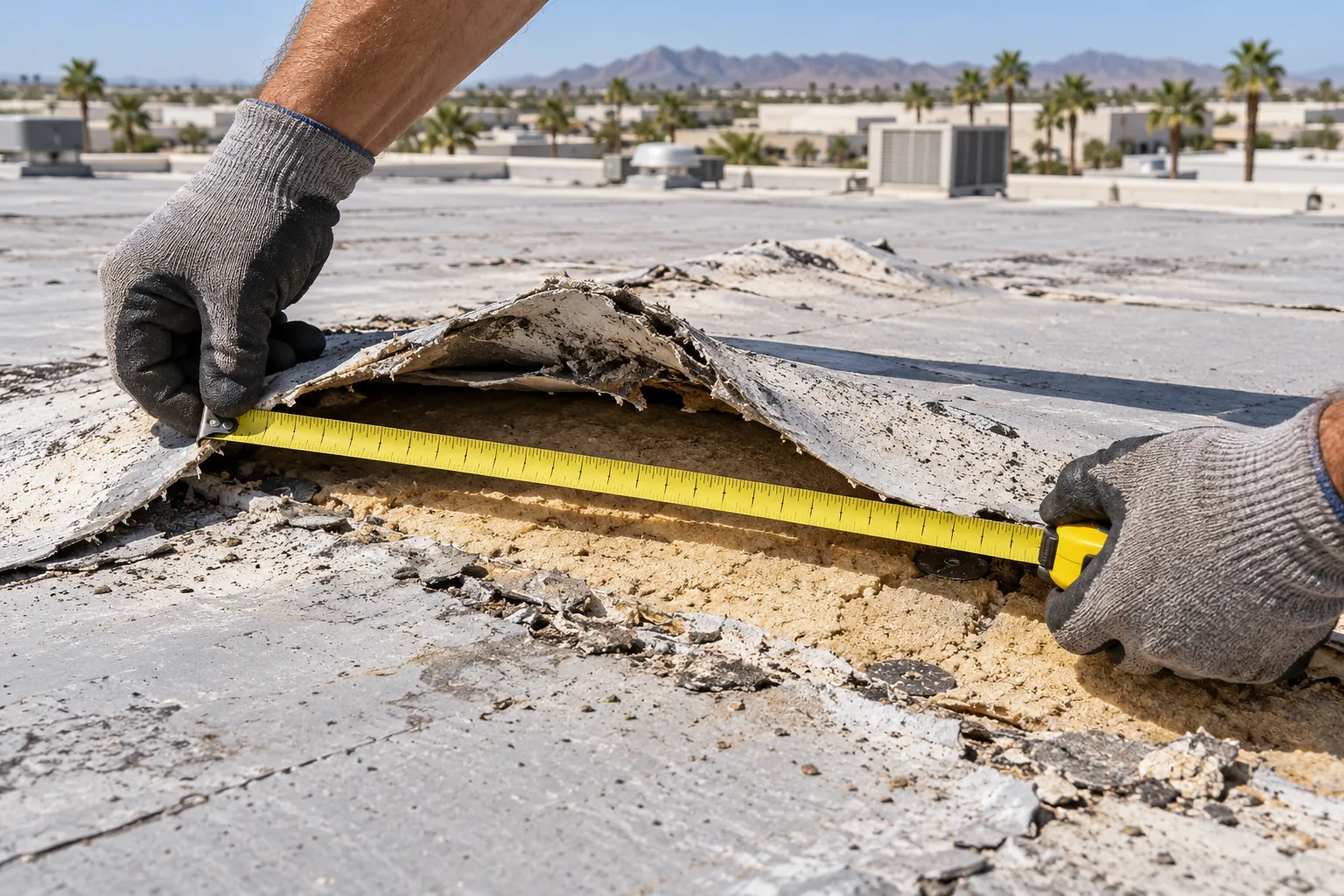
Sun City's first shopping center, at Grand Avenue and 107th Avenue, opened with the community on January 1, 1960, and had its roof replaced in an early-1990s renovation. Buildings that age often carry a second roof over the first, or patches over both.
Before any new roof goes on, we count what is already there. A core cut shows the layers and whether the insulation under them is dry.
Age and layering cause most of what we find here.
A recover laid over an older built-up roof adds weight and traps any moisture between them, and it limits what can go on next. Cores show both layers and tell us whether a tear-off is the only path.
Water that got in years ago can sit between roofs without showing indoors until the deck rusts or the ceiling stains. Moisture readings across the field find it before the deck pays the price.
Steel decks under long-running leaks rust through at the flutes. Cores and an underside look show how far it goes. Rusted sections get cut out and replaced while the roof is open.
Old gravel stops and edge metal loosen as their fasteners let go of aging wood nailers, and wind lifts them. New nailers and edge metal fastened into solid wood hold the perimeter again.
Decades of tenant changes leave capped pipes and old curbs patched over. Each one is a weak spot in an aging roof. Removing them during a tear-off closes every one of those weak spots at once.
Each added layer raises the roof surface around a drain. Drains left at the old level end up sitting low and slow. Raising and reflashing each drain to the new surface gets the water moving again.
What a tear-off and rebuild changes on an older Sun City roof.
Tear-off removes stacked roofs along with the weight and trapped water that come with them. The building carries one roof again, with dry insulation under it.
Opening the roof lets rusted deck sections be replaced instead of covered over again. You know the deck is solid before the new roof covers it for decades.
Drains are raised and reflashed to the new roof level, so water leaves instead of ringing the outlet. Ponding rings around the outlets stop forming after rain.
Rotted wood nailers are replaced, and new edge metal is fastened into solid material. The perimeter holds when straight-line winds come through.
The two systems that most often replace older roofs here.
EPDM suits smaller office and medical buildings with simple layouts and many pipes, and it flexes over the older decks common on buildings from the community's early decades.
EPDM roofing details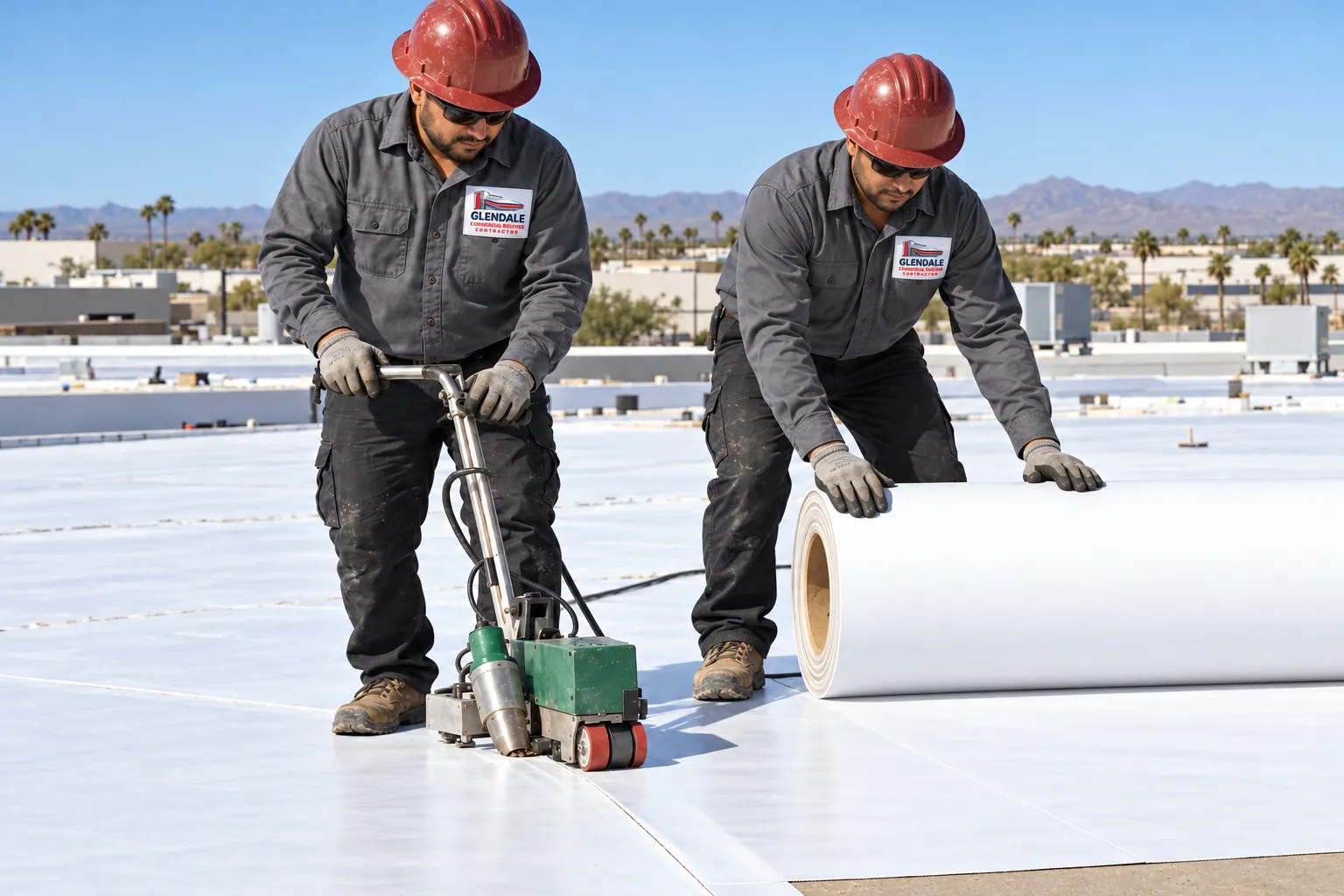
Larger shopping center roofs with long runs usually get a white TPO system after tear-off, with tapered insulation where the old roof held water.
TPO roofing detailsCall and we will cut a core and tell you. The layer count decides whether a recover is even an option.
The county permit and the layer count come first. Then the old roof comes off one section at a time.
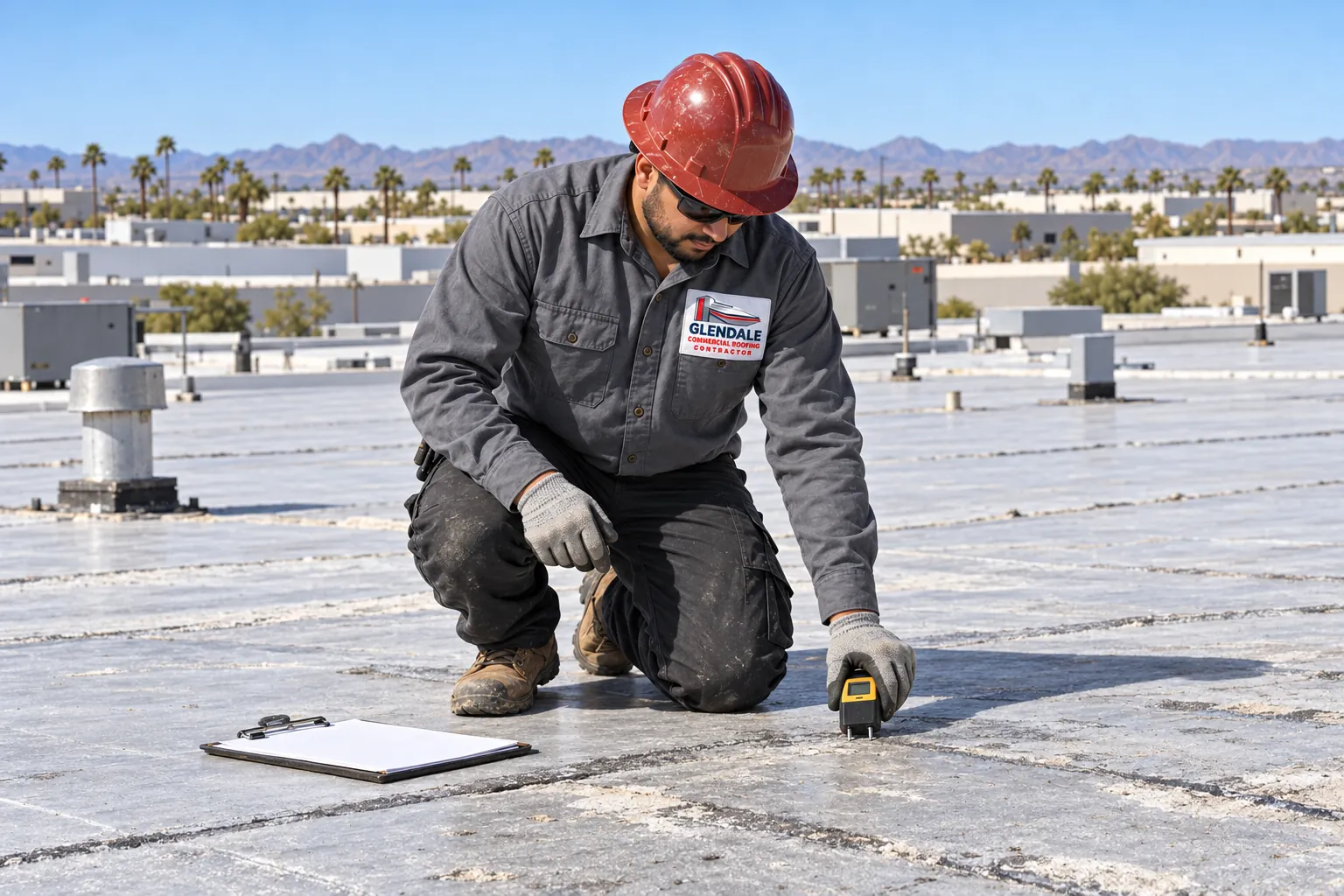
We cut cores to count layers and check the insulation, take moisture readings across the field, and look at the deck from below where we can. Old gravel stops and nailers get checked by hand.
Sun City is unincorporated, so Maricopa County handles the permit. We confirm what the county wants for a roof tear-off before pricing. The parcel's jurisdiction gets confirmed even when the mailing address names another city.
Shopping centers and offices here are busy on weekday mornings, so noisy roof tear-off runs at times you choose and entrances stay clear. Tenants get notice before their section of the roof opens.
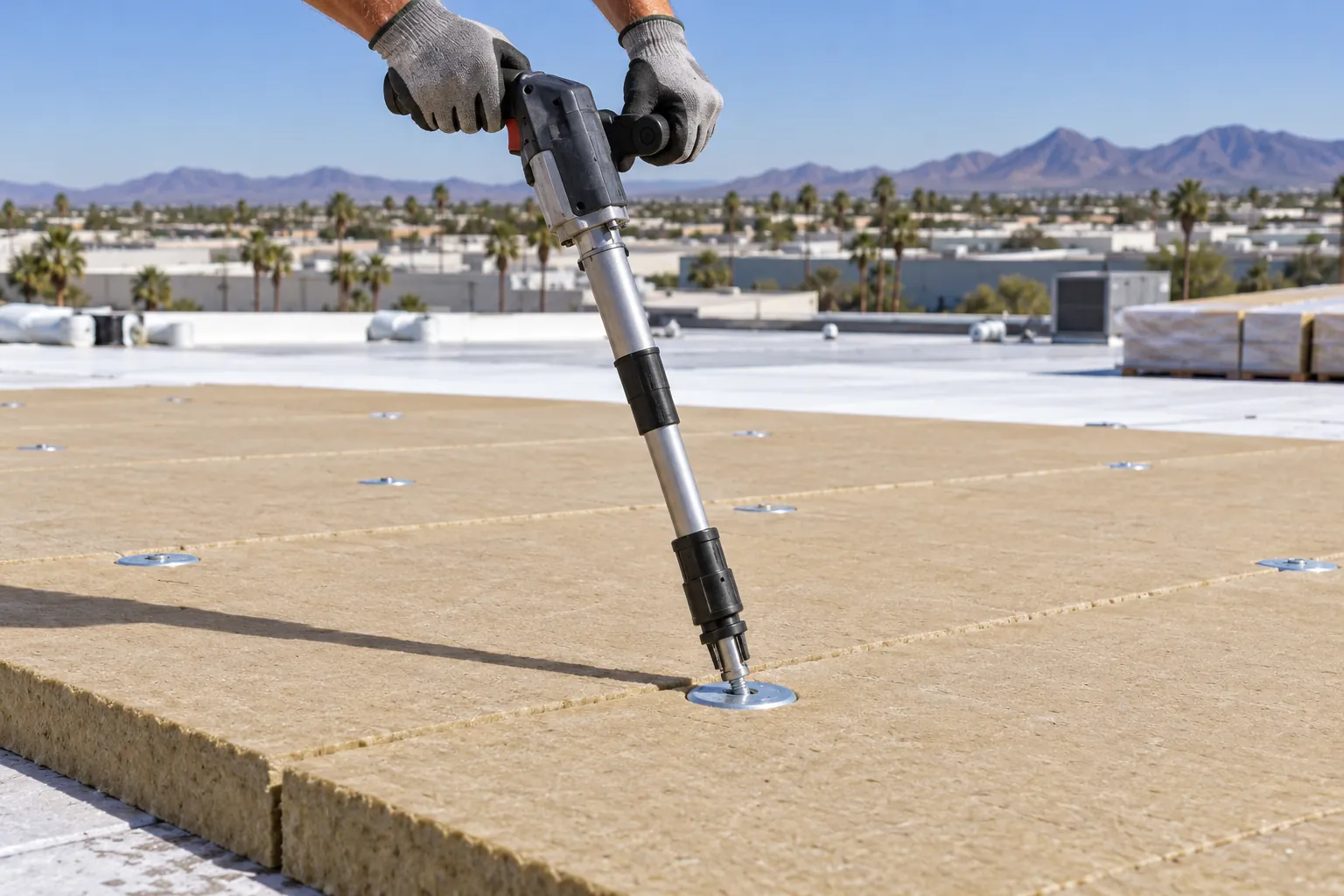
Old layers come off one section at a time, rusted deck is replaced, and new insulation and membrane follow before the section is closed. Wood nailers get replaced where the old ones have rotted.
Drains are raised to the new surface, nailers and edge metal are replaced, and you get photos of the deck as it looked when opened. The final walk covers every reset drain and edge.
Sun City sits beside Youngtown on Grand Avenue, with Peoria to the southeast.
Health-care and senior-living roofs next door, with odor and air-intake planning.
Restaurant pads and retail centers where kitchen grease reaches the roof.
Shared community buildings, also under county permits, with board-approved plans.
Older roofs, repair or replace, and county permits.
Yes, in practice. Each added layer brings weight and can trap moisture, and reroofing rules limit how many layers a roof can carry. A core cut tells us how many are there, and the county's permit review confirms what is allowed.
Moisture readings across the roof point to wet areas, and cores confirm them. Ceiling stains, a soft feel underfoot, and rust on the deck underside are also signs.
Gravel-surfaced built-up roofs are common on older buildings. The gravel comes off with a tear-off, and a recover over gravel needs it removed or covered with a board first.
Repair makes sense when damage is limited and the rest of the roof has life left. Replacement makes sense when leaks keep returning, the insulation is wet over large areas, or the membrane is brittle everywhere. A moisture survey usually settles it.
Yes, when one section is worn out and the rest is in good shape. The new section is tied into the old roof with proper flashing at the joint.
Maricopa County Planning and Development, since Sun City is unincorporated. A Glendale or Peoria mailing address can still sit outside city limits, so we confirm the jurisdiction first.
It depends on the scope. A recover, a tear-off, and changes to structure or rooftop equipment can be handled differently, so we check with the county for each project.
Yes. Centers along Grand Avenue and other commercial buildings in the community, from offices to service shops, are part of our coverage.
We cut a core, count the layers, and tell you whether the roof can be repaired, recovered, or needs a tear-off.
Leave a name and number and we will call you back about the roof.
Or call now: (623) 310-0165