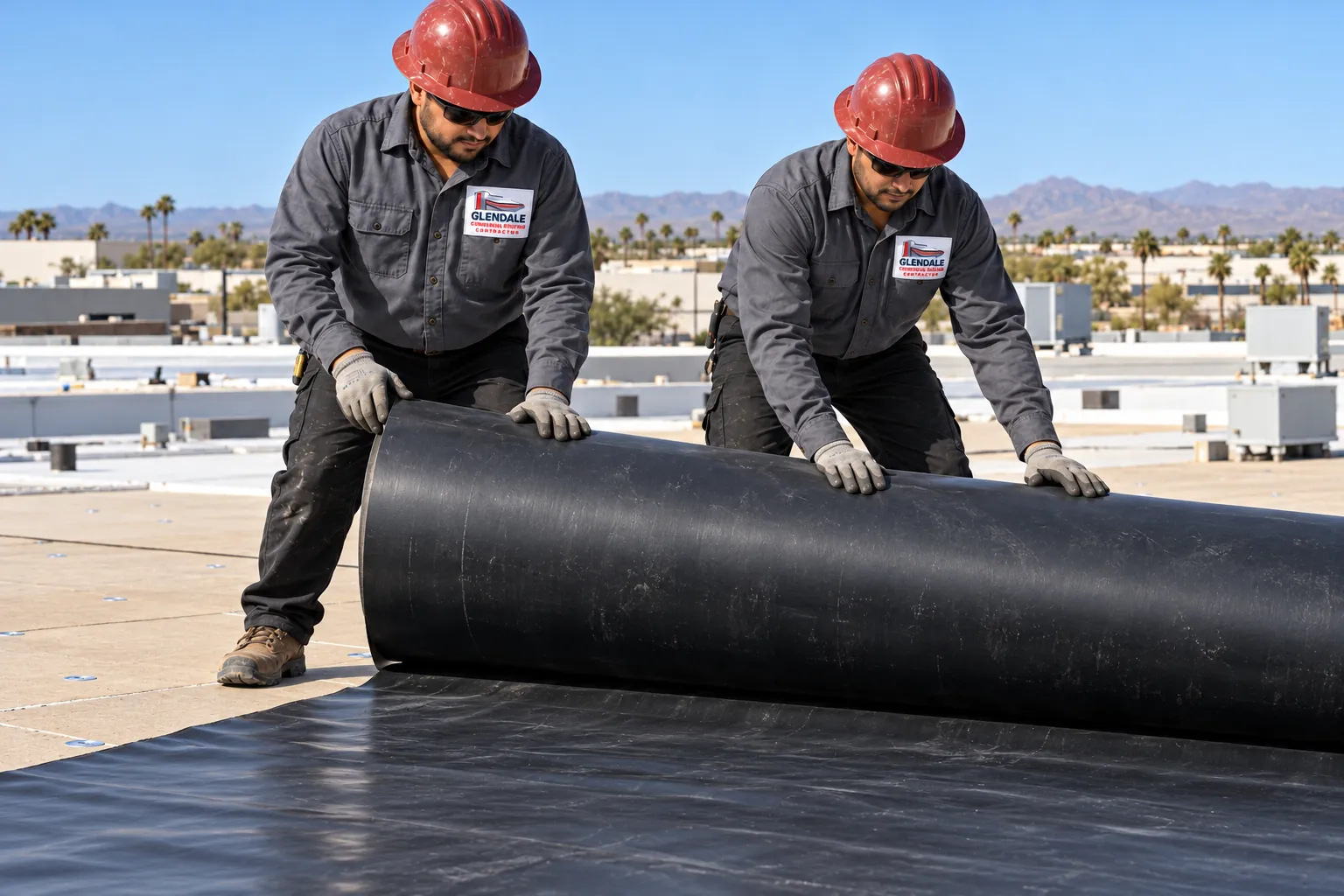
Two roofers unrolling a black EPDM sheet over cover board on a flat commercial roof

Glendale Commercial Roofing Services

Our commercial roofing services in Glendale cover four systems, matched to what your roof carries: foot traffic, kitchen grease, process exhaust, hail, and daily heat movement.

SystemsTPO · EPDM · Industrial · Metal
Starts WithA full roof walk

Commercial Roofing Services We Offer In Glendale

Each card names the buildings a system fits and what gets checked before we recommend it.

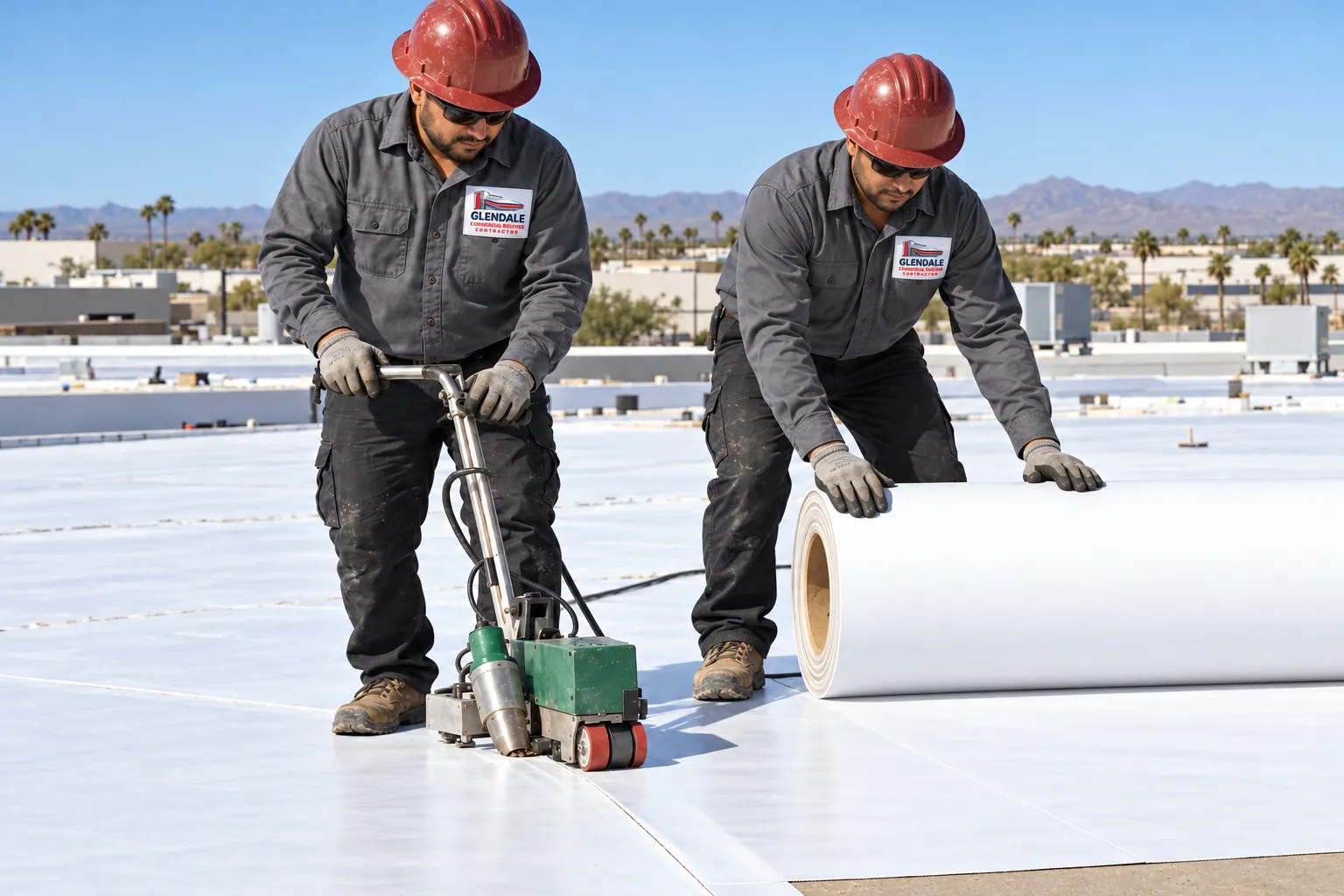
Two roofers heat-welding and unrolling white TPO membrane on a Glendale warehouse roof

TPO Roofing Contractor

Heat-welded white membrane for wide low-slope roofs. Seams fuse into one sheet, and the surface reflects sun that a dark roof soaks up.

Best For
  • Warehouses and big-box stores
  • Roofs with long open runs
Check First
  • Sheet thickness on service paths
  • Insulation moisture before a recover
Glendale TPO roofing contractor
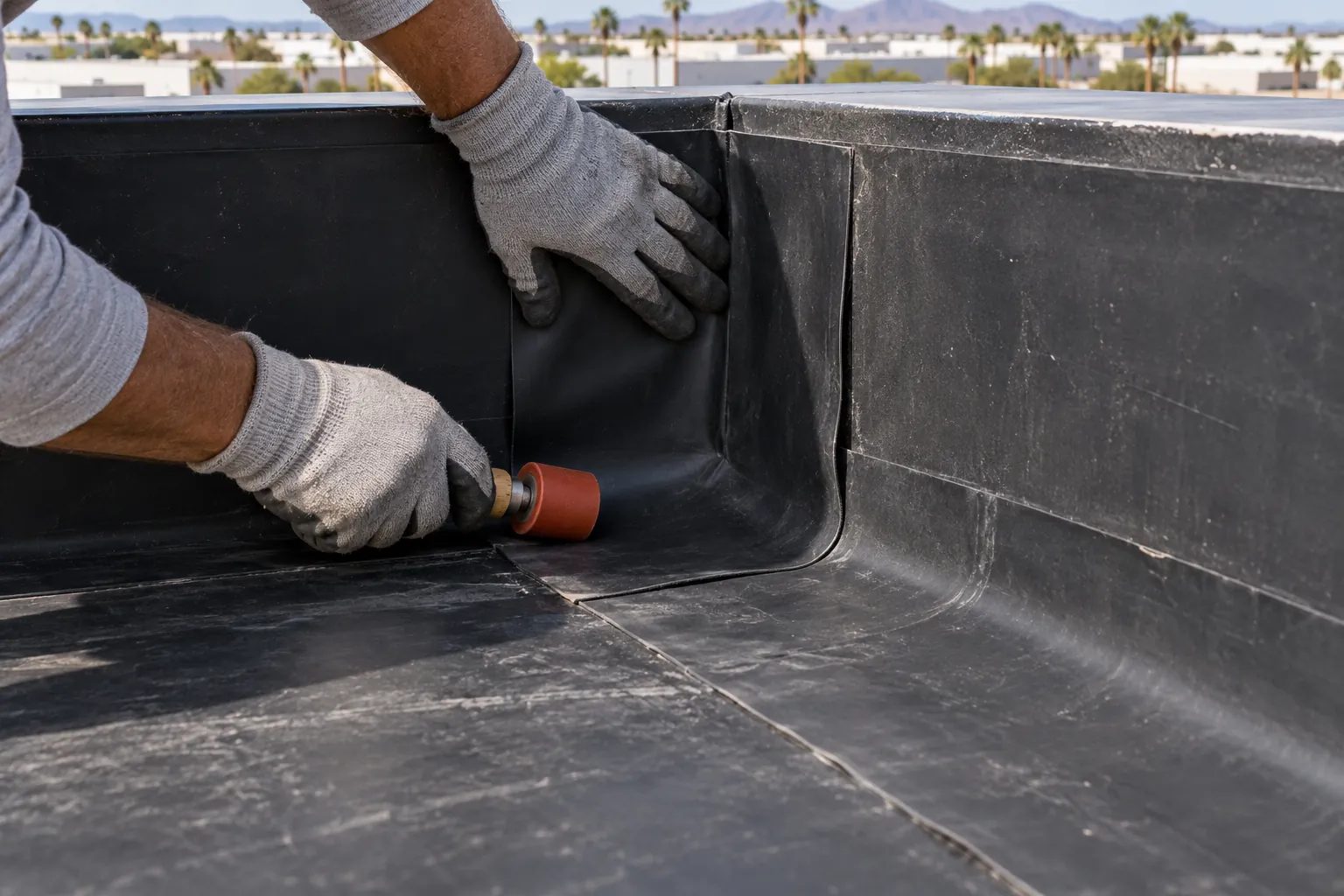
Inside-corner flashing pressed into place where a black EPDM roof meets a parapet wall

EPDM Roofing Contractor

Rubber membrane that flexes with the building and seals around crowded pipes and curbs, in black or white-topped sheets.

Best For
  • Office and medical roofs
  • Sections matched into older EPDM
Check First
  • Grease vents near the sheet
  • Age of existing seam tape
Glendale EPDM roofing contractor
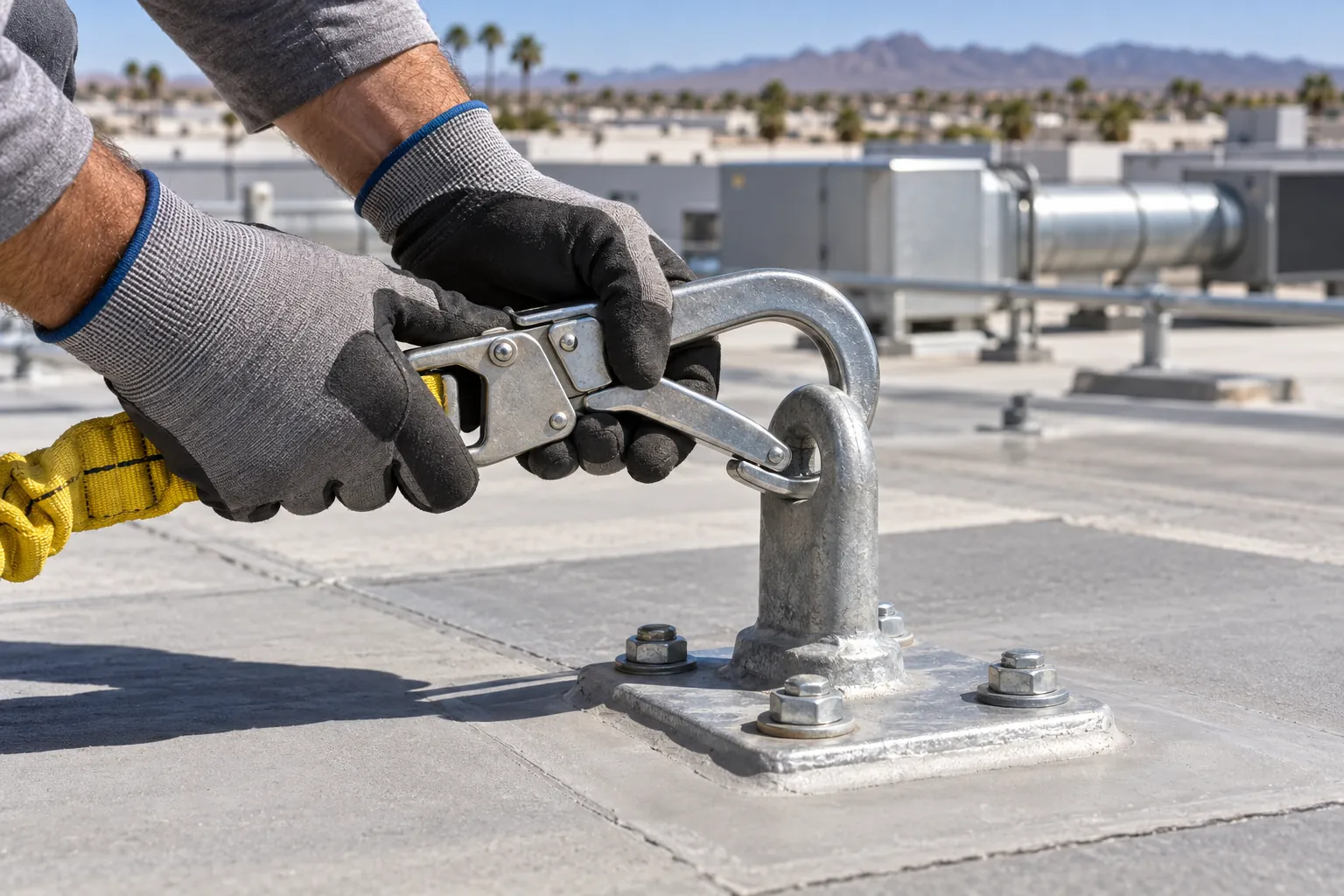
Fall-protection lanyard clipped to a roof anchor on an industrial membrane roof

Industrial Roofing Contractor

Membrane systems built for plants and distribution roofs, with reinforced walk paths, curb flashing at big units, and tie-off anchors for safe access.

Best For
  • Process plants and cold storage
  • Roofs with heavy equipment
Check First
  • What the exhaust carries
  • Lockout windows for rooftop units
Glendale industrial roofing contractor
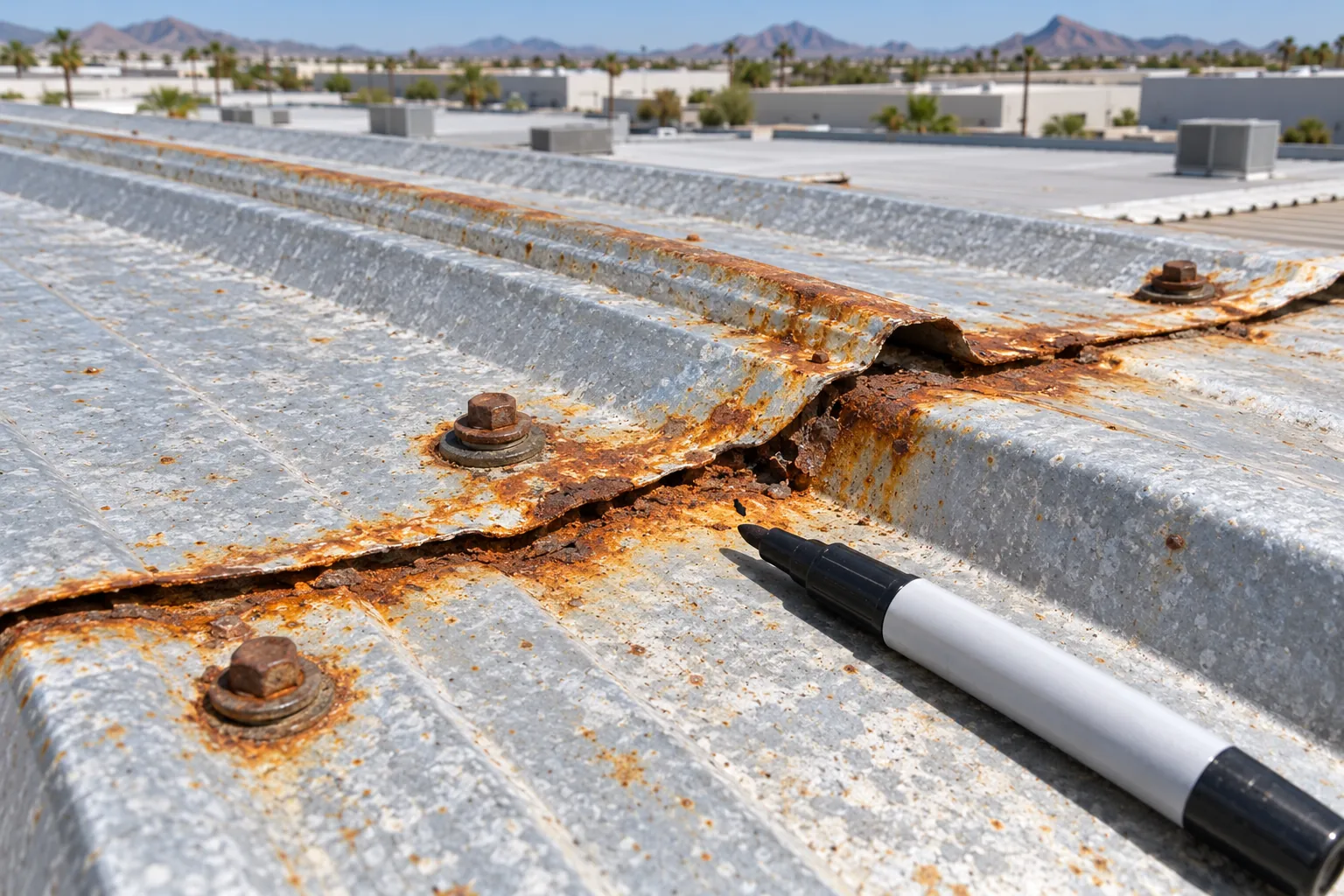
Rust along the panel laps of an older metal warehouse roof, marked for repair

Commercial Metal Roofing Contractor

Standing-seam and ribbed panel roofs, from new installs to fastener replacement, rust repair at the laps, and retrofits over aging metal.

Best For
  • Steel shops and hangars
  • Sloped retail sections
Check First
  • Rust at laps and trim
  • Clip and fastener condition
Glendale commercial metal roofing contractor

What Lands On Your Roof Decides The System

Five things that reach a Glendale roof every week, and how each system is built to handle them.

What Lands On Your Roof Decides The System
What Reaches The RoofTPOEPDMIndustrialMetal
Foot traffic to HVAC unitsHeavier sheet plus walk padsWalk pads over the sheetReinforced walkways at every unitWalkway brackets above the panels
Kitchen grease from exhaust fansGrease containment at fan curbsHandles grease better when detailed correctlyMembrane chosen for the residueContainment box at each fan
Process exhaust with heat or oilsContainment and checks at ventsContainment at ventsMembrane matched to what vents outFinish matched to the exhaust
Hail and wind-blown debrisCover board under the sheetCover board under the sheetCover board and a heavier sheetPanel gauge and finish
Daily heat movementWelded seams move with the sheetSheet stays pliableExpansion joints on long runsClips let panels slide

Ponding Water Around Your Rooftop Units?

Water that sits around a curb after rain points to a low deck or a slow drain. Book a roof walk and we will show you where it collects and why.

How We Take A Roof From Inspection To Finish

The same five steps run on every system. Two of them happen around the building, where your operation sets the plan.

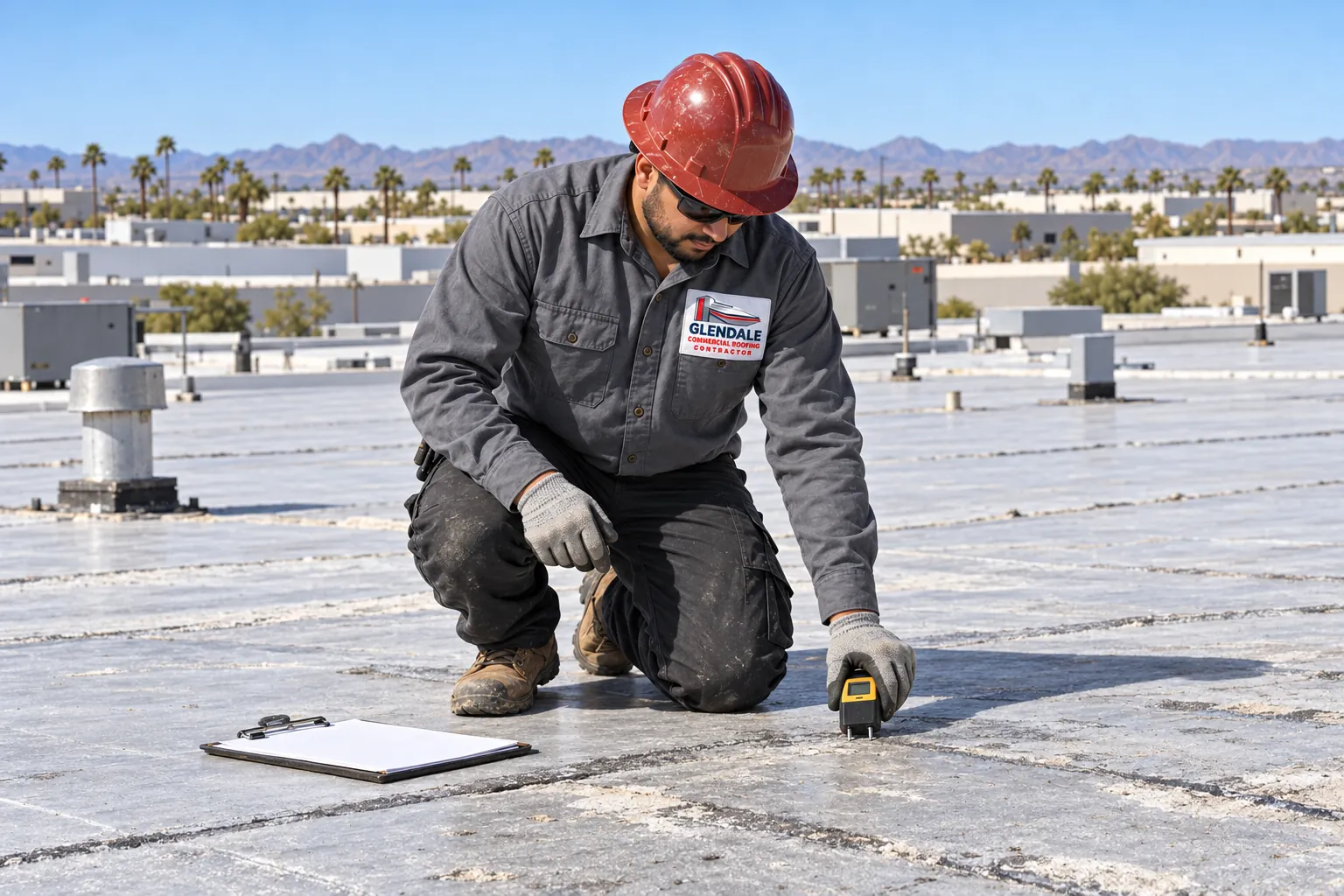
Roofer pressing a moisture meter against a worn low-slope membrane during a roof inspection
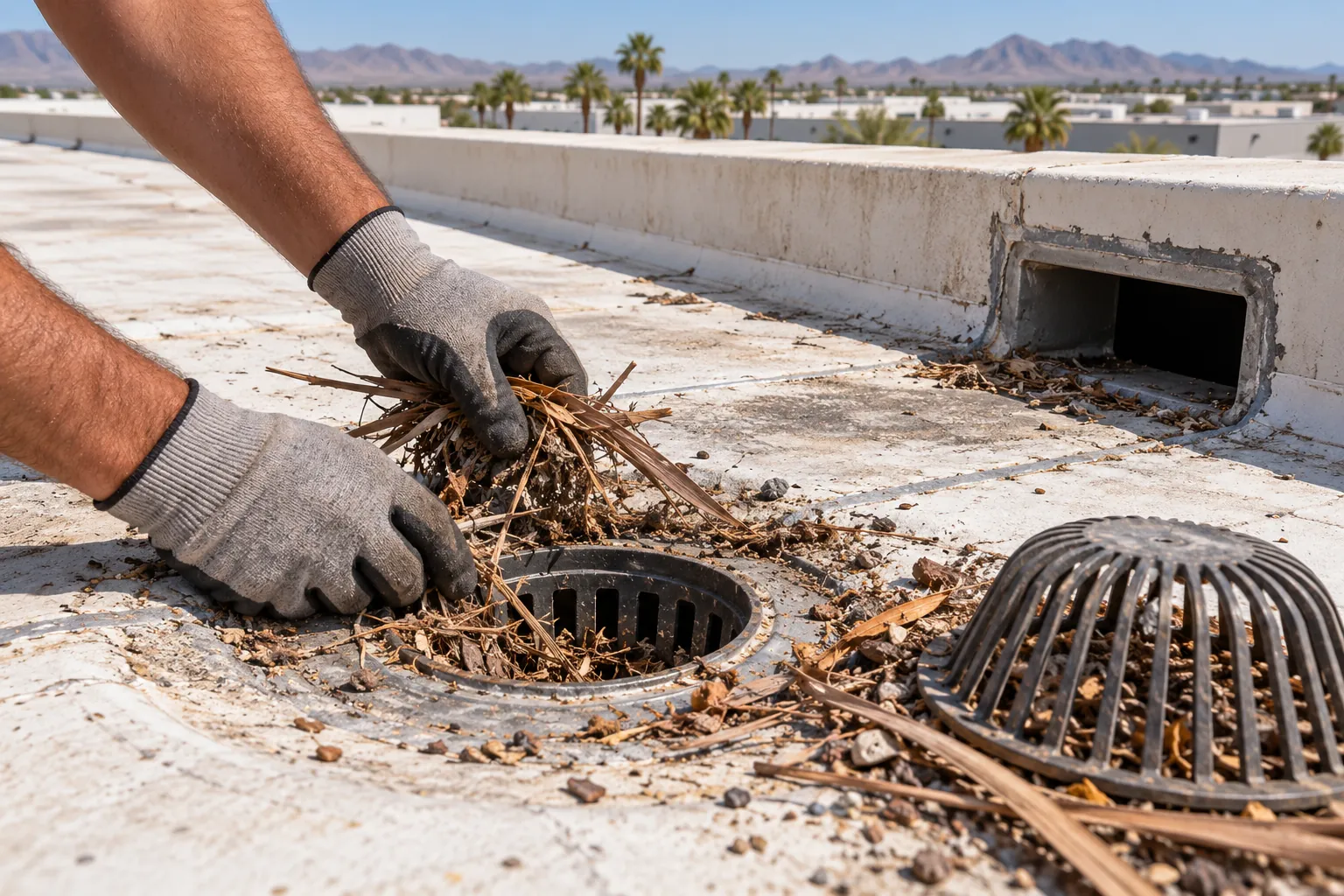
Gloved hands clearing palm debris and dust from a roof drain beside an overflow scupper
On The RoofAround The Building
  1. On The Roof

    Step 1: Inspect Your Roof

    Every system recommendation starts with moisture meter readings across the field, cores at wet spots, and a close look at each curb, drain, and edge.

  2. Around The Building

    Step 2: Match The System To The Building

    What vents onto the roof, how often technicians walk it, and how long you will hold the property decide between TPO, EPDM, industrial membrane, and metal.

  3. Around The Building

    Step 3: Set Work Hours And Staging

    Crane days, dumpster spots, and early summer start times are agreed with you before any roof material is ordered, so docks and entrances stay usable.

  4. On The Roof

    Step 4: Build The New Roof In Sections

    Each section goes from tear-off or prep to finished membrane or panels before the next one opens, and nothing is left exposed overnight.

  5. On The Roof

    Step 5: Test Seams And Walk It With You

    Seams are probed or checked by hand, drains are flushed, and you walk each completed section with us and keep a photo record.

Questions About Choosing A Roof System

What owners ask while deciding between systems.

Which roof system fits my type of building?

Start with how the building is used. Wide warehouses lean toward TPO, restaurant pads and medical offices often go EPDM or TPO, process plants need an industrial membrane, and steel shops and hangars suit metal. The inspection confirms it for your own roof.

Can one building have two roof systems?

Many do. A retail building with a flat main roof and a sloped entry canopy can carry TPO on the flat area and metal on the canopy, with flashing where the two meet.

Do you work on roofs another contractor installed?

Yes. We repair, recover, and replace roofs no matter who put them on, and we tell you plainly when a patch is worth doing and when the roof needs a replacement plan.

Pick The Right System For Your Building

Send us the building type and what you see on the roof. We walk it and recommend a system in writing.

Call (623) 310-0165