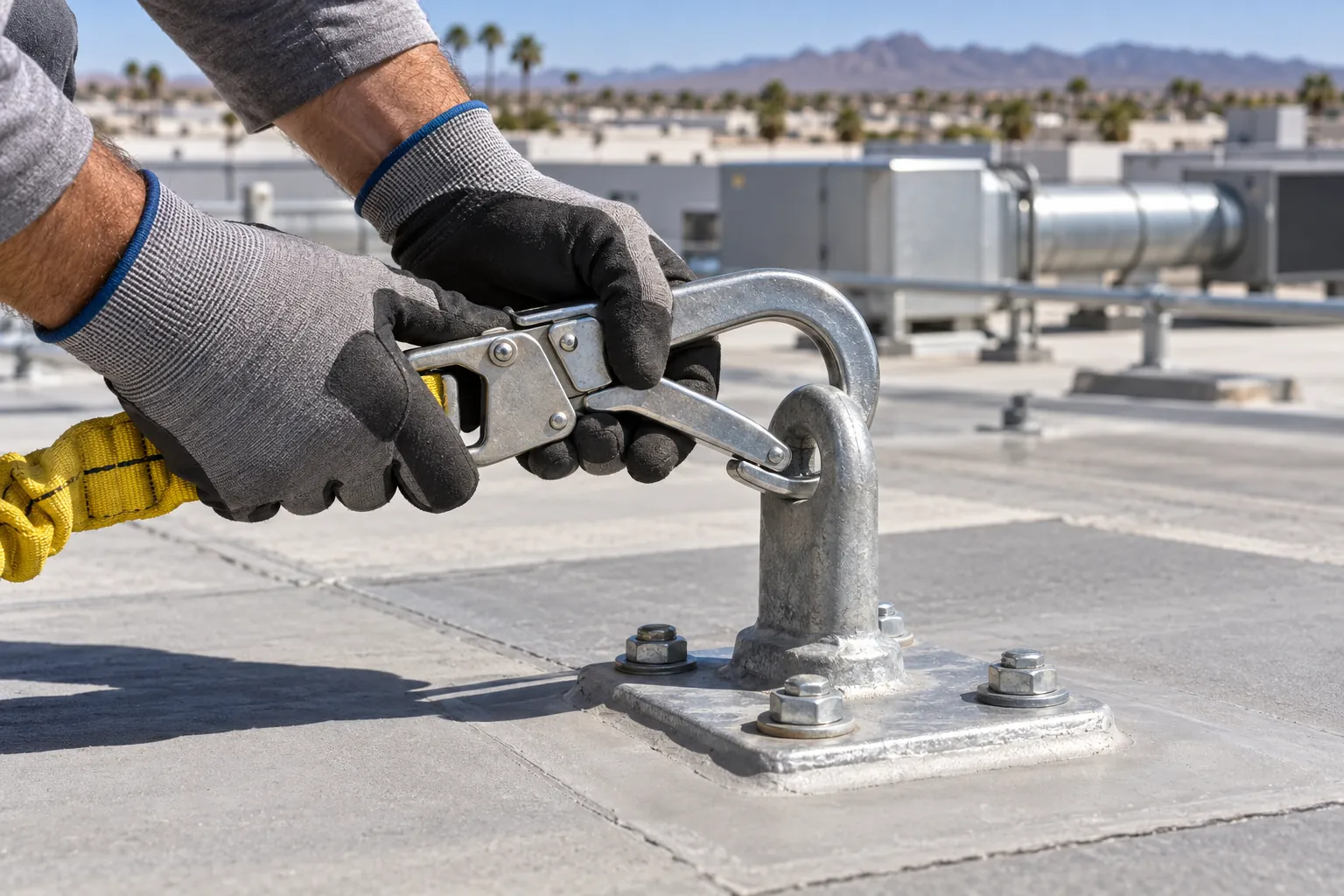
Industrial Roofing
Steel buildings with process exhaust or heavy rooftop units call for industrial detailing at curbs and fans. Walk pads and containment trays protect the panels and curbs around each fan.
industrial roofing in Glendale
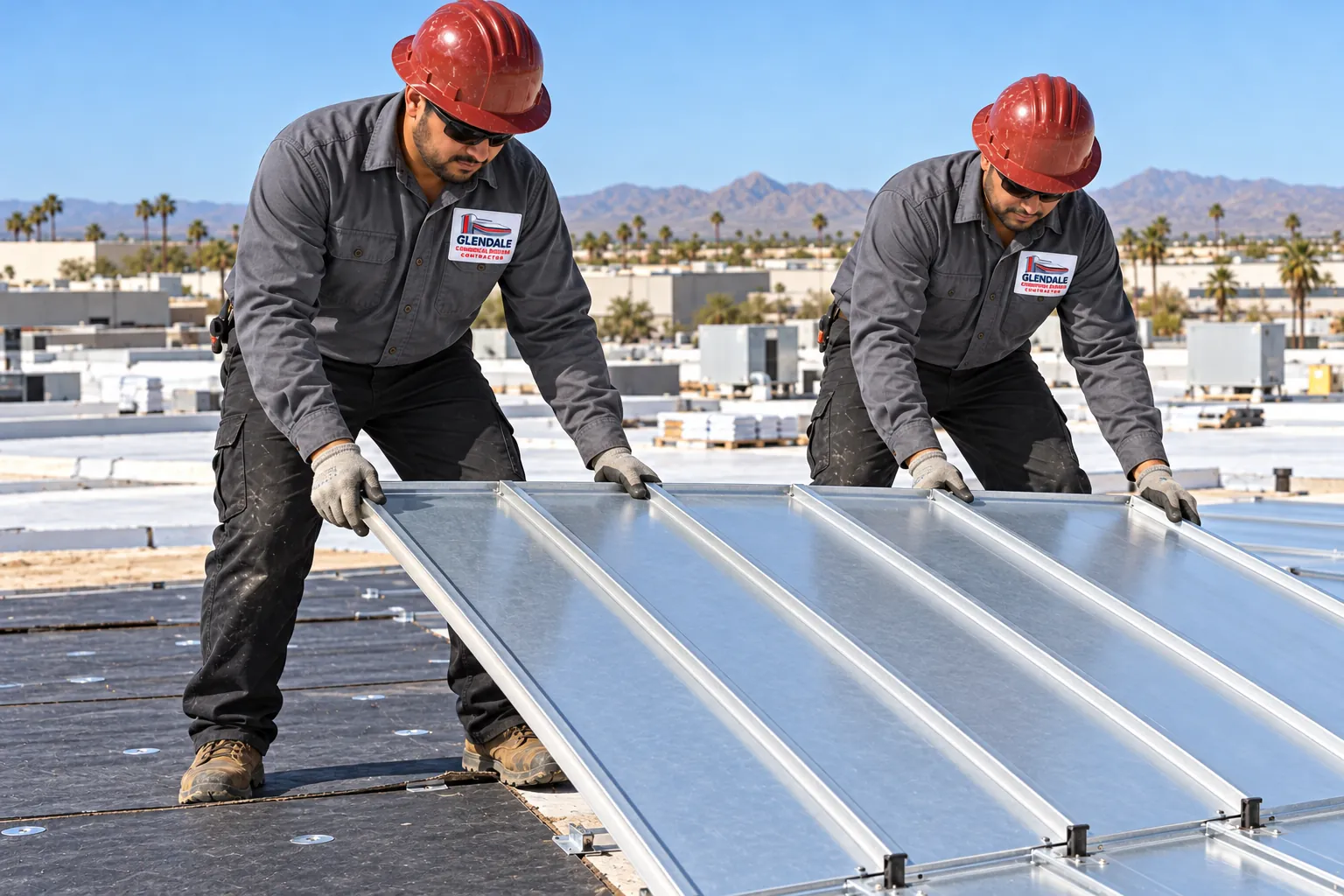
Standing-seam and ribbed metal roofs on Glendale steel shops, hangar-style buildings, and sloped retail sections, installed, repaired, and retrofitted by a commercial metal roofing contractor.
Metal works best where the roof has some slope and the building is framed for panels.
Daily heat movement causes most of these six conditions on metal buildings here.
Exposed fasteners loosen as panels expand every afternoon and shrink every night. Loose screws are the most common leak source on ribbed metal roofs.
Water held between overlapping panels rusts the steel from the inside. Orange staining along the laps shows up long before holes do.
Clips that are unable to slide hold panels tight until something gives. Torn clips let seams open and panels buckle in the heat.
Ridge caps, eave trim, and wall transitions are where wind-driven monsoon rain gets in. Failed sealant and bent trim are common.
Sun breaks down the paint finish over time. Chalky panels absorb more heat and lose the coating that slows rust on the steel.
Plastic panels in metal roofs turn brittle in the sun and crack, and their laps with the steel panels leak first.
Four kinds of metal roof work, from a full new roof to a fastener-by-fastener repair.
| Job | When It Fits | What Happens On The Roof |
|---|---|---|
| New standing-seam roof | New buildings or a full replacement | Clips set to the purlins, panels run and seamed, trim and transitions flashed |
| Fastener replacement | Ribbed roofs with solid panels and loose screws | Worn fasteners swapped for new ones with fresh washers, laps resealed |
| Metal retrofit | Aging metal roofs past repair | New framing and insulation over the old panels, new panels installed on top |
| Restoration coating | Panels with a worn finish and no rust-through | Laps and fasteners sealed, rust treated, a reflective coating applied |
Four reasons owners in Glendale choose metal, each tied to a part of the roof.
Standing-seam clips let panels slide through daily heat movement, which keeps seams closed and fasteners out of the weather on roofs that swing from cool nights to very hot afternoons.
Sloped metal moves monsoon rain off the roof quickly, so water has little time to find its way into a lap or sit against a fastener washer.
A light reflective finish keeps panels cooler in full sun and slows heat aging of the sealant at trim and transitions, where most metal roof leaks begin.
A retrofit over aging metal panels skips tear-off and keeps the building closed in during the work, and it can cost less than removal.
Loose fasteners leak at every rain. Call and we will check the roof panel by panel and replace what has worked loose.
Metal jobs turn on fastener and lap detail. The building side is mostly about getting long panels delivered and lifted.
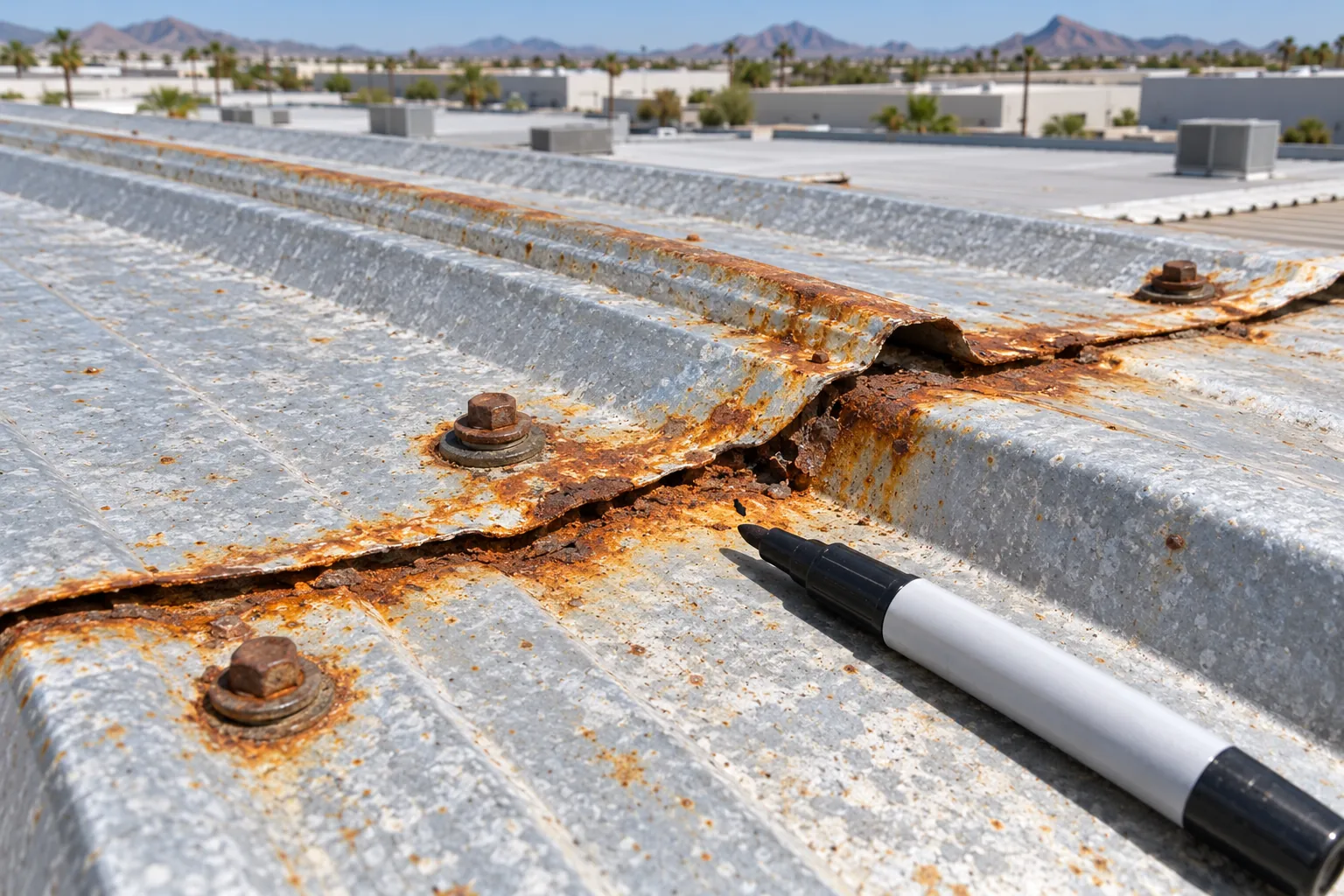
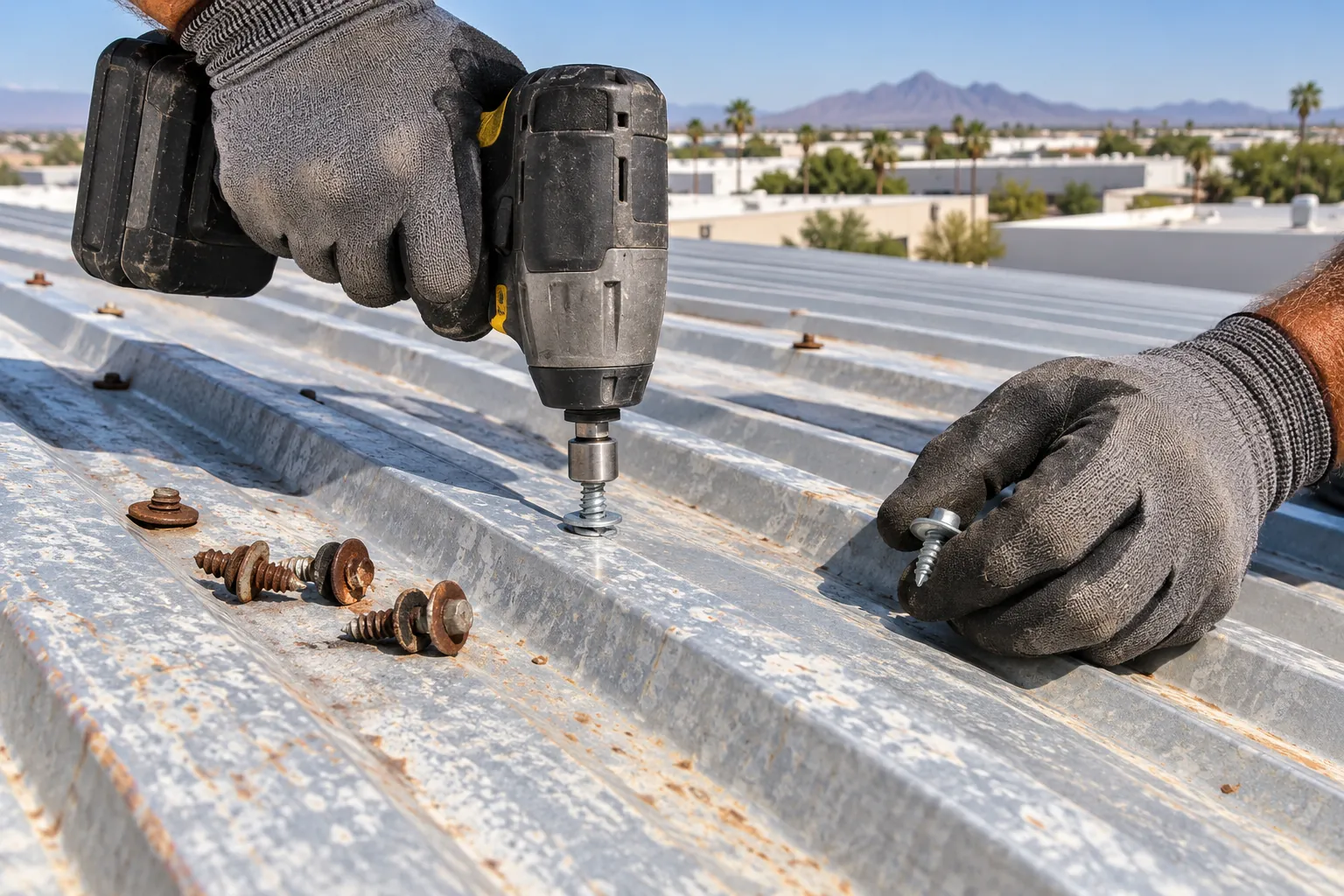
We check fasteners and washers panel by panel, look under laps for rust, and test trim and transitions. Photos mark every loose screw and rusted area. Skylight panels and their laps get checked in the same pass.
Loose fasteners on solid panels mean a repair or restoration. Rusted-through panels or failed clips point to new panels or a retrofit over the old roof. Panel gauge, finish color, and clip type are chosen at this step as well.
Long panels need a lift and clear space to unload. Delivery day and staging are set so docks and shop doors stay in use. Panels stay bundled and blocked off the ground until they go up.
Panels are set and seamed or fastened at the spacing the system calls for, then ridge caps, eave trim, and wall transitions are flashed and sealed. Sealant at every lap and fastener is the type the panel maker specifies.
Every fastener line and seam is checked again, metal shavings are swept off before they rust on the panels, and you get a photo record. Loose trim and leftover clips are collected before the roof walk.
Systems that share buildings with metal roofs across Glendale.
Steel buildings with process exhaust or heavy rooftop units call for industrial detailing at curbs and fans. Walk pads and containment trays protect the panels and curbs around each fan.
industrial roofing in Glendale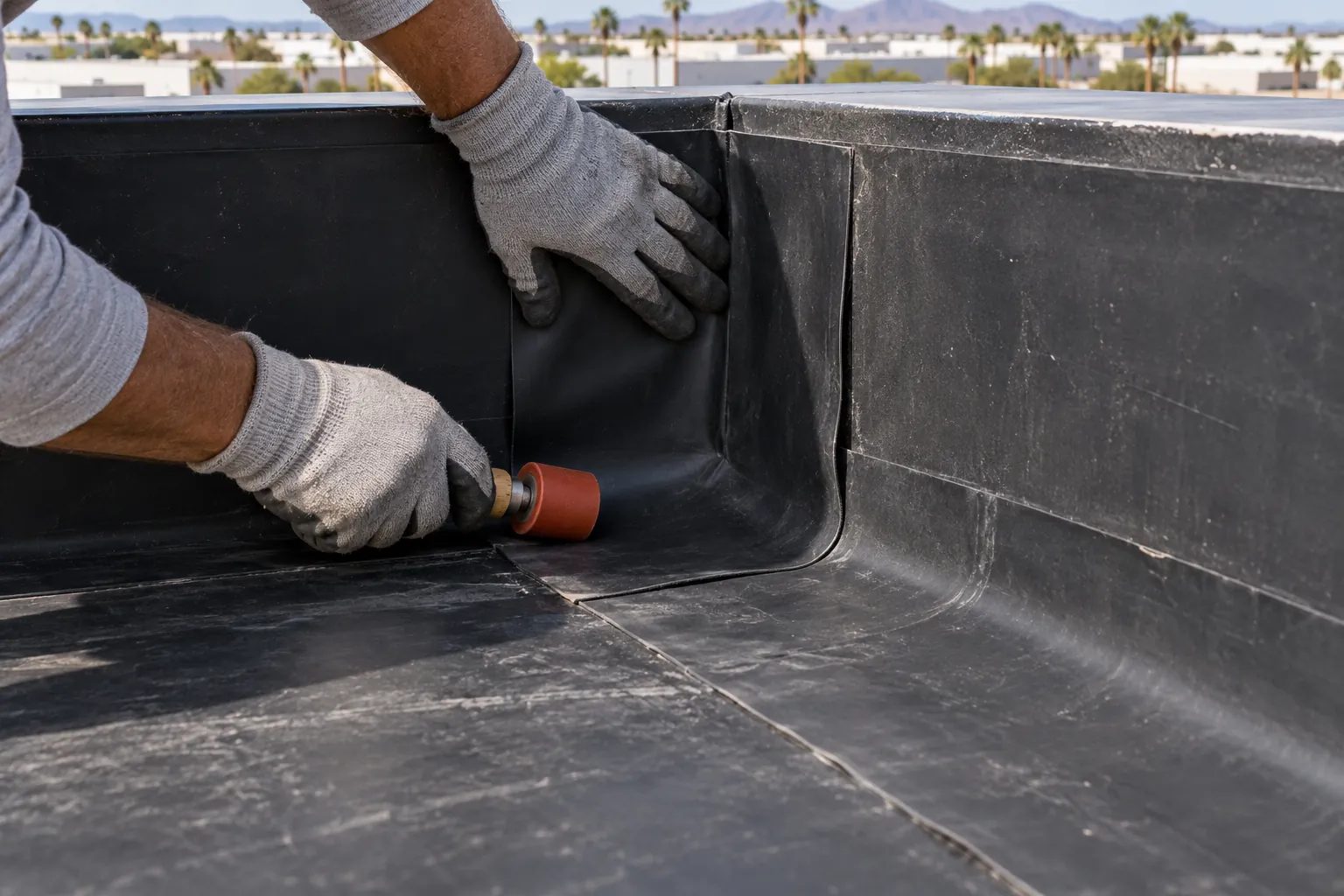
Flat sections attached to a metal building often carry EPDM, flashed where the two systems meet. That joint gets its own detail so water stays out of the gap between panel and membrane.
EPDM roofing in GlendaleWhat owners of steel shops, hangars, and sloped retail roofs ask most.
For many buildings, yes. A well-installed metal roof can outlast most membranes, sheds monsoon rain quickly on sloped structures, and handles sun well with a reflective finish. Steel buildings, hangar-style structures, and sloped retail sections are the strongest fits.
Standing-seam panels hide their fasteners and use clips that let panels slide with heat. Exposed-fastener panels screw through the face, which costs less up front but needs fastener checks over the roof's life.
A dark, chalky finish absorbs heat, while a light reflective finish keeps panels much cooler. Insulation under the panels matters as much as the finish for the space below.
Check them at least once a year here, since daily expansion works them loose. Fastener replacement with new washers is routine upkeep on exposed-fastener roofs.
Surface rust can be cleaned, treated, and coated. Panels rusted through at the laps or along the eaves get replaced, since coating over holes only hides them.
New framing and panels installed over the old metal roof, with insulation added between. It skips tear-off, keeps the building closed in, and can cost less than removing the old roof.
Often. Framing can be built on top of a flat roof to create slope, and metal panels go over it. The structure has to carry the added weight, which an engineer confirms first.
Yes, and that is planned up front. New slope sends water to the eaves, so gutters, downspouts, and where the water lands at ground level get laid out before the framing goes up.
Send the building address and the panel type if you know it. We inspect panel by panel and price repair, restoration, or retrofit.
Leave a name and number and we will call you back about the roof.
Or call now: (623) 310-0165