TPO Roofing
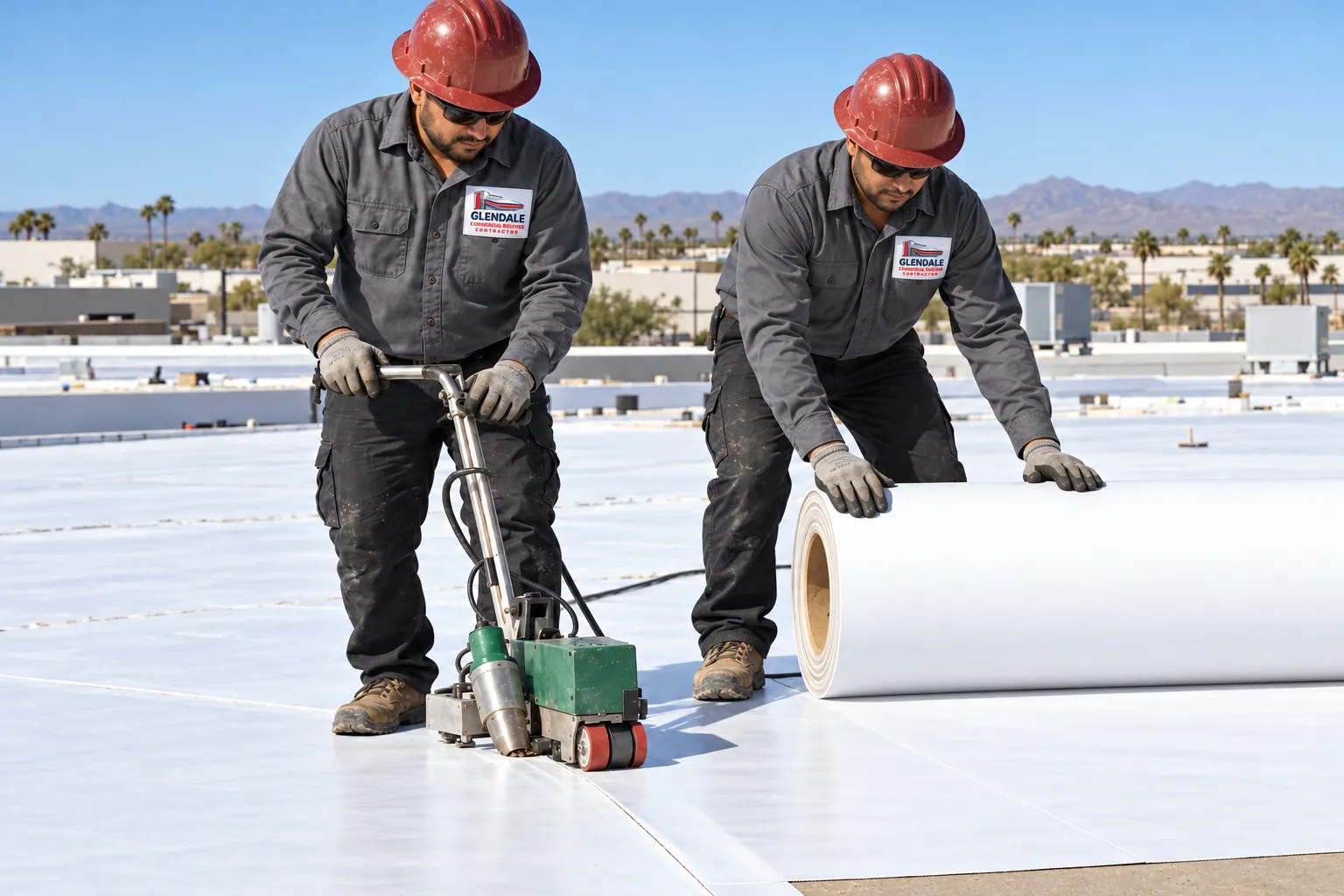
Many newer flat roofs here are white TPO. Repairs use compatible membrane and welded patches, and every weld near the repair gets probed before we leave the roof.
TPO roofing details
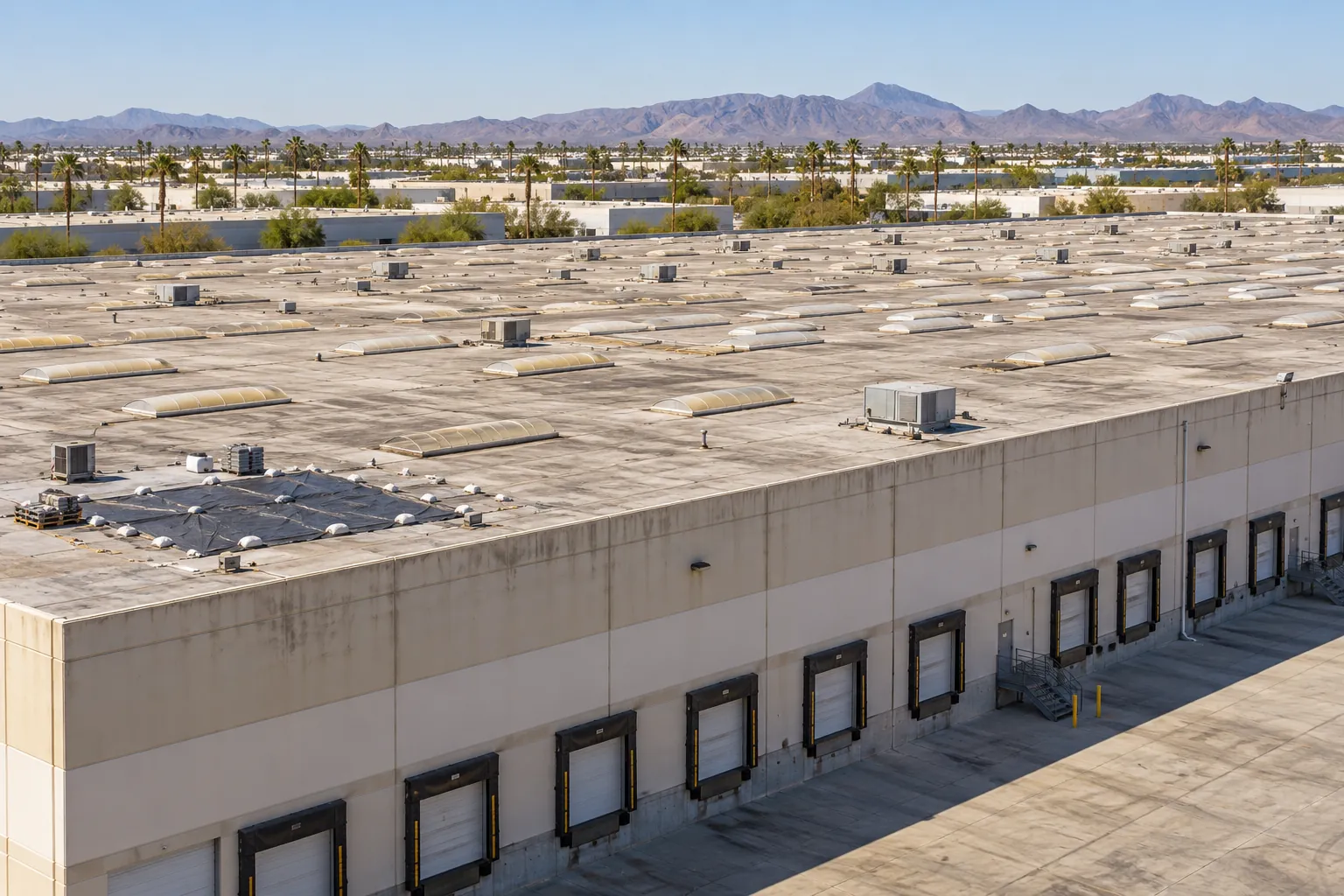
Newer TPO and metal roofs in Surprise, repaired by a commercial roofing contractor the way their manufacturer warranties require, plus replacements on older roofs along Bell Road.
A roof still under warranty needs repairs that follow the warranty's rules.
Surprise is still growing: the city describes itself as about a quarter built out, with industrial land along Loop 303 and the City Center retail district. Many roofs here are recent, and many carry a membrane maker's warranty.
Those warranties come with conditions. Repairs often need approved materials, and some need notice before work. We read the warranty first, then repair in a way that keeps it in force.
Even recent roofs develop these problems in their first years.
New tenants add rooftop units and vents, and the installers cut through the membrane. Curbs flashed by another trade are often the first to leak. Reflashing them to the membrane maker's details closes the leak and keeps the warranty in order.
A few laps that were never fully welded can hold for a year or two before monsoon rain finds them. Probing seams early catches them. A probe along each lap finds them while the original warranty still covers the repair.
Perimeter metal fastened short of the spacing the system calls for lifts in the first strong storm and pulls the membrane edge with it. Refastening to the specified pattern is cheap compared with replacing a torn perimeter.
Screws, sealant tubes, and membrane scraps left from construction end up in drains and scuppers and slow them down. Clearing them early protects the drains and the membrane around each outlet.
Settling and missing tapered insulation leave water standing near drains, and some warranties exclude ponding that sits too long. Documenting it early helps sort out who pays for the fix.
Newer metal buildings still move every day, and screws on exposed-fastener panels start backing out within a few summers. Fasteners with new washers, set to the original pattern, stop the leaks at the panel laps.
What a warranty-minded repair plan leaves you with on a newer Surprise roof.
Repairs made with approved materials and details keep the manufacturer's coverage on the membrane in place for the rest of its term. That coverage matters most in the first ten to fifteen years of the roof.
Dated photos and notes for every seam or curb repair make a warranty claim simpler if a problem returns. The record travels with the building if it is sold or refinanced.
New units and vents get flashed by a roofer to the membrane maker's details, closing the most common early leak. Each new unit gets flashed before its first monsoon season.
Perimeter metal is checked and refastened where it falls short, before a storm tests it. Corners and laps get the closest look, since wind lifts them first.
The two systems most common on newer Surprise buildings.
Many newer flat roofs here are white TPO. Repairs use compatible membrane and welded patches, and every weld near the repair gets probed before we leave the roof.
TPO roofing details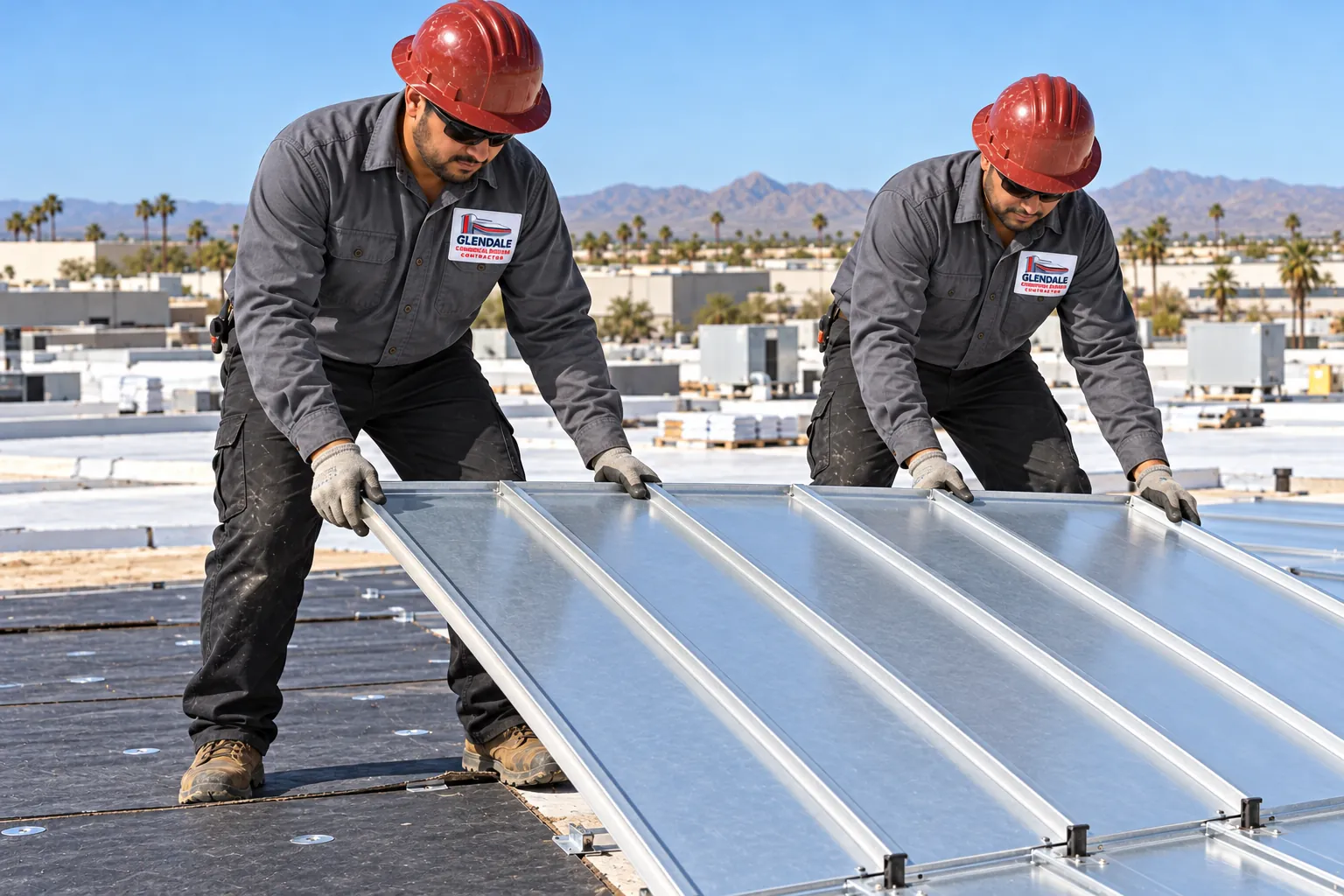
Steel buildings along Loop 303 get fastener checks and panel repairs that follow the panel maker's details, including the washer and screw types the warranty names.
Metal roofing detailsCall before anyone patches it. Tell us who installed the roof and whether it has a warranty, and we will repair it within those terms.
The paperwork comes before the patch. Two steps happen at a desk, three on the roof.
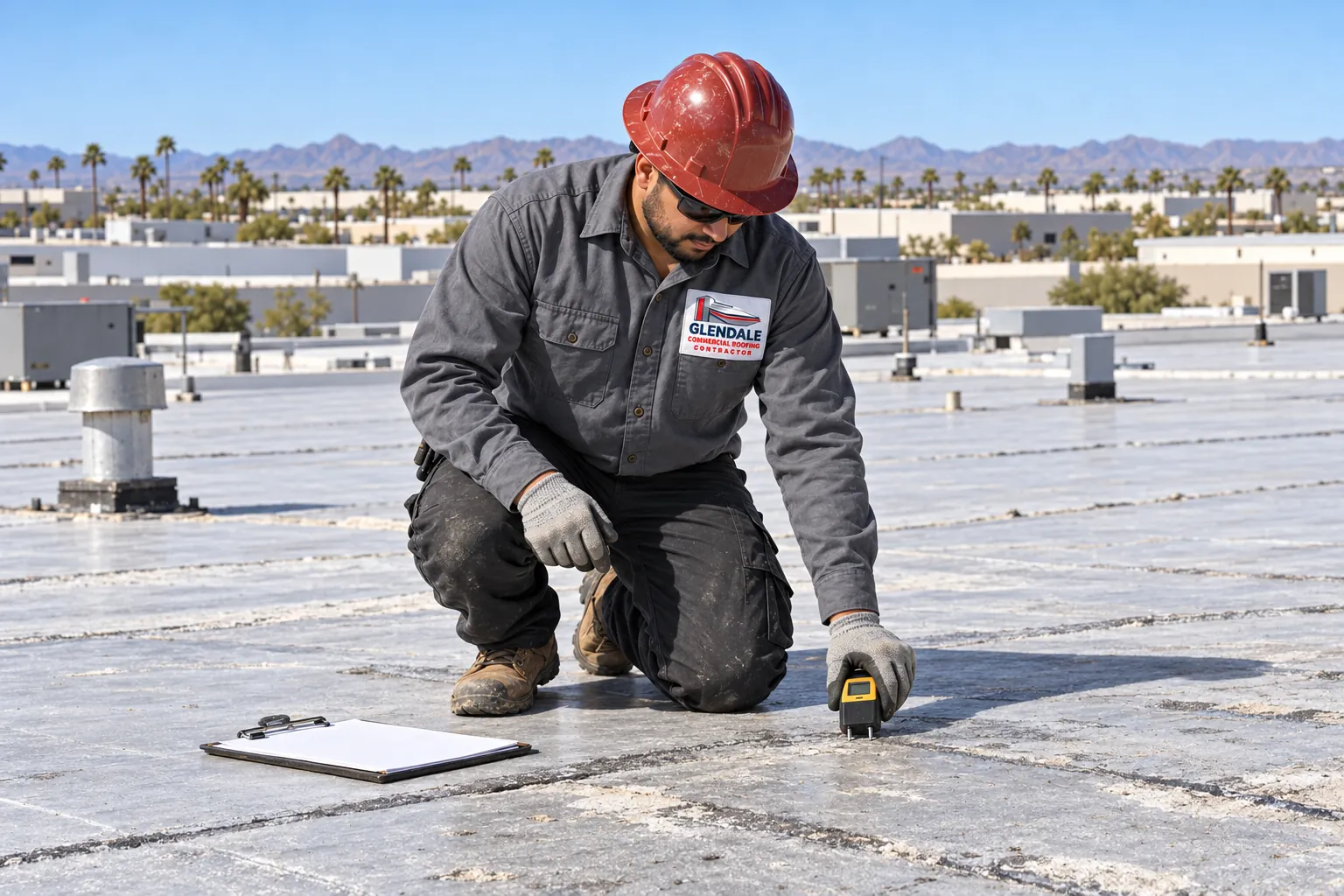
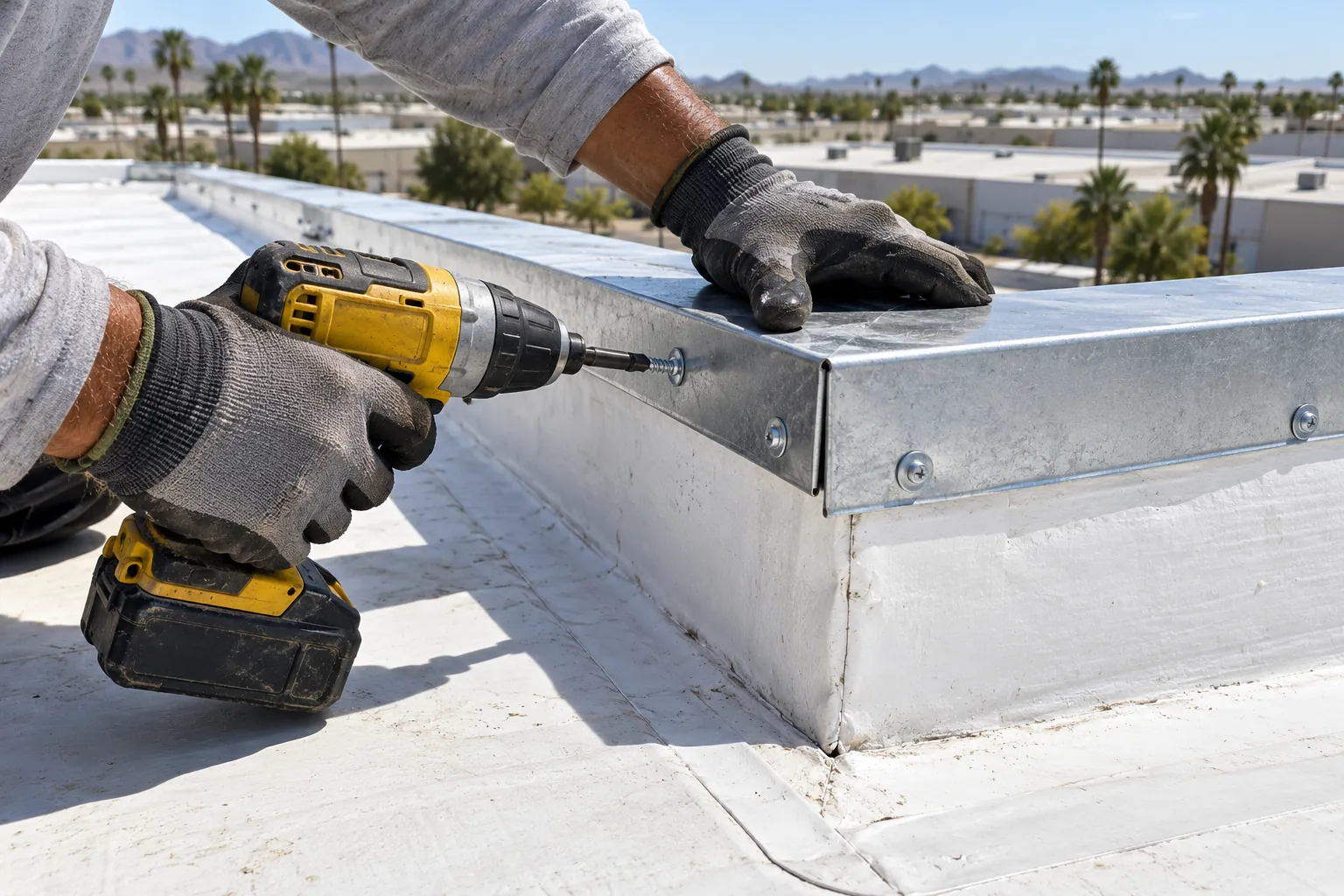
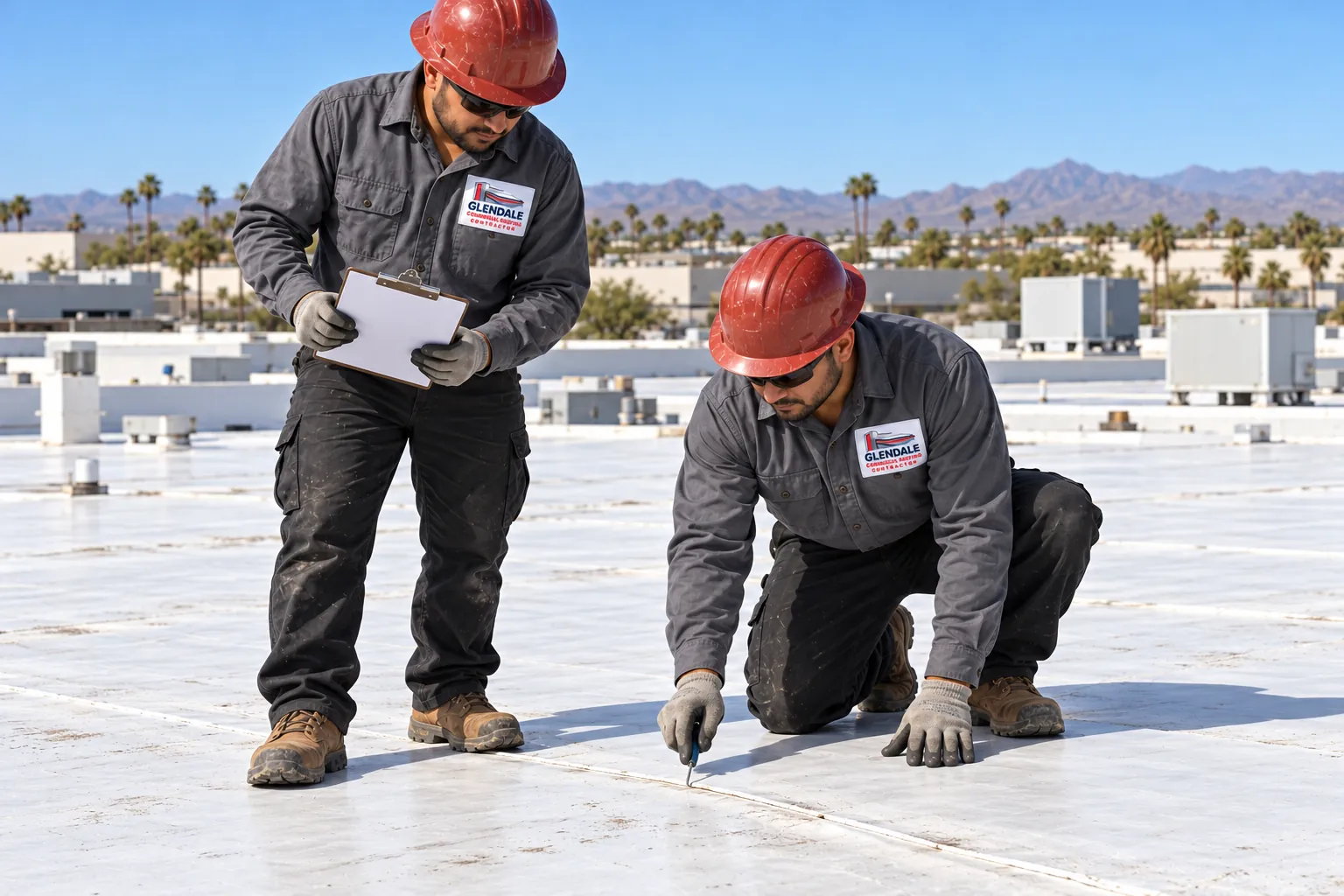
We probe seams, check edge fastening and every curb added since construction, and note anything a warranty excludes, such as long-standing ponding. Any curb flashed by another trade gets photographed for the file.
The membrane maker's warranty and any notice it requires get reviewed first, so the repair method and materials match its terms before work starts. If the warranty names approved installers, you hear that before anything else.
Where the warranty asks for notice, it goes out first. Work on the roof is then set around tenants in the center, one suite at a time if needed. Notice letters and approval replies go into the same roof file.
Patches, reflashed curbs, and edge fixes use materials and methods the warranty allows, with each repair photographed before and after. Patches follow the manufacturer's published details for size and overlap.
You get dated photos, notes, and the materials used for each repair, ready to add to the roof's warranty file. The file is ready to hand to the manufacturer if a claim comes up.
Surprise sits near the northwest end of our Grand Avenue coverage.
Recreation centers and shared buildings where a governing board approves roof work in phases.
Fabrication and yard buildings off Loop 303, where grit wears membranes and packs drains.
Restaurant pads and open-air retail roofs with grease exhaust at every kitchen.
Warranties, roof life, and Surprise permits.
It can if the wrong materials or methods are used. Most membrane warranties require compatible materials and details, and some require notice first. We read the terms before touching the roof.
Start with the warranty terms. Some name approved installers; others accept any qualified roofer who follows their details. Either way, keep photos and records of every repair.
Damage from equipment cut in without proper flashing, ponding that stands too long, foot traffic, and storm damage are common exclusions. Each warranty lists its own, so the document itself is the final word.
With good installation and steady upkeep, TPO roofs commonly last around 20 to 30 years, EPDM 25 to 30, and metal often 40 or more. Arizona sun and heat push any system toward the low end, and actual life comes down to the product, installation, drainage, and care.
Yes. Twice-a-year inspections from the first year catch missed welds, loose edges, and curbs added by other trades while the warranty still covers them.
The City of Surprise handles permits and inspections. What it wants for a reroof or repair depends on the scope, so we confirm with the city for each job.
Yes. Industrial roofs along Loop 303, the Bell Road corridor, and the City Center district are all part of our Surprise coverage.
Spring training crowds fill the streets around the stadium, so deliveries and lifts are scheduled away from game days. The roof work itself follows the normal plan.
Tell us the roof's age and who installed it. We inspect it and repair within the warranty's terms.
Leave a name and number and we will call you back about the roof.
Or call now: (623) 310-0165