Commercial Metal Roofing
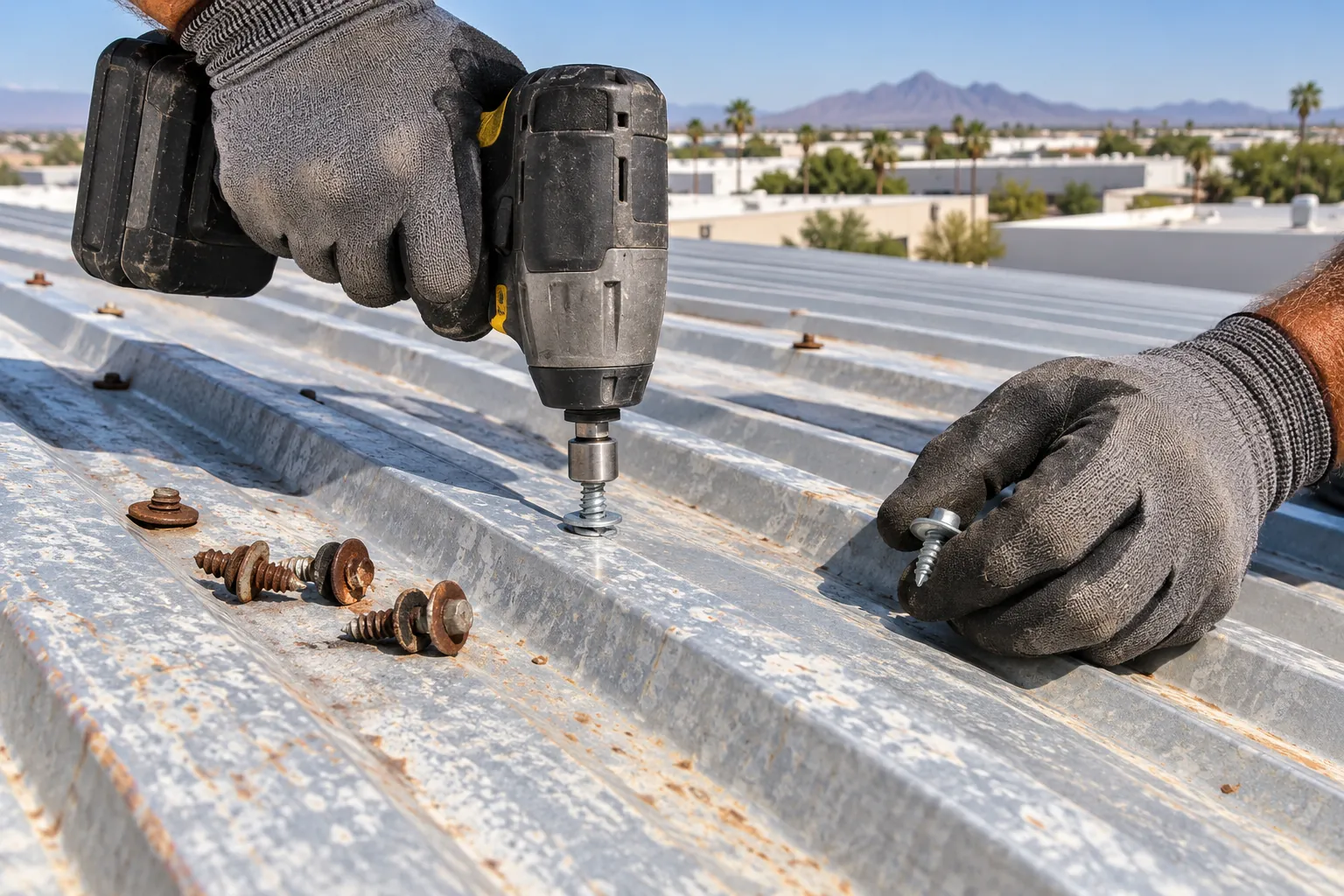
Steel process buildings and warehouses with metal roofs get fastener replacement, lap sealing, or retrofit framing.
commercial metal roofing in Glendale
Plant, distribution, and cold storage roofs in Glendale, rebuilt by an industrial roofing contractor one section at a time so the floor below keeps running.
Industrial roofs carry loads and exposures a small commercial roof rarely sees. These signs point toward an industrial membrane system.
These conditions come from what the building does as much as from the weather.
Oils and process residue settle on the membrane around exhaust fans and soften some sheets over time. The ring around each fan is the first place we check.
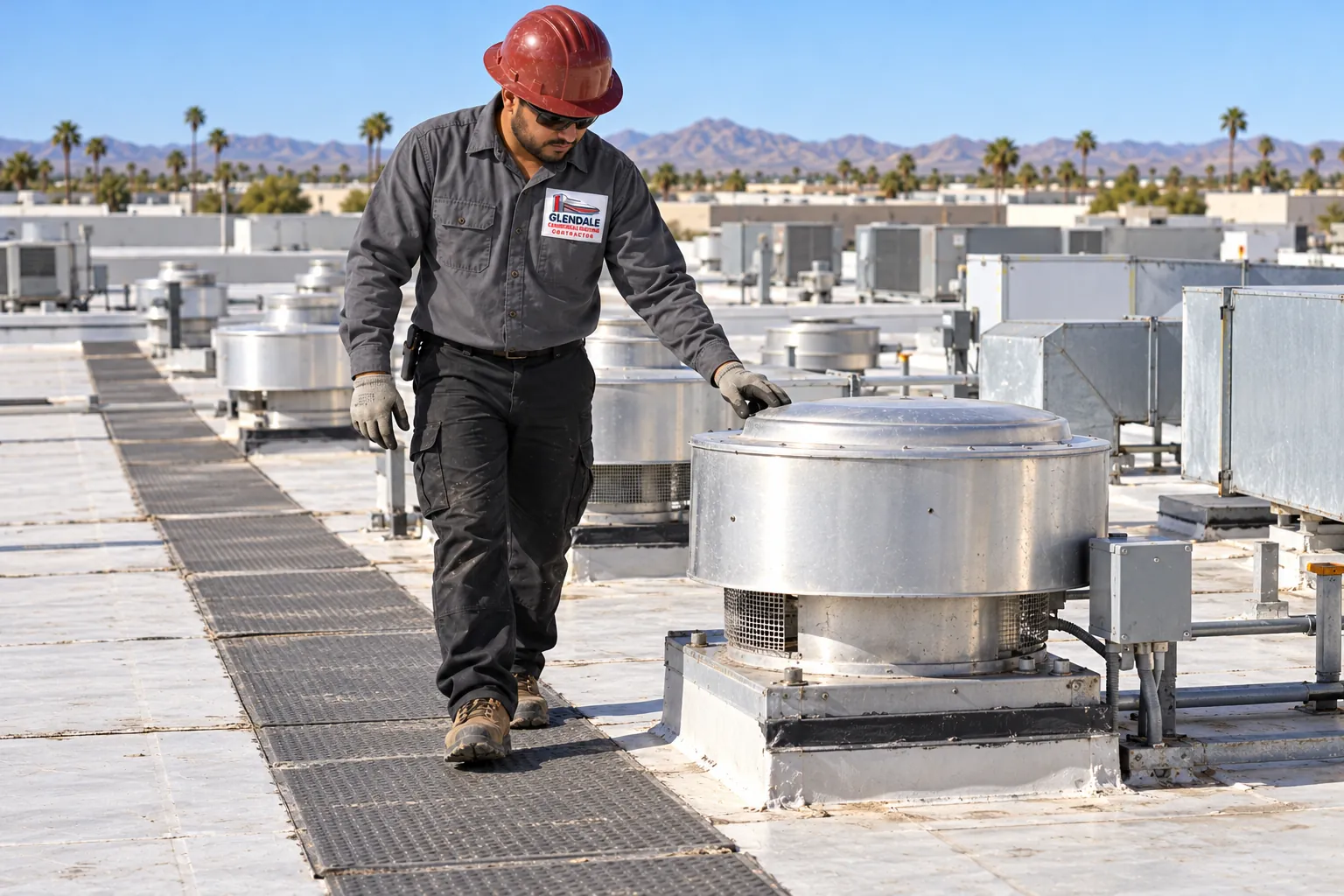
Large rooftop units get frequent service visits. Without reinforced walkways, the membrane along those routes wears thin and tears at the curb.
On a roof hundreds of feet across, a small slope problem holds water over a large area. Ponding there strains seams and adds weight to the deck.
Big units vibrate and expand, working their curb flashing loose. Failed curb flashing leaks straight into production space below.
Dust, packaging scraps, and residue collect in drains on working roofs. A blocked drain on a wide roof backs water up fast.
Long carries from a single hatch and missing tie-off points slow every repair. Planned anchors and paths make roof work safer and quicker.
Four kinds of work on industrial roofs, each planned around what runs inside.
| Job | When It Fits | What Happens On The Roof |
|---|---|---|
| Industrial membrane replacement | Roof at end of life over a working floor | Sections torn off and replaced one at a time, each sealed before the next opens |
| Walkway and curb upgrades | Wear around big units and exhaust fans | Reinforced walk pads installed, curbs reflashed, containment added at exhaust fans |
| Tapered insulation for ponding | Water standing across wide spans | Tapered insulation set toward drains during reroofing, drain sumps rebuilt |
| Leak repair on operating roofs | Active leaks over production or storage | Leak traced from inside to the roof, temporary seal set, permanent repair scheduled |
What changes on the roof when the system is built for the building's use.
Choosing the sheet for what vents out of the building keeps residue from softening or staining the field around each fan, so the area around the fans lasts as long as the rest of the roof.
Reinforced paths to each unit spread boot and cart loads, so the membrane under them holds up to years of service visits and dropped parts.
Tapered insulation and rebuilt drain sumps carry water off a wide roof, taking weight and seam strain off the deck and keeping ponding rings from forming in the middle of a span.
Planned anchors and marked paths make each later repair and inspection quicker, which cuts the hours people spend on the roof.
Call with the location inside the building and what runs above it. We trace the leak from the roof side and set a temporary seal first.
The building's schedule shapes every step. Two of the five happen with your plant team before anyone touches the roof.
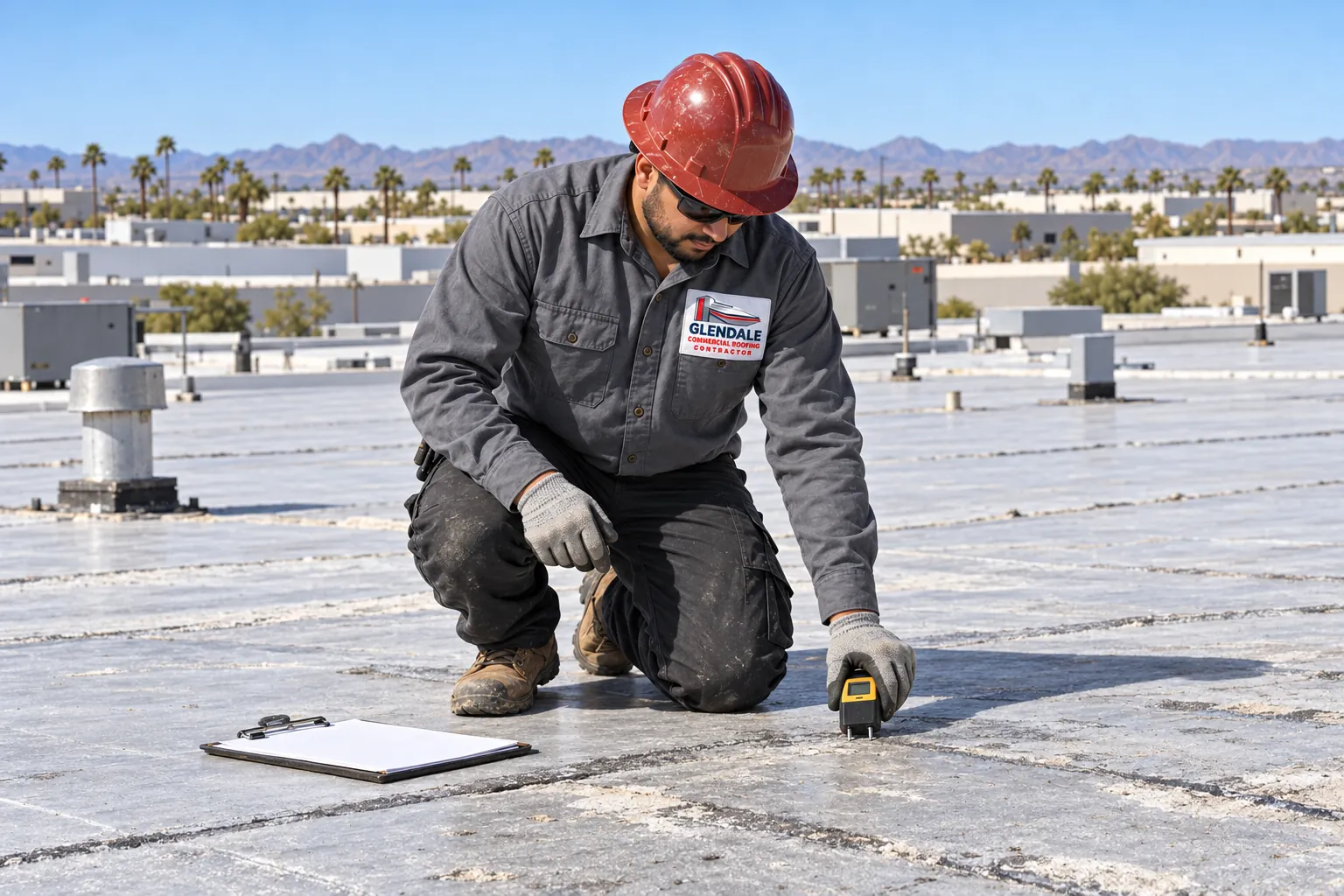
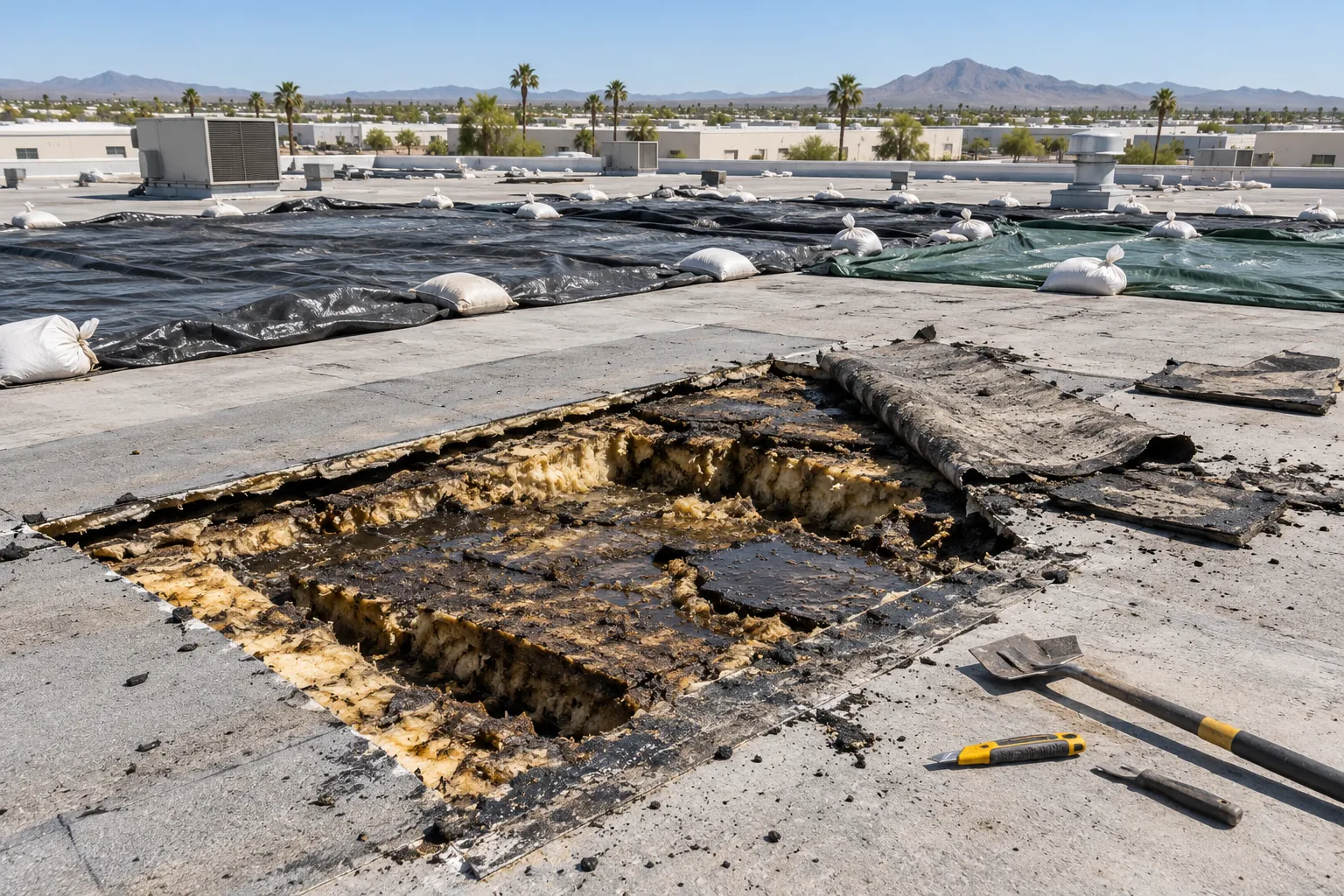
We map the roof by section, mark every fan, unit, and drain, and take moisture readings across the spans. Cores show where insulation is wet and how far it spreads. Residue rings around fans get sampled when the exhaust type is unclear.
Your plant or warehouse team names the areas that must stay clear of overhead work during shifts. Sections are ordered around those windows and unit lockouts. Cold storage and clean areas get their own rules for dust and debris.
Lift locations, hatch use, anchor points, and material paths are agreed before work starts, so carries stay short and everyone on the roof stays tied off. Material paths avoid crossing over open product or staging areas below.
Each section is torn off, insulated, and covered with new membrane before the next opens, and every open edge is sealed by the end of the day. Temporary walkways protect finished sections from the next day's traffic.
Curbs are reflashed, containment goes around exhaust fans, walk pads go down on service routes, and drains are cleared before the final walk. Containment trays are sized to each fan's discharge.
Two systems that share industrial buildings across Glendale.
Steel process buildings and warehouses with metal roofs get fastener replacement, lap sealing, or retrofit framing.
commercial metal roofing in Glendale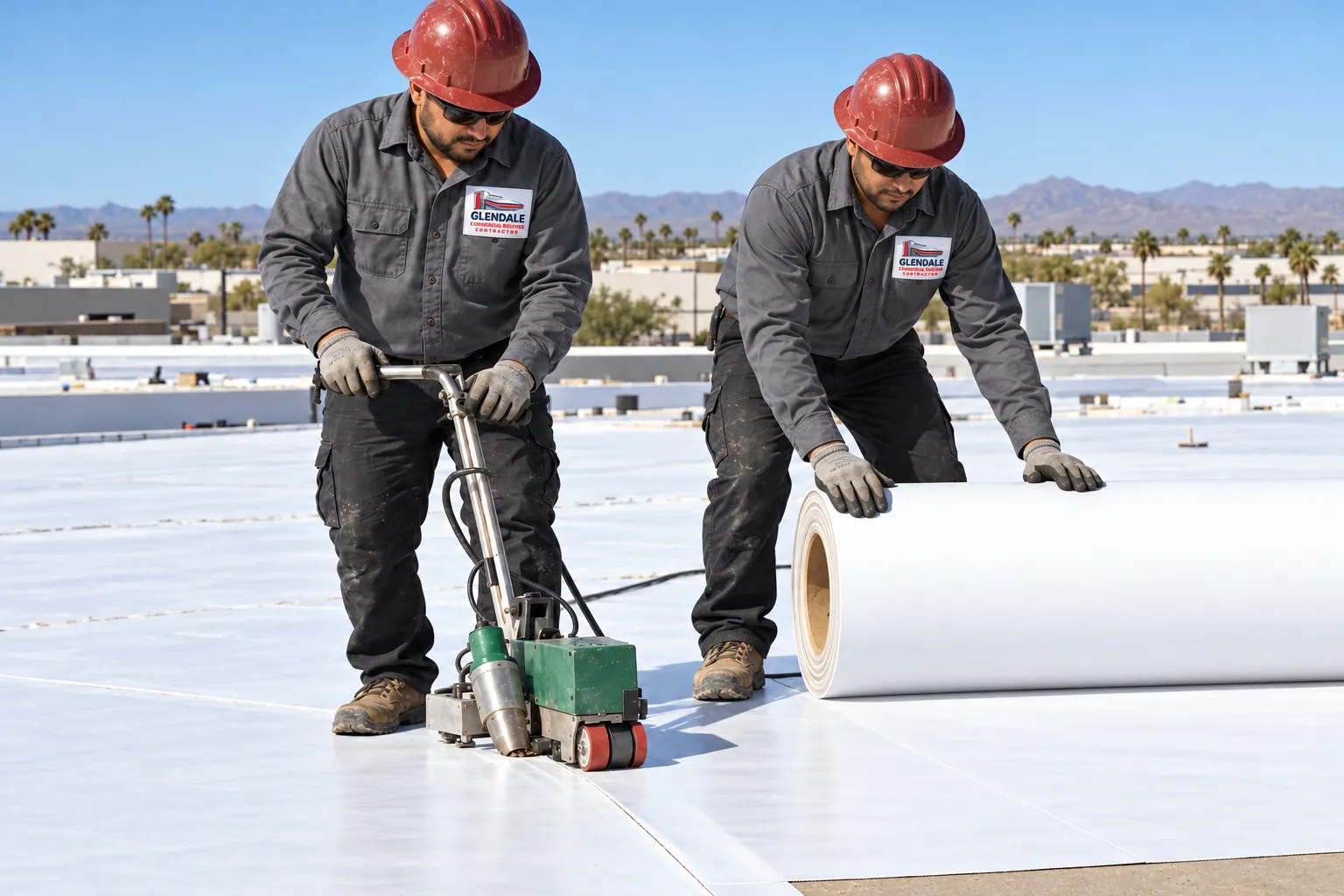
Distribution buildings without heavy exhaust often do well with a white welded TPO system and walk pads.
TPO roofing in GlendaleExposure, operations, and safety on working roofs.
Large working roofs: manufacturing plants, distribution centers, cold storage, and shops with heavy rooftop equipment, many along Loop 101 and near Northern Avenue. The work deals with exhaust and process vents, walkways at big units, ponding on wide spans, and schedules built around production.
That depends on what comes out of the vents. Oils, heat, and chemicals affect sheets differently, so we identify the exhaust first and choose a membrane rated for it, with containment around the worst fans.
Yes. Some membranes soften or swell when oils sit on them. Containment at the fan, regular cleaning, and the right sheet near the vent keep that damage from spreading.
Yes, in phases. Each section is opened, rebuilt, and sealed within the work window your team approves, and every section is closed up before the crew leaves for the night.
Only while their curbs are being flashed. Lockout times are set ahead with your maintenance team, usually a few hours per unit.
Roof work is planned with tie-off points, guardrails at open edges, and marked paths before anyone goes up. Existing anchors are checked, and missing ones are added to the work when needed.
Yes. Walk pads can be welded or adhered onto most existing membranes along the routes technicians use, which protects the sheet without a full reroof.
Cold storage buildings run cold inside and hot on the roof, so condensation under the deck and insulation thickness get extra attention. Vapor control and tight curb flashing keep moisture out of the insulation.
Share the building's size, what runs inside, and when work can happen. We map the roof and price it by section.
Leave a name and number and we will call you back about the roof.
Or call now: (623) 310-0165